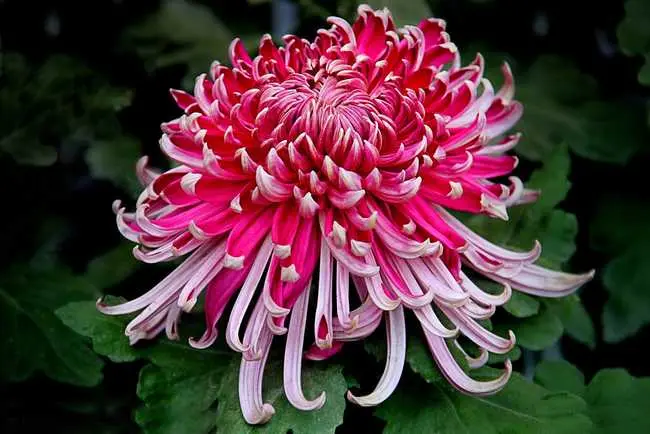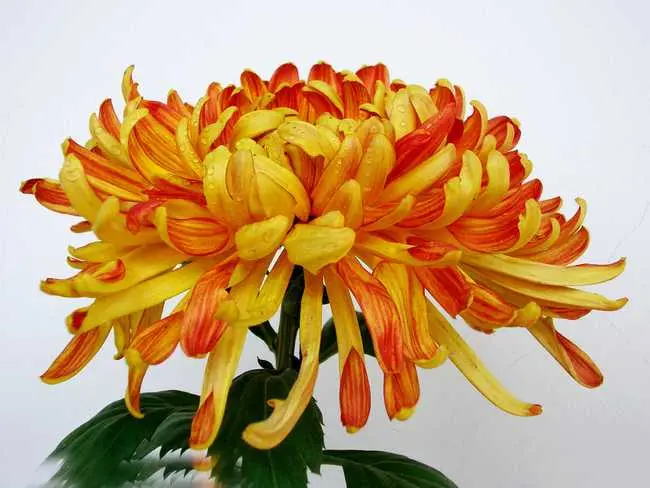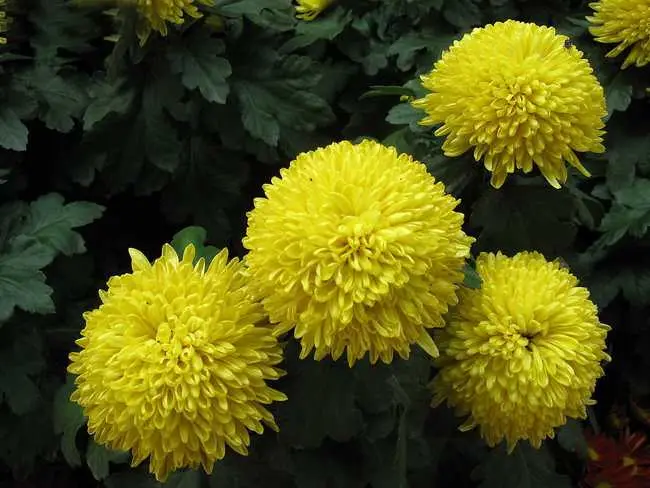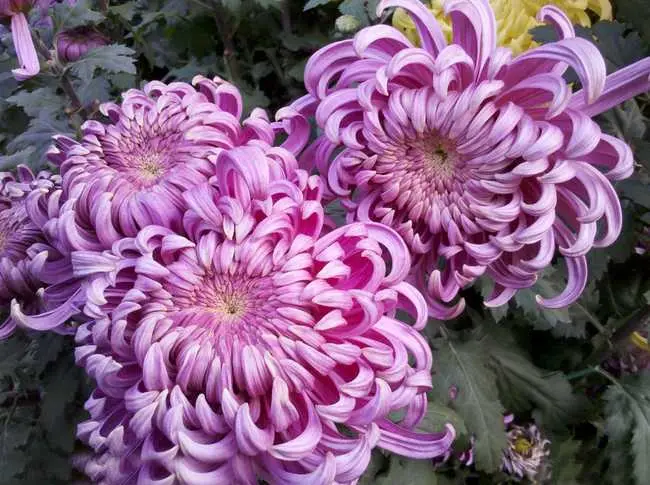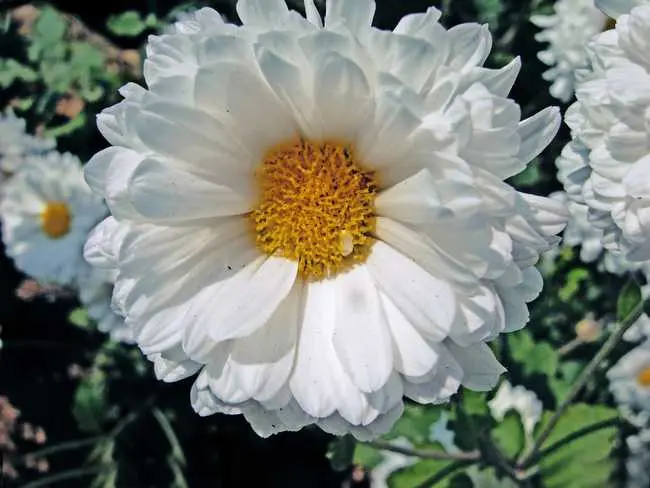
Chrysanthemum flower (Ju Hua)Materia Medica

Chrysanthemum flower (Ju Hua)

Ju Hua
CHRYSANTHEMI FLOS
Nature and flavorSweet, bitter, slightly cold. Enters the Lung and Liver meridians.
Meridians enteredLung, Liver
Dosage5–10 g
Reference market price¥50 / kgBozhou market · spec 七月菊 · 安徽 · snapshot 2026-11-21

Chrysanthemum flower is a key herb in traditional medicine for wind-heat colds and eye disorders.

Source药物来源

The dried flower head of Chrysanthemum morifolium Ramat. (Asteraceae).

Identification性状特征

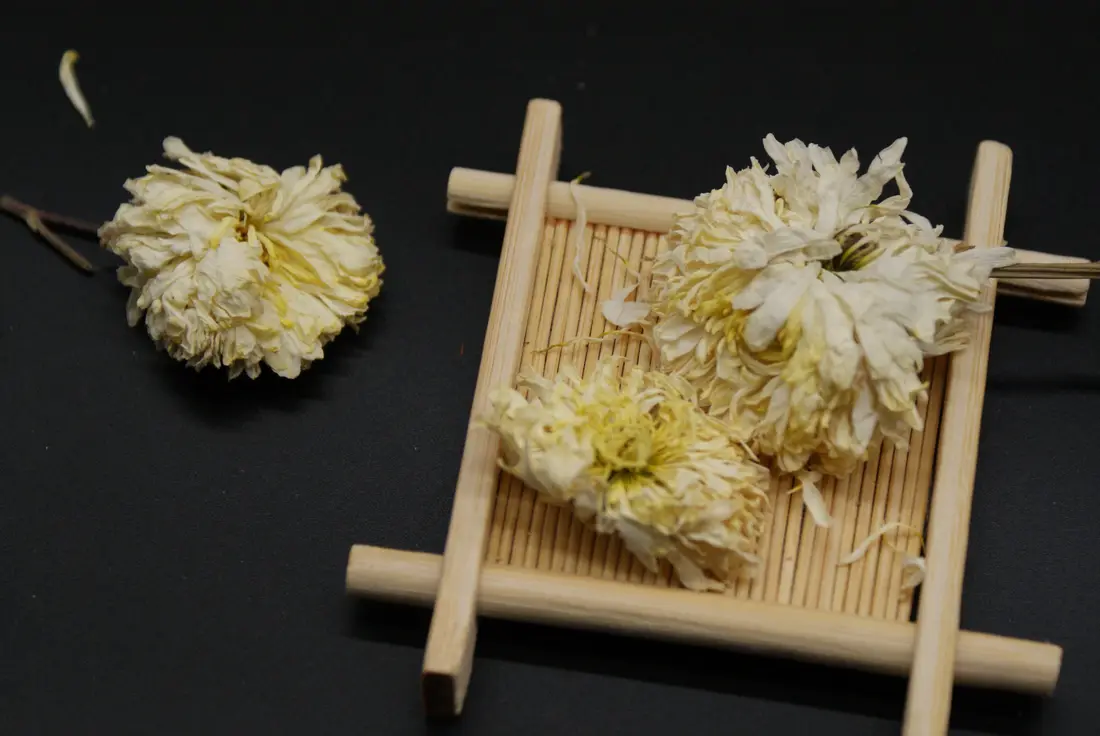
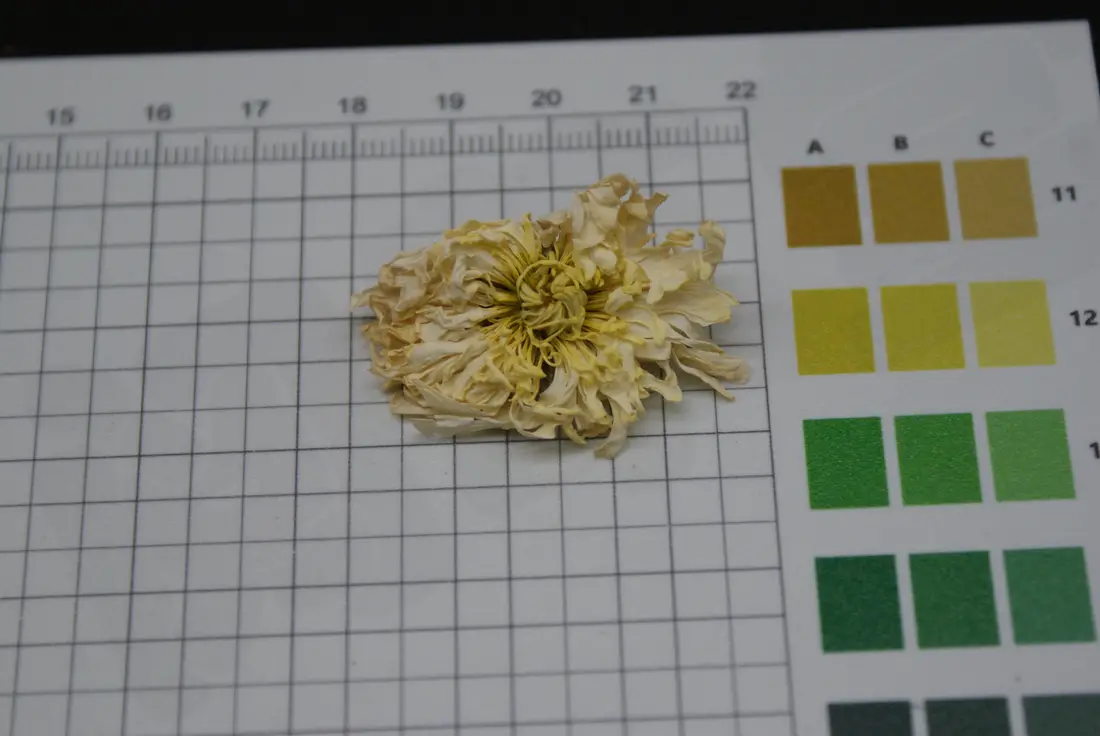
Bozhou Ju: Inverted conical or cylindrical, sometimes flattened, 1.5–3 cm in diameter, discrete. Involucre disc-shaped; bracts 3–4 layers, ovate or elliptic, herbaceous, yellow-green or brown-green, pubescent outside, membranous at margin. Receptacle hemispherical, without paleae or hairs. Ligulate florets several layers, female, peripheral, whitish, straight, ascending, longitudinally folded, scattered with golden glandular dots; tubular florets numerous, bisexual, central, hidden by ligulate florets, yellow, apex 5-toothed. Achenes not developed, without pappus. Light, soft and moist, brittle when dry. Fragrant odor; sweet and slightly bitter taste. Chuzhou Ju: Irregularly spherical or flattened spherical, 1.5–2.5 cm in diameter. Ligulate florets whitish, irregularly twisted, involute, margin wrinkled, sometimes with light brown glandular dots; tubular florets mostly hidden. Gong Ju: Flattened spherical or irregularly spherical, 1.5–2.5 cm in diameter. Ligulate florets white or whitish, obliquely ascending, upper part reflexed, margin slightly involute and wrinkled, usually without glandular dots; tubular florets few, exposed. Hang Ju: Disc-shaped or flattened spherical, 2.5–4 cm in diameter, often several connected. Ligulate florets whitish or yellow, flat or slightly folded, adherent to each other, usually without glandular dots; tubular florets numerous, exposed. Huai Ju: Irregularly spherical or flattened spherical, 1.5–2.5 cm in diameter. Mostly ligulate florets, whitish or yellow, irregularly twisted, involute, margin wrinkled, sometimes with glandular dots; tubular florets mostly hidden.

Properties and actions性味与功效
Actions
Disperse wind-heat · Pacify the liver and brighten the eyes · Clear heat and resolve toxicity
Indications
Used for common cold of the wind-heat type, headache, dizziness, red, swollen and painful eyes, blurred vision, carbuncles, swellings, boils and sores.
Dosage
5–10 g.
Caution
Use with caution in cases of deficiency-cold of the spleen and stomach.
Processing炮制
Raw
Remove impurities and residual stems and leaves; sift out dust.
Modern research现代药理
Cardiovascular effects
Dilates coronary arteries, strengthens heart, reduces myocardial ischemia, enhances myocardial contractility, increases oxygen consumption.
Antipyretic, anti-inflammatory, analgesic
Has antipyretic, anti-inflammatory, and analgesic effects.
Anti-pathogenic microorganism
Inhibits various pathogenic bacteria, influenza virus PR8, and Leptospira in vitro; strong antibacterial effect against E. coli, Staphylococcus aureus, and Shigella dysenteriae in vivo.
Antimalarial
Has antimalarial effect.
Anti-aging
Enhances glutathione peroxidase activity, reduces lipid peroxides, delays aging in mice.
Antioxidant
Has antioxidant effect.
Protects red blood cell membrane; lowers blood pressure
Protects human erythrocyte membrane and has hypotensive effect.
Classical records历代本草
Shennong Bencao Jing records it as bitter and neutral, treating wind-dizziness, eye disorders, and skin numbness. Bencao Gangmu notes its ability to remove wind-heat, benefit liver and kidney, and brighten eyes.
《神农本草经》:味苦,平。主治风头眩肿痛,目欲脱,泪出,皮肤死肌,恶风湿痹。 《本草纲目》:菊,春生、夏茂、秋花、冬实,备受四气,饱经霜露,叶枯不落,花槁不零,味兼甘苦,性禀平和。昔人谓其能除风热益肝补阴,盖不知其得金水之精英,尤多能益金、水二脏也。补水所以制火,益金所以平木,木平则风息,火降则热除。用治诸风头目,其旨深微。黄者,入金水阴分;白者,入金水阳分;红者,行妇人血分。皆可入药,神而明之,存乎其人。 野菊,治痈肿疔毒,瘰疬眼息。 《本草蒙筌》:味甘、微苦,气平、寒。属土与金,有水火,可升可降,阴中阳也。无毒。种类颜色多品,应候黄小为良。苦者胃气反伤,甘者阴血兼补。为使一味,宜桑白皮。驱头风止头痛晕眩,清头脑第一;养眼血收眼泪翳膜,明眼目无双。变老人皓白成乌,同地黄酿酒;解醉汉昏迷易醒,共葛花煎汤。散湿痹去皮肤死肌,安肠胃除胸膈烦热。利一身血气,逐四肢游风。腰痛陶陶,亦堪主治。 《开宝本草》:疗腰痛去来陶陶,除胸中烦热,安肠胃,利五脉,调四肢。 《名医别录》:味甘,无毒。主治腰痛去来陶陶,除胸中烦热,安肠胃,利五脉,调四肢。 《本草拾遗》:味苦。染髭发令黑,和巨胜、茯苓蜜丸,主风眩变白,不老,益颜色。又灵宝方茯苓合为丸以成,炼松脂和,每服如鸡子一丸,令人好颜色不老,主头眩。生平泽,花紫白,五月花。抱朴子刘生丹法,用白菊花汁和之。
Folklore本草传说

In 'Dream of the Red Chamber', chrysanthemum poems are composed by the characters, with Lin Daiyu winning first place for her poems on chrysanthemum, reflecting her personality and fate.
Culinary use民间药膳
Steamed Hashima
Dried hashima oil, chicken soup, ham, cooking wine, salt, MSG, sugar.
Soak hashima oil in warm water for 3 hours, clean, place in bowl with chicken soup, wine, salt, steam for 1.5 hours, add MSG, sugar, top with ham slices.
Nourishes yin and moistens lungs, strengthens kidney and tendons, beautifies. Suitable for aging, weakness, and as tonic for postpartum and elderly.
Rose Five-Flower Paste
Dried rose 25g, safflower, cockscomb, trumpet creeper, wild chrysanthemum 15g each, rice flour and glutinous rice flour 250g each, sugar 100g.
Crush flowers; mix flours with sugar water, add flowers, mix, add sugar water to form paste, steam 12-15 min. Eat as snack 30-50g each time.
Promotes qi movement, resolves depression, cools blood, invigorates blood, disperses wind, resolves toxicity. For liver qi stagnation, depression, facial spots.
Cooked Black Beans
Prepared He Shou Wu, Goji 24g each, Rehmannia, Angelica, Eucommia, Achyranthes 12g each, Chrysanthemum, Licorice, Chuanxiong, Tangerine peel, Atractylodes, White Peony, Moutan 3g each, Astragalus 6g, salt 18g, black beans 500g.
Boil herbs with black beans until well done, dry in sun. Remove herbs, eat beans as snack 30-50g daily.
Darkens hair, strengthens teeth, brightens eyes. For blood deficiency with white hair, dizziness, palpitations, pale complexion.
Liver-Nourishing Eye-Brightening Soup
Goji 30g, Tribulus 12g, Ligustrum 12g, Plantago 15g, Dodder 15g, White Chrysanthemum 15g, pig liver 90g.
Grind herbs into coarse powder. Take 15g, decoct, add sliced pig liver, cook as soup or steam. Add salt. Eat with meals.
Tonifies liver and kidney, clears heat, brightens eyes. For blurred vision due to liver-kidney deficiency.
Chrysanthemum Green Tea
Chrysanthemum 3g, Sophora flower 3g, green tea 3g.
Place in cup, pour boiling water, steep 5 min, drink frequently.
Pacifies liver, clears heat, brightens eyes, relieves pain. For headache, eye distention, dizziness, tinnitus, irritability due to liver yang rising; also for early warm diseases.
Xianju Tea
Agrimony 30g, Chrysanthemum 15g, Honeysuckle 15g, Licorice 6g, Quartz 24g, white sugar 30g.
Wash herbs, place in pot, add water, boil, simmer 20 min, strain, add sugar.
Liver-Clearing Drink
Sophora flower 10-15g, Prunella 10-15g, Chrysanthemum 10-15g.
Boil in water for 30 min, drink as tea.
Clears liver, brightens eyes, clears heat, purges fire. For red swollen eyes, headache, dizziness due to liver fire.
Uncaria and Chrysanthemum Tea
Uncaria 18g, Chrysanthemum 36g.
Wash, steep in boiling water.
Pacifies liver, extinguishes wind. For hypertension with dizziness.
Cassia, Chrysanthemum and Uncaria Porridge
Cassia seed 15g, white chrysanthemum 10g, Uncaria 10g, rice 100g, rock sugar to taste.
Stir-fry cassia until fragrant, decoct with chrysanthemum and uncaria, strain. Cook rice with decoction, add rock sugar.
For hypertension and stroke patients.
Ligustrum and Corn Silk Drink
Ligustrum 30g, Mulberry leaf 6g, Chrysanthemum 6g, Corn silk 30g, Bamboo shavings 6g.
Wash, place in pot, add 300ml water, boil, simmer 25 min.
Clears lung heat, quenches thirst. For diabetes with three types of wasting.
Audio and video语音与视频
Narration · Chinese · 7:34
Latin name · pronunciation
Narration and video are shared by all language versions and are in Chinese; the images and footage themselves are language-independent.
Photographs药材图片
Chrysanthemum flower (Ju Hua)
Cultivation and authentication栽培与鉴别

9 cultivation notes and 11 authentication articles exist for this herb. They are long-form field material and are published in Chinese only.

Read them in Chinese →

Compiled from public Chinese materia medica sources for study and reference. Not medical advice.
Chinese version · All herbs