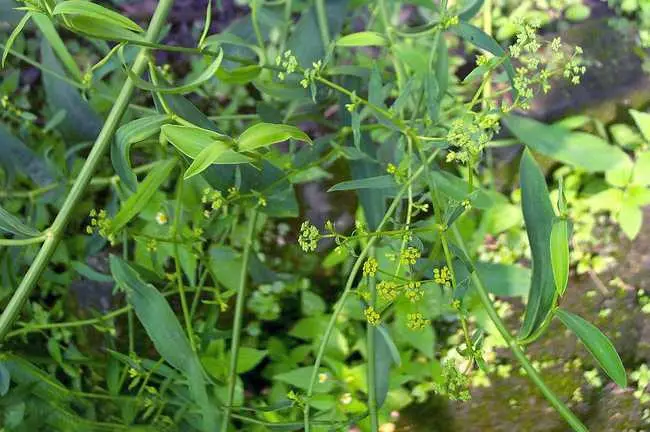
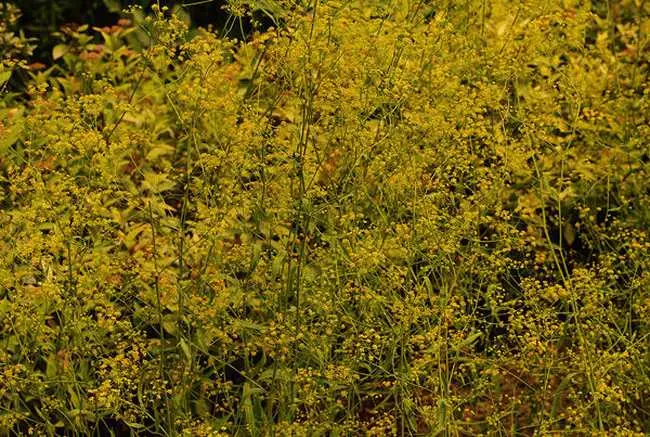
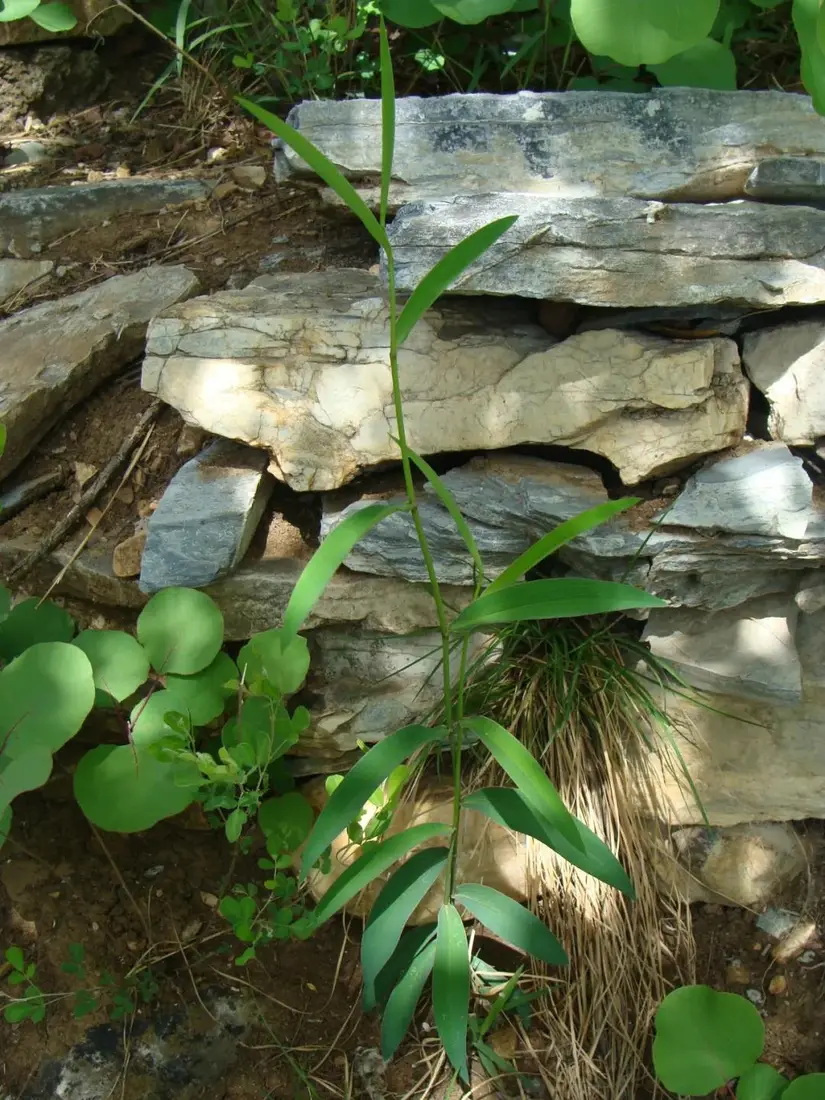
Bupleurum root (Chai Hu)
Chai Hu
BUPLEURI RADIX
Nature and flavorPungent, bitter, slightly cold; enters Liver, Gallbladder and Lung meridians.
Meridians enteredLiver, Gallbladder, Lung
Dosage3–10 g
Reference market price¥150 / kgBozhou market · spec common grade · 内蒙古 · snapshot 2026-11-21
Bupleurum root is a key herb for releasing the exterior and harmonizing lesser yang, used in wind-heat colds and liver-qi stagnation.
Source药物来源
The dried root of Bupleurum chinense DC. or Bupleurum scorzonerifolium Willd. (family Apiaceae).
Name origin: The medicinal part is the root; in ancient materia medica it was mainly recorded as 'Zi Hu' (茈胡). The Bencao Gangmu explains: 'The character 茈 has two sounds, chai and zi. For 茈姜 and 茈草 it is pronounced zi, but in 茈胡 the 茈 is pronounced chai. Chai Hu grows in the mountains; the tender plant can be eaten as a vegetable, and when old it is gathered as firewood (chai) … hence the root is called Chai Hu.'
Identification性状特征
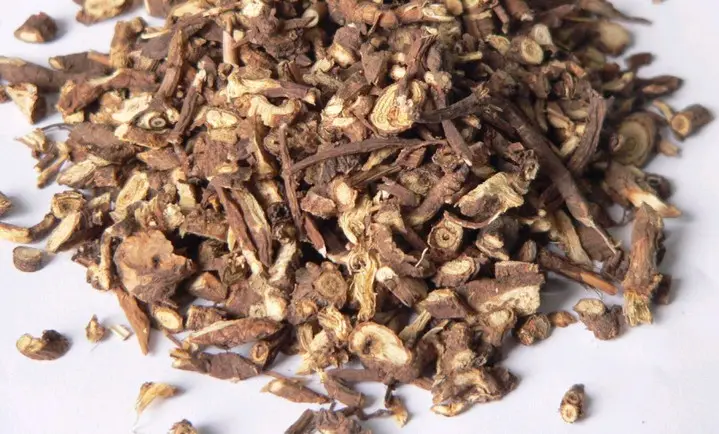
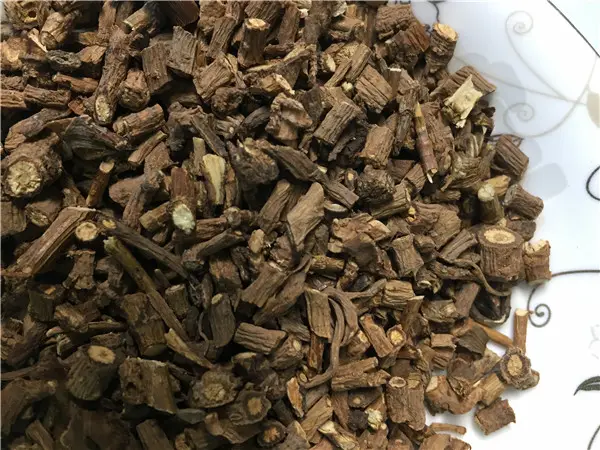
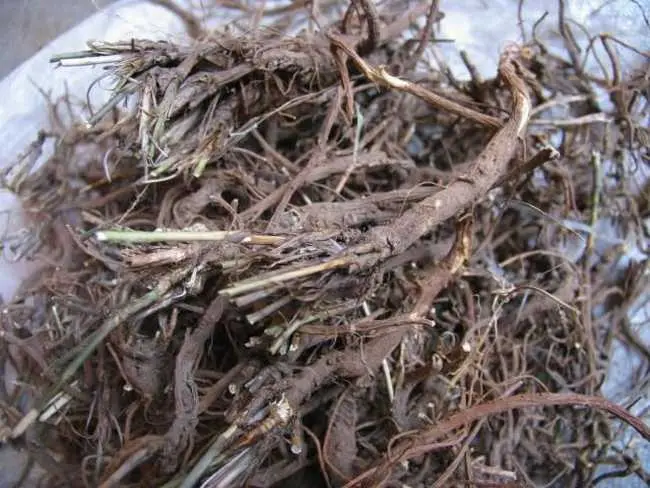
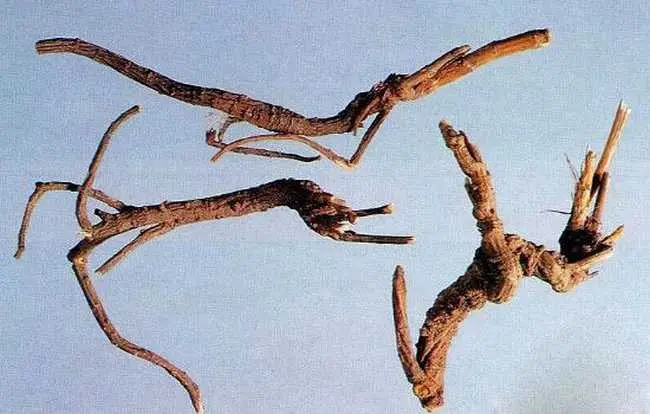
Bei Chai Hu: cylindrical or long-conical, 6–15 cm long, 0.3–0.8 cm in diameter. Root head enlarged, with 3–15 residual stem bases or short fibrous leaf bases at the apex, branched below. Surface dark brown or light brown, with longitudinal wrinkles, rootlet scars and lenticels. Hard and tenacious, not easily broken; fracture fibrous, cortex light brown, wood yellow-white. Slight aromatic odor, slightly bitter taste.
Nan Chai Hu: root thinner, conical, apex with many fine hairy withered leaf fibers, lower part mostly unbranched or slightly branched. Surface reddish-brown or black-brown, with fine dense annular striations near the root head. Slightly soft, easily broken; fracture slightly flat, not fibrous. Has a disagreeable oily odor.
Properties and actions性味与功效
ActionsDisperse wind-heat and relieve fever · Soothe the liver and relieve depression · Raise yang qi
IndicationsFor common cold with fever, alternating chills and fever, distending pain in the chest and hypochondrium, irregular menstruation, uterine prolapse and rectal prolapse.
Dosage3–10 g, decocted and taken orally.
CautionSlightly cold in nature; use with caution in deficiency-cold of the spleen and stomach. Not for use without real heat or in cases of yin deficiency with heat. Do not use in excessive doses as it may cause vomiting.
Processing炮制
Chai Hu (raw)Remove impurities and residual stems from the crude drug, wash, soften thoroughly, cut into thick slices, and dry.
Vinegar-processed Chai Hu (Cu Chai Hu)Mix clean Chai Hu slices with a measured amount of rice vinegar, moisten until the vinegar is absorbed, then stir-fry over gentle heat until dry; remove and cool. Use 20 kg rice vinegar per 100 kg Chai Hu.
Turtle-blood-processed Chai Hu (Bie Xue Chai Hu)Mix Chai Hu slices with fresh turtle blood and yellow wine (or cold boiled water), moisten until absorbed, stir-fry over gentle heat until dry, remove and cool. Use 13 kg turtle blood and 25 kg yellow wine per 100 kg Chai Hu slices.
Modern research现代药理
Sedative and sleep-prolonging effectSaikosaponins prolong sleep time in cats, with significant increases in slow-wave sleep (SWS) and REM sleep compared with pre-administration.
Antipyretic and analgesic effectBei Chai Hu oil and saikosaponins have a marked antipyretic effect on yeast-induced fever in rats. Saikosaponins and Chai Hu decoction show significant analgesic effects in tail-electric-stimulation tests in rats and mice.
Anticonvulsant effectOral Chai Hu decoction (20 g/kg) antagonizes caffeine-induced convulsions in mice.
Anti-inflammatory effectTotal saikosaponins and volatile oil inhibit various acute exudative and chronic proliferative inflammations.
Antibacterial and antiviral effectIn vitro, Chai Hu inhibits hemolytic Streptococcus, Staphylococcus aureus, Vibrio cholerae and Mycobacterium tuberculosis; it also inhibits influenza virus, hepatitis virus, Leptospira and vaccinia virus, and suppresses cytopathic changes caused by poliovirus type I.
Liver-protective and choleretic effectChai Hu protects the liver and promotes bile secretion; the main choleretic constituents are flavonoids.
Hypolipidemic effectIntramuscular saikosaponins lower cholesterol, triglycerides and phospholipids in experimental hyperlipidemic animals, especially triglycerides, and accelerate fecal excretion of cholesterol and its metabolites. The main active ingredients are saikosaponins a and b.
Classical records历代本草
The Shennong Bencao Jing records its bitter, neutral nature and use for abdominal masses, accumulation, and intermittent fevers. The Bencao Gangmu emphasizes its role in raising yang qi, calming liver-gallbladder fire, and treating malaria and menstrual disorders. The Bencao Mengquan notes it as a guiding herb for the Shaoyang and Jueyin meridians, often used with Coptis or Scutellaria. The text also warns against indiscriminate use in consumptive diseases without true heat.《神农本草经》:味苦,平。主治心腹,去肠胃中结气,饮食积聚,寒热邪气,推陈致新。
《本草纲目》:治阳气下陷,平肝胆三焦包络相火,及头痛眩运,目赤昏痛障翳,耳鸣聋;诸疟,及肥气寒热,妇人热入血室,经水不调,小儿痘疹余热,面疳羸热。
劳有五劳,病在五脏。若劳在肝、胆、心及包络胃有热,或阳气下陷,则柴胡乃引清气,退热必用之药。惟劳在肺肾者,不用可尔。然东垣言诸有热者,宜加之,无热则不加。又言诸经之疟,皆以柴胡为君。十二经疮疽,须用柴胡以散结聚。则是肺疟,肾疟,十二经之疮,有热者则可用之矣。但要用者精思病原,加减佐使可也。寇氏不分脏腑经络,有热无热,乃谓柴胡不治劳乏,一概摈斥,殊非通论。庞元英《谈薮》:张氏久病疟,热时如火,年余骨立。医用茸附诸药,热益甚。召医宫孙琳诊之,投小柴胡汤一帖,热减十之八九,三服脱然。淋曰:此名劳疟,热从髓出,加以刚剂,气血愈亏,安得不瘦?盖热有在皮肤、脏、骨髓,非柴胡不可。若得银胡,只须一服。南方者加减,故三服乃效。观此,则得用药之妙也。
行手、足少阳,黄芩为佐;行手、足厥阴,黄连为佐。
《本草蒙筌》:味苦,气平、微寒。气味俱轻,升也,阳也,阴中之阳。无毒。乃手足少阳、厥阴四经行经药也,泻肝火,去心下痰结热烦,用黄连猪胆汁炒。为佐;治疮疡,散诸经血凝气聚,与连翘同功。止偏头疼,胸胁刺疼及胆瘅疼痛;解肌表热,早晨潮热并寒热往来。伤寒门实为要剂,温疟证诚作主方。且退湿痹拘挛,可作浓汤浴洗。在脏主血,在经主气。亦妇人胎前产后,血热必用之药也。经脉不调,加四物秦艽牡丹皮治之最效;产后积血,佐巴豆三棱蓬莪茂攻之即安。又引清气顺阳道而上行,更引胃气司春令以首达。
谟按:《衍义》云:《本经》并无一字治劳,今人治劳方中,鲜有不用。误世甚多。尝原劳怯,虽有一种,真脏虚损,复受邪热,热因虚致,故曰劳者牢也。亦须斟酌微加,热去即当急已也。设若无热,得此愈增。《经验方》治劳热青蒿煎丸,少佐柴胡正合宜尔,故服之无不效者。《日华子》竟信为实,就注《本经》条下,谓补五劳七伤,除烦而益气力。《药性论》又谓:治劳乏羸瘦,是皆不智,妄自作俑者也。若此等病,苟无实热,医者执而用之,不死何待!本草注释,岂可半字卤莽耶?万世之后,所误无穷,谁之咎也。明达之医,固知去取;中下之士,宁不蹈其辙哉!非比仲景治伤寒,寒热往来如疟之证,制大小柴胡及柴胡加龙骨、柴胡加芒硝等汤,此诚要切之药,万世之所宗仰,柴胡加芒硝等汤,此诚要切之药,万世之所宗仰,而无罅议者也。
《开宝本草》:味苦,平、微寒,无毒。除伤寒心下烦热,诸痰热结实,胸中邪逆,五脏间游气,大肠停积水胀,及温痹拘挛,亦可作浴汤。
《开宝本草》:仲景治伤寒,有大、小柴胡汤,及柴胡加龙牡、柴胡加芒硝汤等,故后人治寒热,此为最要之药。
《名医别录》:微寒,无毒。主除伤寒,心下烦热,诸痰热结实,胸中邪逆,五藏间游气,大肠停积水胀,及湿痹拘挛。
Folklore本草传说
Legend has it that long ago, two farmhands, Chai and Hu, lived and worked together as brothers. One day Hu fell ill with alternating fever and chills. The cruel landlord dismissed him. Chai, angered, carried Hu away. While resting by a mountain, Hu chewed on a bamboo-leaf-like root and felt better. When Chai returned, Hu's fever and chills had gone. They dug up the herb and used it to treat poor people with similar symptoms, with great success. To honor them, the herb was named 'Chai Hu'.
Culinary use民间药膳
Steamed Soft-shelled Turtle with Two 'Mu' Herbs1 soft-shelled turtle, 6 g Chuan Bei Mu, 6 g Zhi Mu, 6 g Xing Ren, 6 g Qian Hu, 6 g Yin Chai Hu; scallion, ginger, Sichuan pepper, salt, sugar, yellow wine, MSG to taste.
Slaughter the turtle, drain blood, remove shell, viscera and claws, wash and cut into large pieces. Wash the herbs, slice thinly, place in a gauze bag and tie securely.
Nourish yin and clear heat, clear the lung and relieve cough
Liver-pacifying and Heat-clearing Tea1.8 g Long Dan Cao, 1.8 g vinegar-processed Chai Hu, 3 g Gan Ju Hua, 3 g Sheng Di Huang, 1.8 g Chuan Xiong.
Grind the herbs into coarse powder, decoct in water or infuse with boiling water, and drink as tea. 1–2 doses per day.
Pacify the liver and clear heat
Cultivation and authentication栽培与鉴别
21 cultivation notes and 21 authentication articles exist for this herb. They are long-form field material and are published in Chinese only.
Read them in Chinese →