Clove (Ding Xiang)
Ding Xiang
CARYOPHYLLI FLOS
Nature and flavorPungent, warm. Enters the spleen, stomach, lung, and kidney meridians.
Meridians enteredSpleen, stomach, lung, kidney
Dosage1–3 g
Reference market price¥65 / kgBozhou market · spec 大丁 · 进口 · snapshot 2026-11-21
Clove is the dried flower bud of <i>Eugenia caryophyllata</i>, used in traditional medicine to warm the middle and relieve hiccups.
Source药物来源
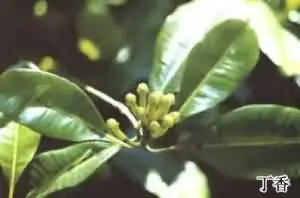
The dried flower bud of Eugenia caryophyllata Thunb. (Myrtaceae).
Identification性状特征
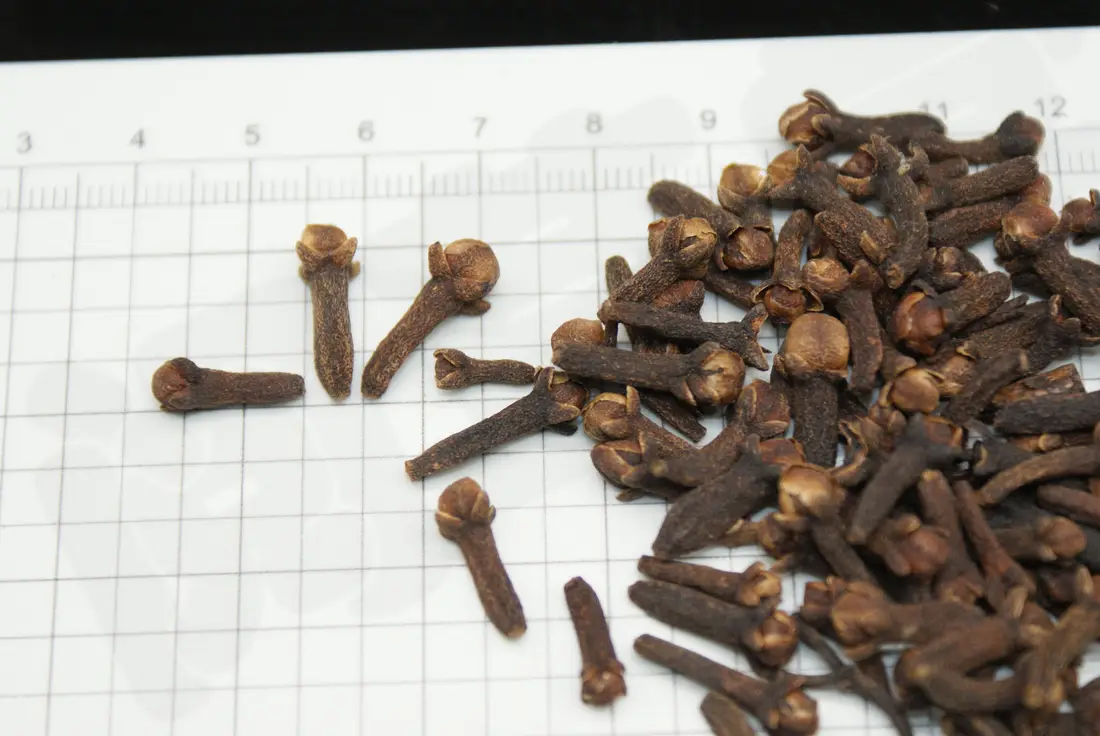
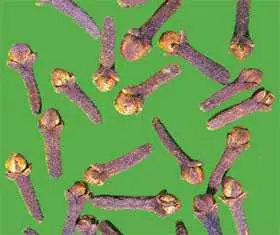
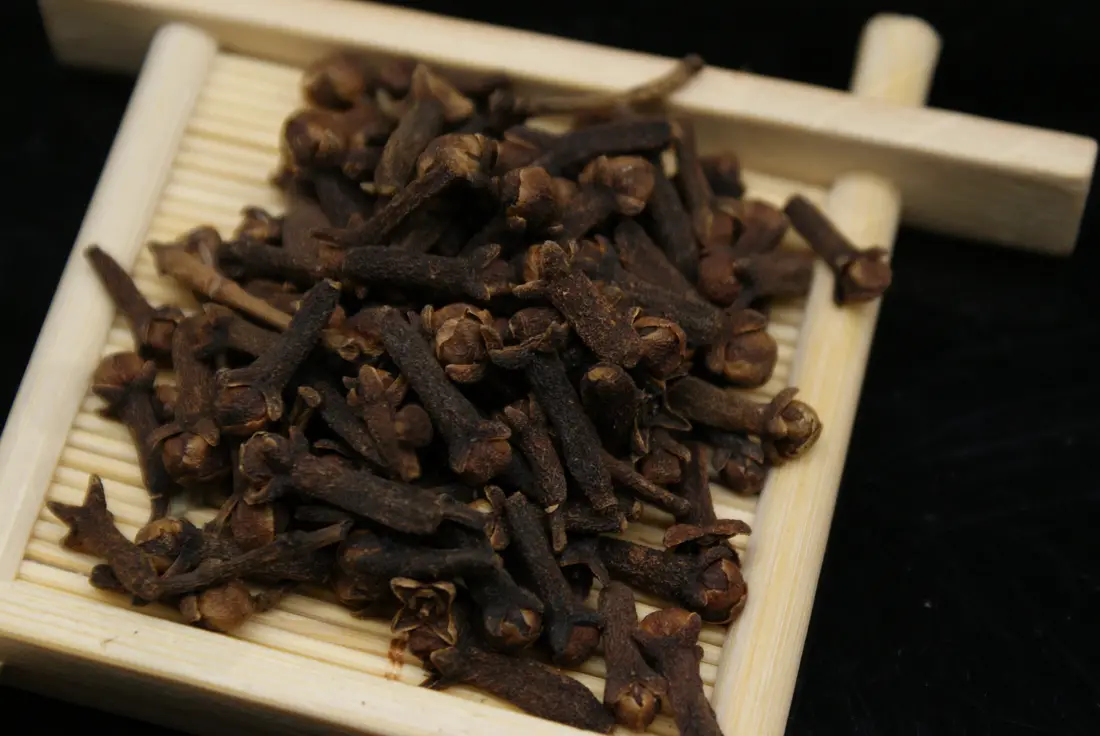
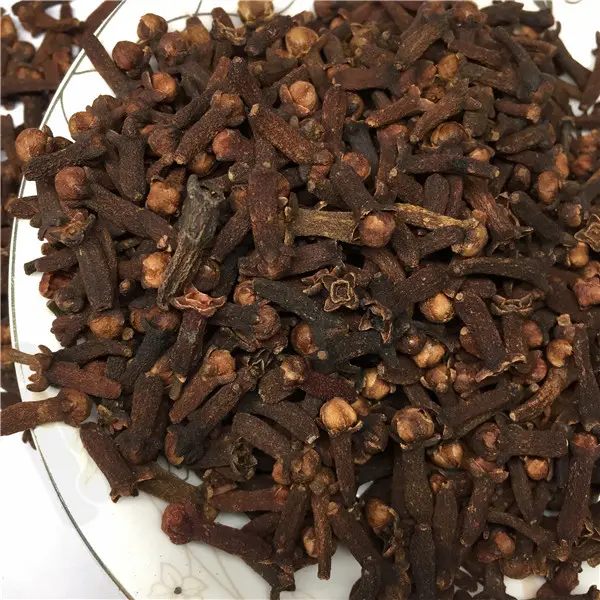
The crude drug is slightly rod-shaped, 1–2 cm long. The corolla is spherical, 0.3–0.5 cm in diameter, with 4 imbricate petals, brownish or brownish-yellow; inside are stamens and style, and many yellow granular anthers are visible after crushing. The calyx tube is cylindrical, slightly flattened, sometimes curved, 0.7–1.4 cm long, 0.3–0.6 cm in diameter, reddish-brown or brownish, with 4 triangular sepals at the top arranged crosswise. It is firm and oily. The odor is strongly aromatic; the taste is pungent and numbing.
Properties and actions性味与功效
ActionsWarm the middle and direct qi downward · Tonify the kidney and assist yang
IndicationsUsed for deficiency-cold of the spleen and stomach, hiccups and vomiting, poor appetite with vomiting and diarrhea, cold pain in the epigastrium and abdomen, and kidney deficiency with impotence.
Dosage1–3 g, taken orally or applied topically as a powder.
CautionContraindicated in yin deficiency with heat and in deficiency-cold of the spleen and stomach with caution; use only under professional guidance.
Processing炮制
RawRemove impurities and sieve out dust. Crush before use.
Modern research现代药理
Antiplatelet and cardiovascular effectsClove inhibits platelet aggregation, has anticoagulant and antithrombotic effects, exerts negative inotropic action on the heart, gradually slows heart rate, and lowers blood pressure.
Gastrointestinal effectsClove promotes gastric acid secretion and gastric mucosal regeneration, inhibits gastric ulcers, and has antidiarrheal and bile secretion-promoting effects.
Antimicrobial effectsClove has antibacterial, antifungal, and antiviral effects.
Anthelmintic effectClove has a relatively strong anthelmintic effect.
Respiratory effectsClove directly relaxes isolated tracheal smooth muscle, inhibits the release of SRS-A from lung tissue and antagonizes SRS-A, and has antitussive, expectorant, and antiasthmatic effects.
Sedative and analgesic effectsClove has sedative, analgesic, and anticonvulsant effects.
Enzyme inhibitionClove extract weakly inhibits takadiastase.
Classical records历代本草
Li Shizhen's <i>Bencao Gangmu</i> records the use of clove in pediatric pox and also warns against indiscriminate use of strongly pungent-heating agents without considering qi, blood, deficiency, excess, cold, heat, and meridians. <i>Bencao Mengquan</i> praises its ability to warm the middle and expel cold.《本草纲目》:宋太医陈文中治小儿痘疮不光泽,不起发,或胀或泻,或渴或气促,表里俱虚之证。并用木香散、异功散功效,倍加木香宫桂,甚者丁香三、五十枚,宫桂一、二钱,亦有服之而愈者。此丹溪所谓立方以时,必运气在司水司天之际,又值严冬郁遏阳气,均用大辛热之剂发之者也。若不分气血、虚实、寒热、经络,一概骤用,其杀人也必矣。《抱朴子》云:凡有病在目者,以丁香、黄连、乳汁煎注之,皆愈。此得辛散苦降养阴之妙。陈承言不可点眼者,盖不知此理也。
治虚哕,小儿吐者,痘疮胃虚,灰白不发。
《本草蒙筌》:味辛,气温。属火,有金,纯阳。无毒。形有大小,名列雌雄。雄丁香如钉子长,雌丁香似枣核大。凡资主治,母者用多。专入肾胃二经,又走太阴肺脏。诸香能发,凡气善驱。口香气,奔豚气殊功,且止噫忒气逆;翻胃呕,霍乱呕立效,兼除心腹冷疼。暖腰膝壮阳,杀疳蛪坚齿。治奶绽裂,消虫毒胀膨。细末研成,犹有两治。妇人阴户常冷,纱囊盛纳阴内,旋使转温;老人拔去白须,姜汁和涂孔中,重生即黑。
《开宝本草》:味辛,温,无毒。主温脾胃,止霍乱壅胀,风毒诸肿,齿疳匿,能发诸香。其根疗风热毒肿。
《海药本草》:主风疳,骨槽劳臭,治气,乌髭发,杀虫,疗五痔,辟恶去邪,治奶头花,止五色毒痢,正气,止心腹痛。
《药性论》:臣,能主冷气腹痛。
《药性解》:丁香,味甘香,性温,无毒,入肺、脾、胃、肾四经。主口气腹痛、霍乱反胃、鬼疰蛊毒及肾气奔豚气,壮阳暖腰膝,疗冷气,杀酒毒,消痃癖,除冷劳。有大如山茱萸者,名母丁香,气味尤佳。
按:丁香辛温走肺部,甘温走脾胃,肾者土所制而金所生也,宜咸入之。果犯寒疴,投之辄应,倘因火症,召祸匪轻。
Folklore本草传说
Legend has it that an official suffering from bad breath was once given clove to hold in his mouth by the emperor, but he mistook it for poison. Later, it was verified as clove, a fragrant herb for oral freshness. Another tale tells of a beggar who prescribed a sachet of clove and other fragrant herbs to cure an emperor's indigestion from raw and cold food. These stories illustrate the traditional use of clove and other aromatic herbs for therapy.
Culinary use民间药膳
Clove DuckClove 5 g, cinnamon 5 g, Alpinia katsumadai 5 g each, 1 duck (about 1000 g), appropriate amounts of scallion, ginger, salt, braising sauce, rock sugar, sesame oil, and other seasonings.
Slaughter the duck, remove feathers and viscera, and wash clean. Decoct clove, cinnamon, and Alpinia katsumadai twice in water, 20 minutes each time, to obtain 3000 ml of decoction. Place the decoction, duck, scallion, and ginger in a pot; bring to a boil over high heat, then simmer over low heat until six-tenths cooked; remove and cool. Put the duck into a braising sauce pot and simmer over low heat until cooked; remove. Leave the braising sauce in the pot, add rock sugar, and heat over low heat until the sugar melts. Add the duck, roll it while ladling the sauce over it until the duck is shiny red; remove and evenly coat with sesame oil. Cut into pieces and serve with meals in the morning and evening.
Warm the middle and harmonize the stomach, warm the kidney and assist yang.
Cultivation and authentication栽培与鉴别
2 cultivation notes and 9 authentication articles exist for this herb. They are long-form field material and are published in Chinese only.
Read them in Chinese →