Yin Chen (Artemisia capillaris herb)Materia Medica

Yin Chen (Artemisia capillaris herb)

Yin Chen
ARTEMISIAE SCOPARIAE HERBA
Nature and flavorBitter, pungent, slightly cold. Meridian tropism: spleen, stomach, liver, gallbladder.
Meridians enteredSpleen, stomach, liver, gallbladder.
Dosage6–15 g; appropriate amount for external use, decoct and wash.
Reference market price¥8.5 / kgBozhou market · spec common grade · 辽宁 · snapshot 2026-11-21

Yin Chen is a heat-clearing, dampness-draining herb used for jaundice, damp-heat, and eczema.

Source药物来源

This product is the dried aerial part of Artemisia scoparia Waldst. et Kit. or Artemisia capillaris Thunb. (family Asteraceae). Name origin: "This herb resembles Qinghao but is not fragrant; the back of the leaves is white, it does not die in winter, and in spring new shoots grow from the old ones, hence the name Yin Chen (cause of old)." ("Bencao Bian Du").

Identification性状特征

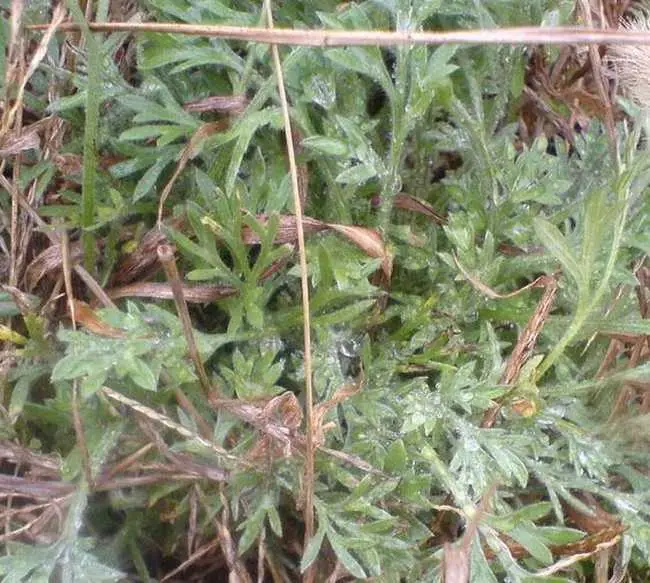
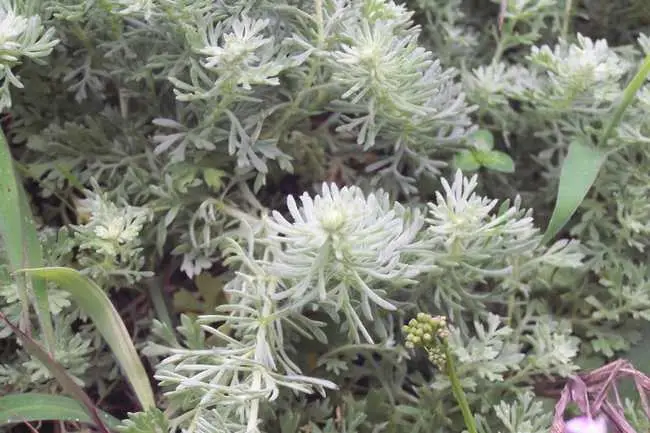
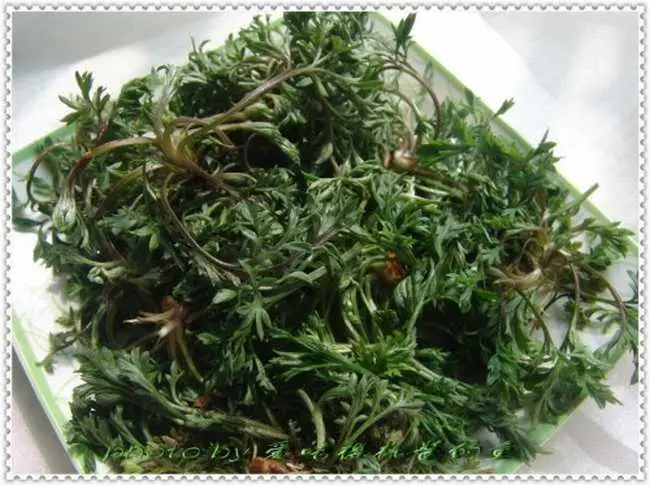
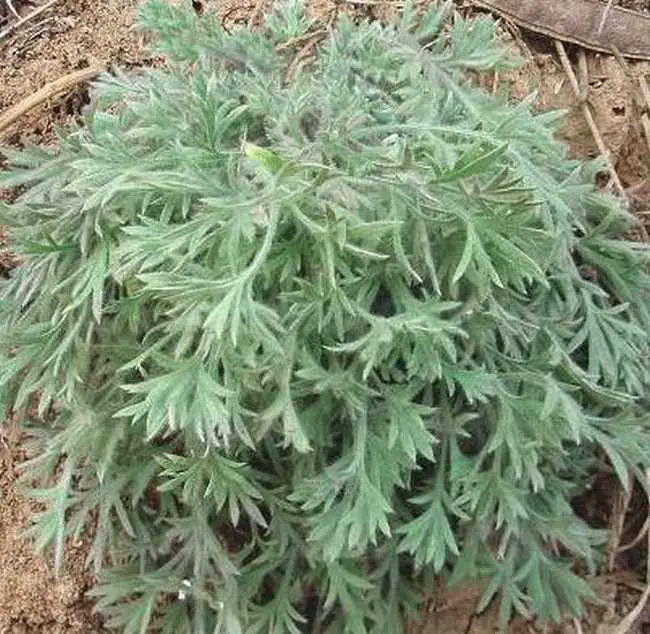
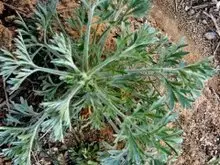
Mian Yin Chen: Mostly curled into masses, grayish-white or grayish-green, densely covered with white hairs, soft like floss. Stems slender, 1.5–2.5 cm long, 0.1–0.2 cm in diameter; longitudinal striations visible after removing white hairs; brittle, easily broken. Leaves petiolate; when flattened, blades 1–3-pinnatisect, 1–3 cm long, about 1 cm wide; ultimate segments ovate or slightly oblanceolate to linear, apex acute. Odor faintly fragrant; taste slightly bitter. Hua Yin Chen: Stems cylindrical, much branched, 30–100 cm long, 2–8 mm in diameter; surface pale purple or purple, with longitudinal striations, covered with short soft hairs; light, brittle, fracture nearly white. Leaves dense or caducous; lower leaves 2–3-pinnatipartite, segments linear or narrowly linear, both surfaces densely covered with white soft hairs; cauline leaves 1–2-pinnatisect, base amplexicaul, segments filiform. Capitula ovate, mostly aggregated in panicles, 1.2–1.5 mm long, 1–1.2 mm in diameter, shortly pedunculate; involucral bracts 3–4-seriate, ovate, 3-lobed; outer female flowers 6–10, up to 15; inner bisexual flowers 2–10. Achenes oblong, yellow-brown. Odor aromatic; taste slightly bitter.

Properties and actions性味与功效
Actions
Clear heat and drain dampness · Benefit the gallbladder and relieve jaundice
Indications
Jaundice with scanty urine, damp-warm and summer-damp, eczema with itching.
Dosage
6–15 g; appropriate amount for external use, decoct and fumigate-wash.
Caution
Contraindicated in jaundice due to blood stasis. Use with caution in cases of deficiency-cold of the spleen and stomach.
Processing炮制
Yin Chen
Remove residual roots and impurities; rub or cut into pieces. For Mian Yin Chen, sift out dust.
Mian Yin Chen
Remove residual roots, old stems, and impurities; sift out dust.
Modern research现代药理
Choleretic and hepatoprotective effects
Coumarin, chlorogenic acid, caffeic acid, p-hydroxyacetophenone, and methylcapillarisin in Yin Chen have choleretic effects; the decoction has a liver-protective effect.
Hypotensive and lipid-lowering effects
Coumarin and p-hydroxyacetophenone have hypotensive effects; the decoction has a lipid-lowering effect. Yin Chen also has anticoagulant and fibrinolytic-promoting effects.
Diuretic effect
The volatile oil, coumarin, chlorogenic acid, and caffeic acid in Yin Chen all have diuretic effects.
Antimicrobial and antiviral effects
In vitro experiments show that the decoction inhibits various bacilli, cocci, and pathogenic fungi (human and bovine types), and has some inhibitory effect on influenza virus, various leptospirae, and pig roundworms.
Antipyretic effect
The volatile oil substances in Yin Chen have a significant antipyretic effect.
Antiasthmatic and other effects
Coumarin components have an antiasthmatic effect; p-hydroxyacetophenone indirectly promotes the absorption of griseofulvin. The refined infusion of Yin Chen has an excitatory effect on animal uteri.
Classical records历代本草
The Shennong Bencao Jing records it as bitter and neutral, mainly treating wind-damp-heat pathogens and heat-accumulation jaundice. The Bencao Mengquan states it enters the foot Taiyang meridian and is a sovereign herb for jaundice, often combined with Zhizi and Fuzi to differentiate yang-heat and yin-cold. The Bencao Jingshu explains that its bitter-cold nature drains dampness and clears heat, so damp-heat-related symptoms resolve.
《神农本草经》:味苦,平。主治风寒湿热邪气,热结黄疸。 《本草蒙筌》:味苦、辛,气平,微寒。阴中微阳。无毒。秋后叶落,茎梗不凋。至春复发旧枝,故因名茵陈蒿也。所行经络,惟足太阳。专治疸证发黄,入剂使为君主。佐栀子、附子,分阳热、阴寒。阳黄热多,有湿有燥。湿黄加栀子大黄汤服,燥黄加栀子橘皮汤煎。如苗涝则湿黄,苗旱则燥黄。湿则泻之,燥则润之意也。阴黄寒多,只有一证,须加附子,共剂成功。解伤寒大热,仍除退瘴疟。风热悉逐,行滞止痛,宽膈化痰。 《开宝本草》:味苦,平、微寒,无毒。通身发黄,小便不利,除头热,去伏瘕。 《名医别录》:微寒,无毒。主治通身发黄,小便不利,除头热,去伏瘕。久服面白悦。 《本草拾遗》:本功外,通关节,去滞热,伤寒用之。虽蒿类,苗细经冬不死,更因由苗而生,欲名因陈。后加蒿字也。 《本草经疏》:茵陈蒿感天地苦寒之味,而兼得春之生气以生者也。其味苦平,微寒无毒。故主风湿寒热邪气,热结黄疸,通身发黄,小便不利,及头热,皆湿热在阳明、太阴所生病也。苦寒能燥湿除热,湿热去则诸证自退矣。 简误:蓄血发黄者,禁用。
Folklore本草传说

Legend has it that Hua Tuo once met a farmer with severe jaundice who could not afford treatment. Months later, the farmer recovered after eating wild herbs, including Yin Chen. Hua Tuo and his disciples then spent three years testing wild herbs and found that Yin Chen could treat jaundice, but only the tender leaves in March and April were effective; by May and June, the herb was useless as fuel. Hua Tuo remarked that there is no end to learning and that many folk remedies remain unknown.
Culinary use民间药膳
Yin Chen Congee
Yin Chen 30–50 g, japonica rice 100 g, appropriate amount of sugar or salt.
Wash Yin Chen, put in a clay pot with 200 ml water, decoct to 100 ml, remove residue; add rice and 600 ml water, cook until congee is done, season with salt or sugar. Take warm twice daily. 7–10 days as one course.
Clears heat and removes dampness, benefits the gallbladder and relieves jaundice.
Audio and video语音与视频
Narration · Chinese · 7:34
Latin name · pronunciation
Narration and video are shared by all language versions and are in Chinese; the images and footage themselves are language-independent.
Photographs药材图片
Yin Chen (Artemisia capillaris herb)
Cultivation and authentication栽培与鉴别

1 cultivation notes and 1 authentication articles exist for this herb. They are long-form field material and are published in Chinese only.

Read them in Chinese →

Compiled from public Chinese materia medica sources for study and reference. Not medical advice.
Chinese version · All herbs