Japanese honeysuckle flower (Jin Yin Hua)Materia Medica

Japanese honeysuckle flower (Jin Yin Hua)

Jin Yin Hua
LONICERAE JAPONICAE FLOS
Nature and flavorSweet, cold. Enters Lung, Heart, Stomach meridians.
Meridians enteredLung, Heart, Stomach
Dosage6–15 g
Reference market price¥82 / kgBozhou market · spec common grade · Shandong · snapshot 2026-11-21

Japanese honeysuckle flower is a key herb for clearing heat and resolving toxicity, widely used in wind-heat colds and skin infections.

Source药物来源

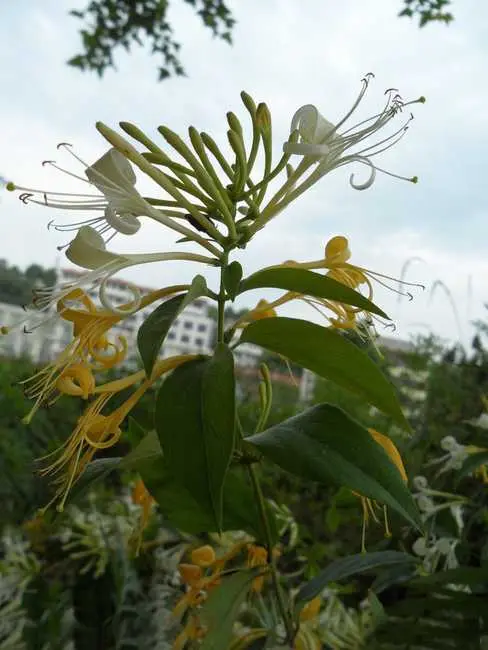
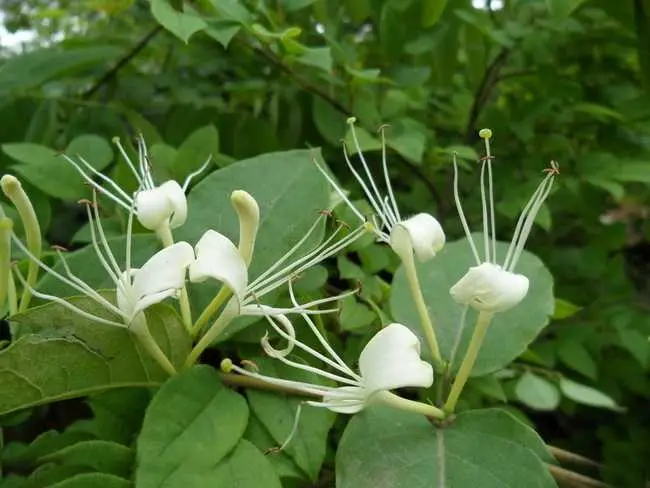
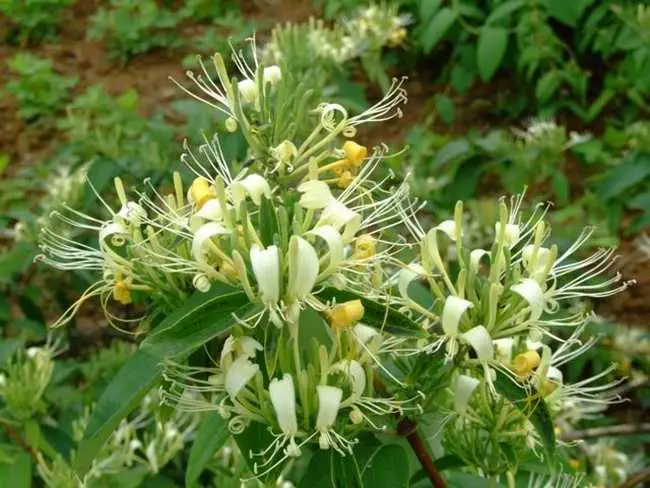
The dried flower buds or flowers just opening of Lonicera japonica Thunb. (family Caprifoliaceae).

Identification性状特征

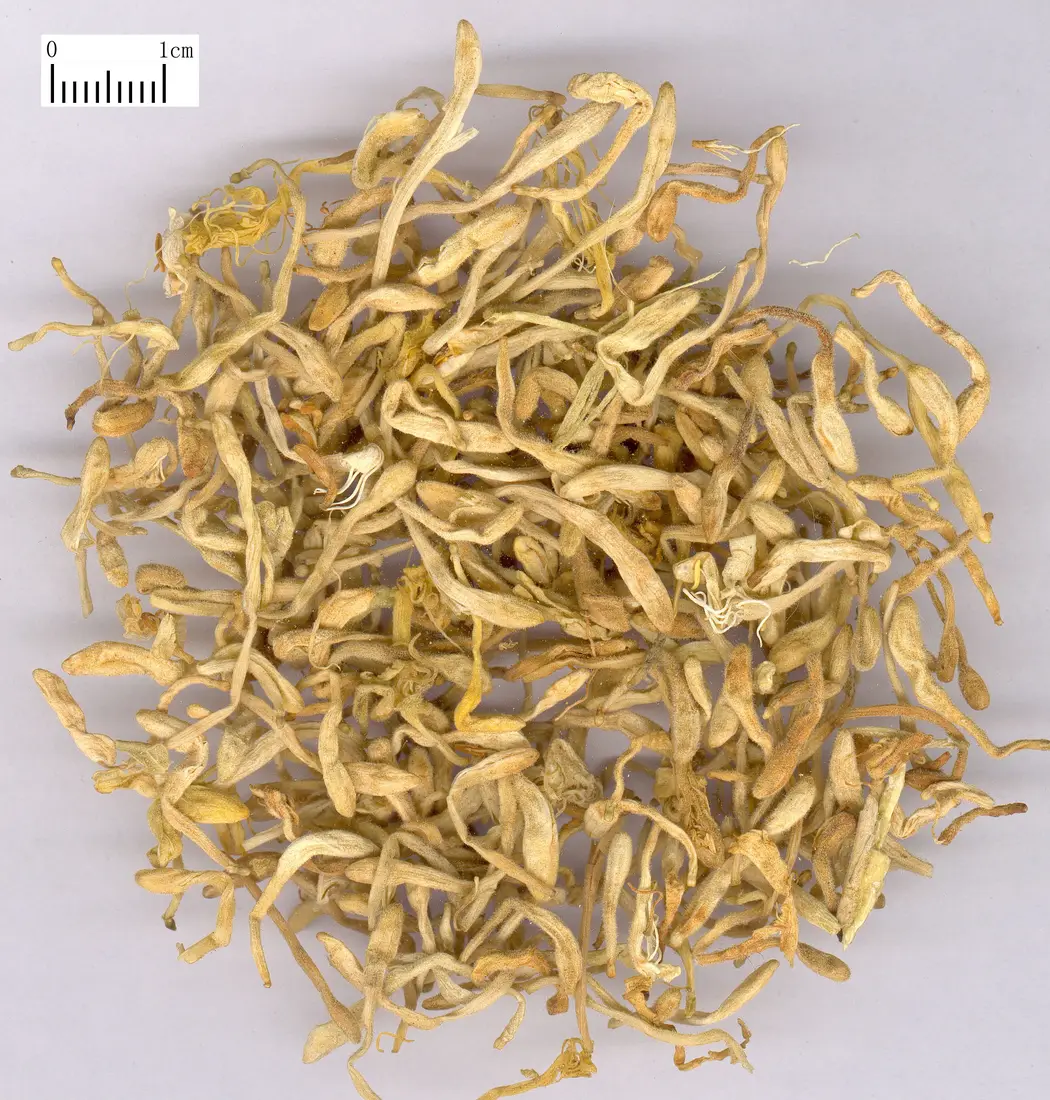
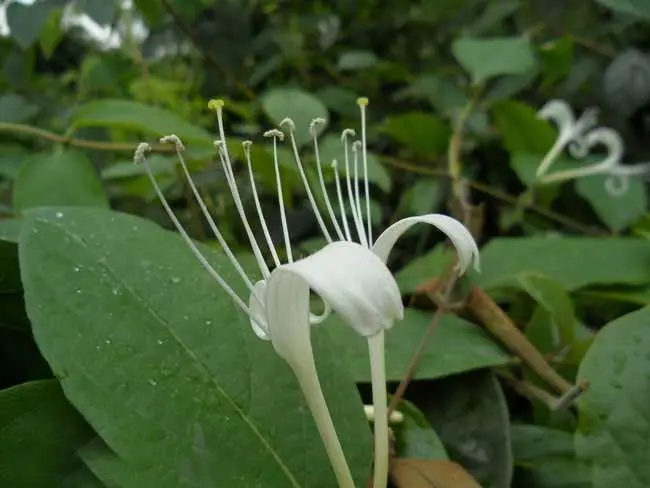
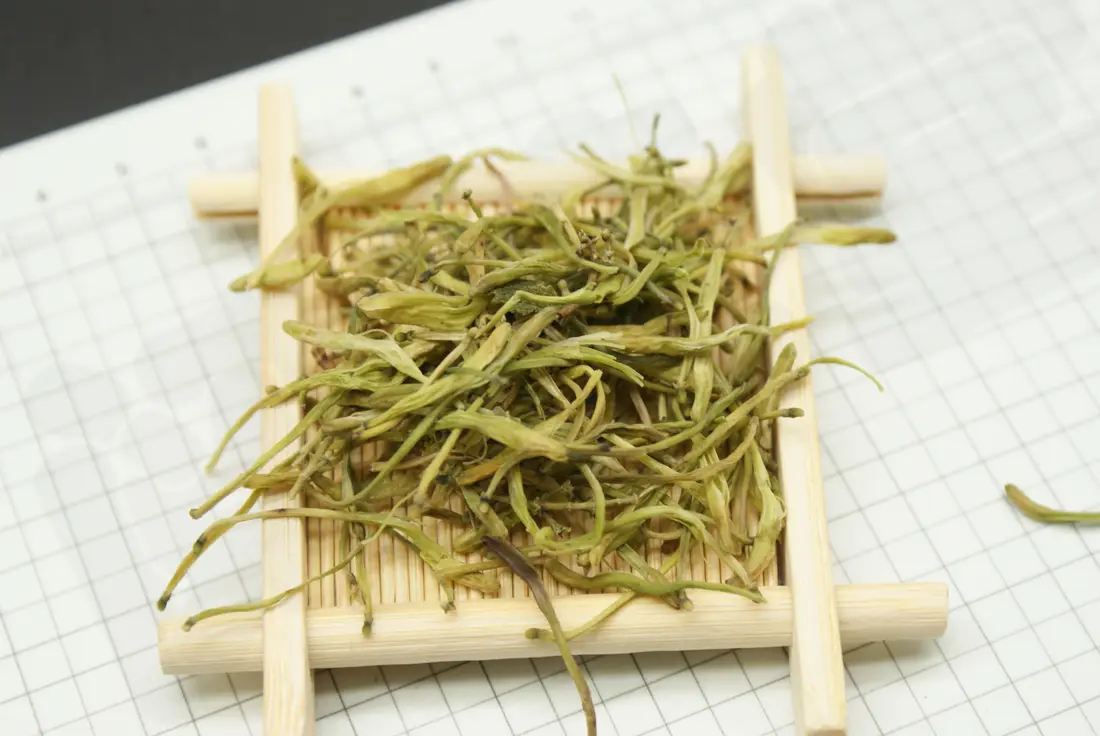
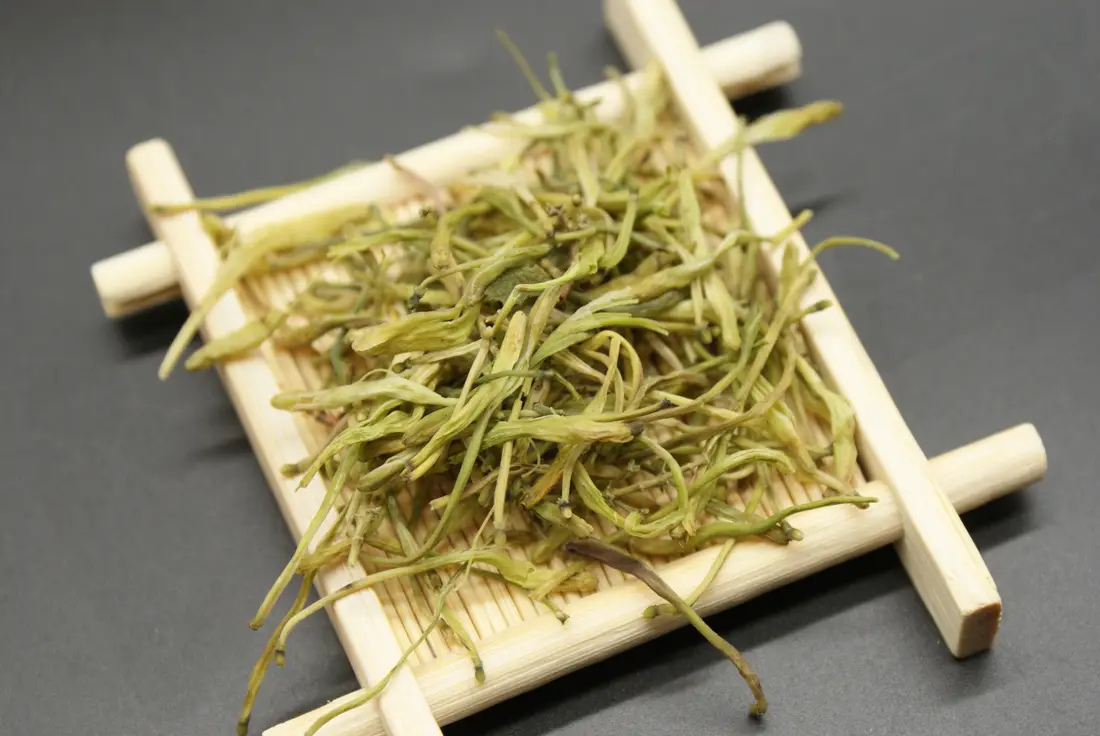
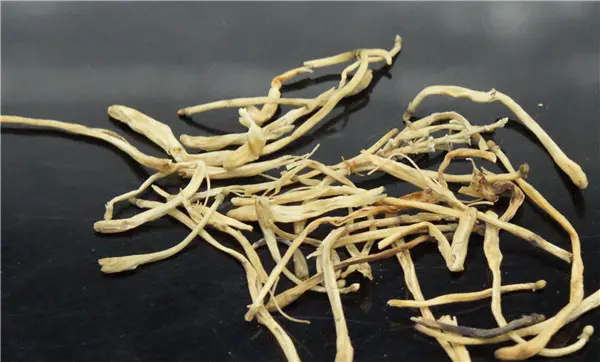
The drug is rod-shaped, thick at the upper end and thin at the lower end, slightly curved, 2–3 cm long, about 3 mm in diameter at the upper part and about 1.5 mm at the lower part. The surface is yellow-white or green-white (darkening with prolonged storage), densely covered with short pubescence. Occasionally leaf-like bracts are present. The calyx is green, with 5 lobes at the apex, the lobes hairy, about 2 mm long. In open flowers, the corolla is tubular with two lips at the apex; stamens 5, attached to the tube wall, yellow; pistil 1, ovary glabrous. Odor fragrant, taste weak and slightly bitter.

Properties and actions性味与功效
Actions
Clear heat and resolve toxicity · Disperse wind-heat
Indications
Used for carbuncles, swellings, boils and sores, throat impediment (acute sore throat), erysipelas, bloody dysentery due to heat-toxin, common cold of the wind-heat type, and warm disease with fever.
Dosage
6–15 g, decocted and taken orally.
Caution
Contraindicated in deficiency-cold of the spleen and stomach; use with caution in yin deficiency.
Processing炮制
Japanese honeysuckle flower (raw)
Remove impurities and sieve out sand and soil.
Honey-fried Japanese honeysuckle flower
Take clean flowers, add refined honey diluted with a small amount of boiling water, mix well, cover and moisten, then stir-fry over gentle heat until no longer sticky and a burnt honey aroma appears. Remove and cool.
Japanese honeysuckle flower charcoal
Take clean flowers, stir-fry over medium heat until charred brown, extinguish sparks by covering or spraying with water, remove and spread out to cool.
Modern research现代药理
Antimicrobial effect
The flowers have activity against pathogenic microorganisms, inhibiting various bacteria, fungi, and viruses. The decoction inhibits Leptospira; the injection inhibits Pseudomonas aeruginosa; the extract inhibits Streptococcus mutans and Actinomyces viscosus; the decoction markedly inhibits Coxsackie B5 virus in cultured cells. The main active constituents are chlorogenic acid compounds.
Anti-inflammatory, antipyretic, anti-allergic effects
The extract inhibits rat paw edema induced by carrageenan and egg white.
Immune-enhancing effect
The decoction promotes phagocytosis by albumin; intraperitoneal injection of the injection also markedly promotes phagocytosis by inflammatory cells in mice.
Cytotoxic and gastrointestinal effects
The extract has cytotoxic activity; oral administration stimulates gastrointestinal motility and increases gastric juice and bile secretion. In addition, chlorogenic acid slightly enhances the pressor effect of adrenaline and noradrenaline in cats and rats.
Classical records历代本草
The Bencao Gangmu (Compendium of Materia Medica) notes that the stem, leaf, and flower of Lonicera have similar functions; it was traditionally regarded as a key herb for dispersing swelling, resolving toxicity, and treating sores, and for wind and dysentery. Chen Ziming's Waike Jingyao records that Lonicera wine treats carbuncles and back abscesses with remarkable effect.
《本草纲目》:忍冬,茎叶同花,功用皆同。昔人称其治风除胀,解痢逐尸的要药,而后世不复知用。后世称其消肿散毒治疮为要药。而昔人并未言及。乃知古今之理,万变不同,未可一辙论也。陈自明《外科精要》云:忍冬酒,治痈疽发背,初发便当服此,其效甚奇,胜于红内消。洪迈沈括诸方所载甚详。 一切尸注鬼击,一切风湿气,及诸肿毒。痈疽疥癣,杨梅诸恶疮,散热解毒。 昔人称其治风除胀,解痢逐尸为要药,而后世不复知用。后世称其消肿散治疮要药,而昔人并未言及。 《本草蒙筌》:味甘,气温。无毒。凌冬不凋,名由此得。蔓延树上,藤多左缠。故又名左缠藤。专治痈疽,诚为要药。未成则散,甚多拔毒之功;已成则溃,大有回生之力。或捣汁搀酒顿饮,或研烂拦酒厚敷。或和别药煎汤,随证轻重取效。《别说》又云:大治五种飞尸,倘被鬼击作痛亦可服也。血痢水痢兼治,风气湿气咸除。 谟按:患人生痈发毒,固未肯遗。 《开宝本草》:味甘,温,无毒。主寒热身肿。 《名医别录》:味甘,温,无毒。主治寒热、身肿。 《本草拾遗》:主热毒,血痢,水痢,浓煎服之。
Folklore本草传说

Legend tells of twin sisters, Jin Hua and Yin Hua, by the Dingxiang River, who saved a woman covered in wounds. The woman later planted a vine on their graves, which bloomed white then yellow—hence the name Jin Yin Hua (gold and silver flower). Because both gold and silver are treasures, it is also called Er Bao Hua. In winter the old leaves fall but new leaves sprout, so it is called Ren Dong (winter-resistant).
Culinary use民间药膳
Immortal Chrysanthemum Tea
Agrimony 30 g, chrysanthemum 15 g, Japanese honeysuckle flower 15 g, licorice 6 g, quartz 24 g, white sugar 30 g
1. Wash the agrimony, chrysanthemum, honeysuckle, licorice, and quartz, place in an aluminum pot. 2. Add water, bring to a boil over high heat, then simmer for 20 minutes. Strain, add sugar, and stir well.
Cogongrass Root and Honeysuckle Tea
Fresh cogongrass root 40 g, Japanese honeysuckle flower 20 g
Add 1000 ml cold water to a pot, add both herbs, bring to a boil, strain, add 20 g rock sugar to taste. Take one dose daily, drink frequently.
This formula clears heat and resolves toxicity, soothes the throat, and is effective for viral colds, acute and chronic tonsillitis, and periodontitis.
Anti-inflammatory Tea
Dandelion 400 g, Japanese honeysuckle flower 400 g, mint 200 g, Sterculia lychnophora 50 g, raw licorice 100 g
Grind dandelion and honeysuckle into fine powder; use half and sift. Decoct the remaining dandelion and honeysuckle twice, combine and filter the decoction, concentrate to a syrup, mix with starch paste (50 g starch in water), boil to a paste, then mix with the reserved powder to form a soft mass. Granulate through a sieve and dry. Take 7–10 g three times daily, brewed with boiling water as tea.
Clears heat and resolves toxicity, relieves inflammation and pain.
Dandelion and Honeysuckle Wine
Dandelion 15 g, Japanese honeysuckle flower 15 g, yellow wine 600 ml
Decoct the herbs in yellow wine until reduced by half, strain. Take the liquid in 2 portions, warm, after breakfast and dinner. Apply the residue externally to the affected area.
Clears heat, resolves toxicity, reduces swelling.
Audio and video语音与视频
Narration · Chinese · 7:34
Latin name · pronunciation
Narration and video are shared by all language versions and are in Chinese; the images and footage themselves are language-independent.
Photographs药材图片
Japanese honeysuckle flower (Jin Yin Hua)
Cultivation and authentication栽培与鉴别

66 cultivation notes and 14 authentication articles exist for this herb. They are long-form field material and are published in Chinese only.

Read them in Chinese →

Compiled from public Chinese materia medica sources for study and reference. Not medical advice.
Chinese version · All herbs