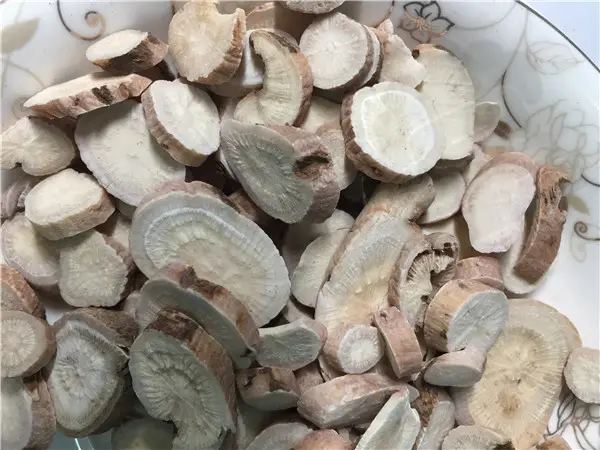
White Peony Root (Bai Shao)
Bai Shao
PAEONIAE RADIX ALBA
Nature and flavorBitter, sour, slightly cold; enters Liver and Spleen meridians.
Meridians enteredLiver, Spleen
Dosage6–15 g
Reference market price¥25 / kgBozhou market · spec common grade · 安徽 · snapshot 2026-11-21
White Peony Root, the dried root of Paeonia lactiflora, is a key herb for nourishing blood and easing pain.
Source药物来源
The dried root of Paeonia lactiflora Pall. (Ranunculaceae).
Identification性状特征
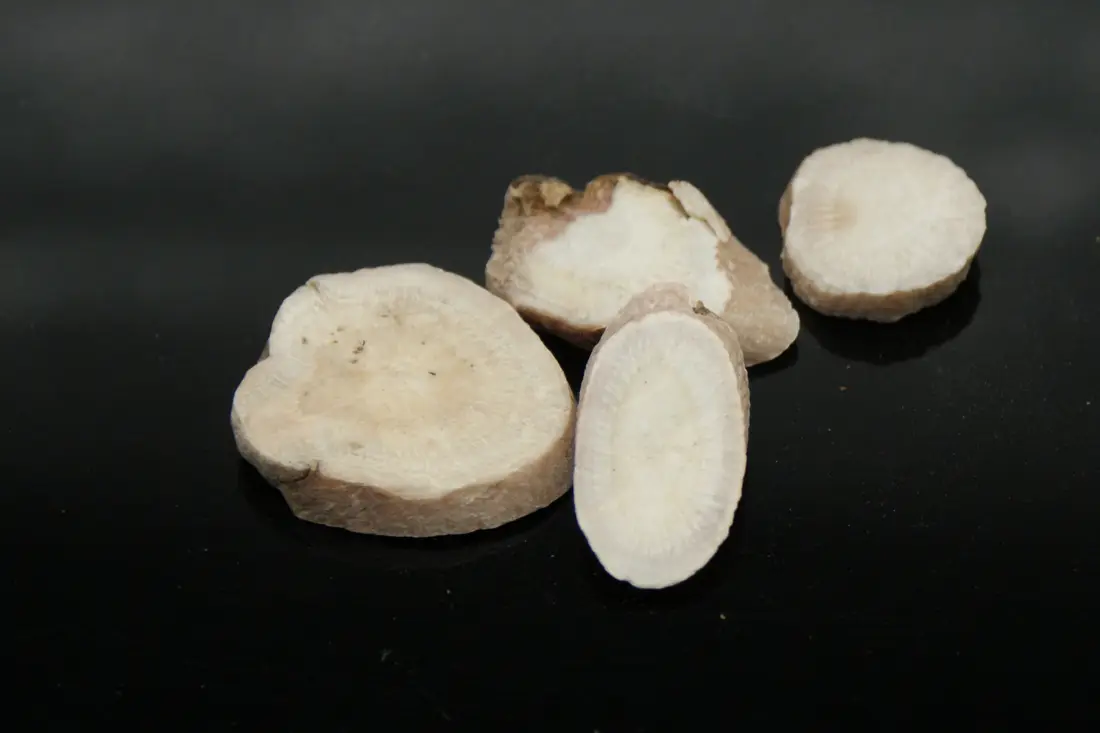
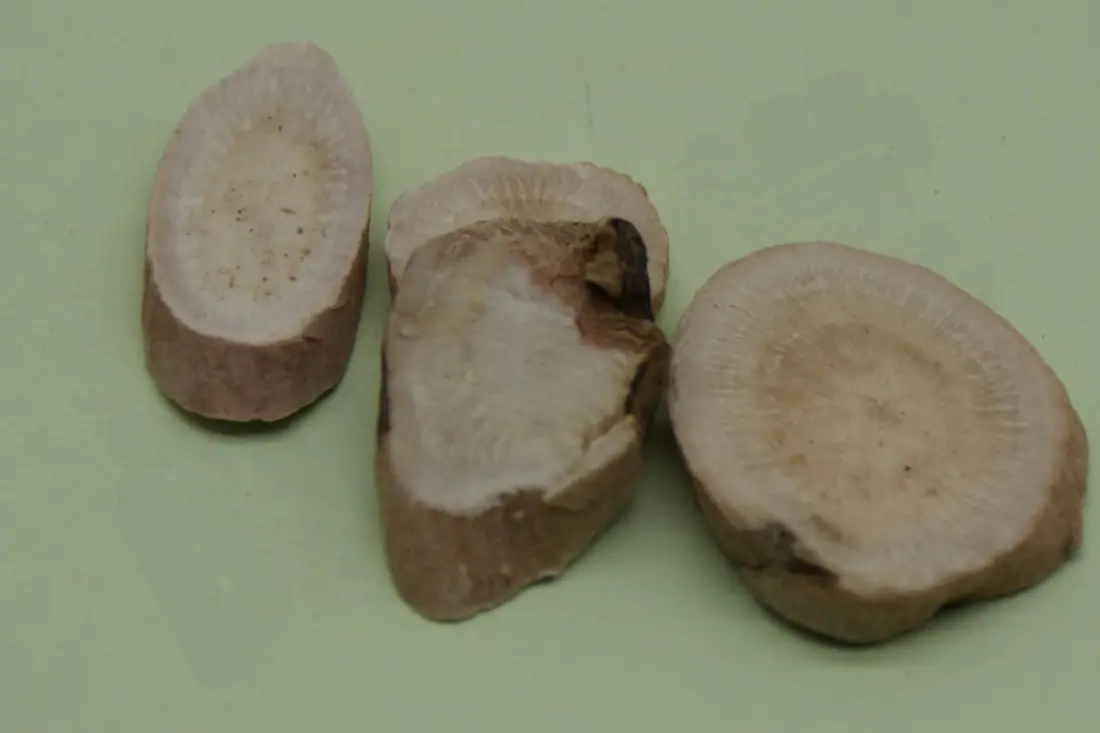
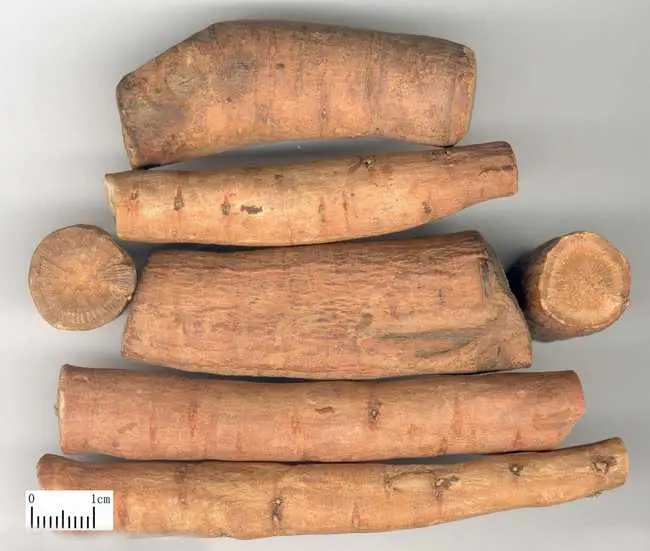
Cylindrical, straight or slightly curved, both ends flat-cut, 5–18 cm long, 1–2.5 cm in diameter. Surface whitish or pale brownish-red, smooth or with longitudinal wrinkles and rootlet scars, occasionally with residual brown outer bark. Solid, hard to break; fracture relatively flat, whitish or slightly brownish-red, cambium ring distinct, rays radiate. Odor slight; taste slightly bitter and sour.
Properties and actions性味与功效
Actions
Nourish blood and regulate menstruation · Astringe yin and stop sweating · Soothe the liver and relieve pain · Pacify liver yang
Indications
Used for blood-deficiency sallow complexion, irregular menstruation, spontaneous sweating, night sweating, hypochondriac pain, abdominal pain, cramps of limbs, headache and dizziness.
Dosage
6–15 g.
Caution
Slightly cold in nature; use with caution in cases of deficiency-cold of the spleen and stomach. Contraindicated with Veratrum (Li Lu).
Processing炮制
Bai Shao (raw)
Remove impurities, wash, soften thoroughly, slice thin, dry. Sift out fragments.
Wine-processed Bai Shao
Mix clean slices with yellow rice wine (10 kg per 100 kg slices), moisten until absorbed, stir-fry over gentle heat until dry, cool.
Stir-fried Bai Shao
Stir-fry clean slices over gentle heat until surface slightly yellow, cool.
Vinegar-processed Bai Shao
Mix clean slices with vinegar (15 kg per 100 kg slices), moisten, stir-fry over gentle heat until dry, cool.
Earth-processed Bai Shao
Stir-fry with furnace earth powder (20 kg per 100 kg slices) over medium heat until surface coated with earth color and slightly scorched yellow, sift out earth, cool.
Modern research现代药理
Immunomodulation
Regulates the immune system.
Sedative, anticonvulsant, analgesic, antipyretic
Has sedative, anticonvulsant, analgesic, and hypothermic effects; total glucosides enhance learning and short-term memory in mice.
Hepatoprotective and gastric secretion inhibition
Protects the liver and inhibits gastric acid secretion.
Cardiovascular effects
Increases myocardial nutritional blood flow, elevates blood pressure, and enhances heart sounds.
Antiplatelet and antithrombotic
Inhibits platelet aggregation and thrombus formation.
Anti-inflammatory
Inhibits granuloma proliferation.
Adaptogenic
Enhances hypoxia tolerance, heat tolerance, and has tonic and strengthening effects.
Antimicrobial and antiviral
Has antibacterial and direct antiviral effects.
Antispasmodic and anti-early pregnancy
Has antispasmodic and anti-early pregnancy effects.
Classical records历代本草
The Shennong Bencao Jing records Bai Shao as bitter and neutral, treating abdominal pain from pathogenic qi, blood stasis, and pain. The Bencao Mengquan notes its sour-bitter, slightly cold nature, entering Lung and Spleen, and describes differences between white and red peony. The Bencao Gangmu (Kaibao Bencao) adds actions of promoting blood circulation and reducing swelling.
《神农本草经》:味苦,平,主治邪气腹痛,除血痹,破坚积,寒热,疝瘕,止痛,利小便,益气。
《本草蒙筌》:味苦、酸,气平、微寒。气薄味厚,可升可降,阴中之阳。有小毒。反藜芦,恶硝斛。芒硝、石斛。畏硝石、鳖甲、小蓟,使乌药、没药、雷丸。入手太阴肺经。及足太阴脾脏。赤白因异,制治亦殊。赤芍药色应南方,能泻能散,生用正宜;白芍药色应西方,能补能收,酒炒才妙。若补阴,酒浸日曝,勿见火。赤利小便去热,消痈肿破积坚,主火盛眼疼要药;白和血脉缓中,固腠理止泻痢,为血虚腹痛捷方。已后数条,惟白可用,得甘草炙为辅佐,兼主治寒热腹疼。热加黄芩,寒加肉桂。与白术同用补脾,与参芪同用益气,与川芎同用泻肝。凡妇人产后诸病,切忌煎尝,因其酸寒,恐伐生发之性故也。倘不得已要用,桂酒肉桂煎酒。渍炒少加。血虚寒人,亦禁莫服。经云:冬月减芍药,以避中寒,则可征矣。
谟按:芍药何入手足太阴也?盖酸涩者为上,为收敛停湿之剂故尔。虽主手足太阴,终不离于收降之体。又至血海而入九地之下,直抵于足厥阴焉。气味酸收,又何利小便也?盖肾主大小二便,用此益阴滋湿,故小便得通。仲景治伤寒每多用者,抑非以其主寒热利小便乎?一说:芍药本非通利之药,因其能停诸湿而益津液,故小便自利,于义亦通。又何谓缓中也?盖损其肝者缓其中,即调血止痛之谓。丹溪云:芍药惟止血虚腹痛。然诸痛并宜辛散。引仅酸收,故致血调,血调则痛自止,岂非谓缓中耶?
《开宝本草》:味苦、酸,平、微寒,有小毒。通顺血脉,缓中,散恶血,逐贼血,去水气,利膀胱、大小肠,消痈肿,时行寒热,中恶,腹痛,腰痛。
《名医别录》:味酸,微寒,有小毒。主通顺血脉,缓中,散恶血,逐贼血,去水气,利膀胱、大小肠,消痈肿,时行寒热,中恶,腹痛,腰痛。
《药性赋》:味酸,平,性寒,有小毒。可升可降,阳也。其用有四:扶阳气大除腹痛,收阴气陡健脾经。坠其胎能逐其血,损其肝能缓其中。
《药性解》:味酸苦,性微寒,有小毒,入肝经,主怒气伤肝,胸腹中积聚,腰脐间瘀血,腹痛下痢,目疾崩漏,调经安胎。赤者专主破血利小便,除热明眼目。雷丸、乌药、没药为使,恶石斛、芒硝,畏硝石、鳖甲、小蓟,反藜芦。
按:白芍酸走肝,故能泻木中之火,因怒受伤之症,得之皆愈。积聚腹痛,虽脾之病,然往往亢而承制,土极似木之象也。经曰:治病必求于本。今治之以肝,正其本也。目疾与妇人诸证,皆血之病,得之以伐肝邪,则血自生而病自己,故四物汤用之,亦以妇人多气也,今竟称其补血之效而忘其用,可耶?新产后宜酌用之,恐酸寒伐生生之气也。血虚者煨用,痛痢者炒用。
Culinary use民间药膳
Cooked Beans with Herbs
Processed fleeceflower root 24g, goji berry 24g, raw rehmannia 12g, prepared rehmannia 12g, angelica 12g, stir-fried eucommia 12g, achyranthes 12g, chrysanthemum 3g, licorice 3g, ligusticum 3g, tangerine peel 3g, atractylodes 3g, white peony 3g, moutan 3g, astragalus 6g, salt 18g, black beans 500g.
Decoct all herbs with black beans until cooked, then sun-dry. Remove herbs and eat beans as snack, about 30–50g daily.
Darkens hair, strengthens teeth, and brightens eyes. Suitable for blood-deficiency premature graying, dizziness, palpitations, and pale complexion.
Carp Soup
Carp 1 (500g), atractylodes 15g, ginger 9g, white peony 9g, angelica 9g, poria 12g.
Clean carp. Chop the five herbs, decoct to extract juice, remove dregs, cook carp in the juice, add seasoning when done. Eat fish and drink soup, divided into 3–5 servings within a day.
Strengthens spleen and nourishes blood, promotes urination and reduces weight. Suitable for obesity with difficult urination, dizziness, and edema.
Ten-Ingredient Great Tonifying Soup
Ginseng 10g, astragalus 10g, atractylodes 10g, poria 10g, prepared rehmannia 10g, white peony 10g, angelica 5g, cinnamon 5g, ligusticum 3g, licorice 3g, jujube 12 pieces, ginger 20g, cuttlefish 250g, fat hen 250g, old duck 250g, pork stomach 250g, pork knuckle 250g, pork ribs 500g, winter bamboo shoots 50g, mushrooms 50g, peanuts 50g, scallion 50g, seasonings to taste.
Place herbs in a cloth bag. Clean meats and cut into pieces. Put all ingredients in a pot with water, bring to a boil, then simmer until meats are tender. Add rice wine, Sichuan pepper, salt, etc. Remove meats, cut into strips, return to soup, remove herb bag, season with MSG. Serve meat and soup, one small bowl each morning and evening. After finishing, repeat every 5 days.
Warms and tonifies qi and blood.
White Peony and Angelica Honey Drink
White peony 20g, angelica 5g, processed fleeceflower root 5g, honey 20g.
Decoct the three herbs in water for 30 minutes, strain, and when warm add honey, mix well.
Nourishes blood and qi, benefits essence and promotes hair growth.
Ten-Ingredient Fish Soup
Ginseng, cinnamon, ligusticum, prepared rehmannia, poria, atractylodes, licorice, astragalus, angelica, white peony.
1. Wash ingredients; 2. Heat sesame oil, sauté ginger until brown; 3. Add fish, ten-ingredient packet, and water, bring to a boil, simmer for 10 minutes, then turn off heat.
Fish 120g, ginger 5 slices, ten-ingredient packet (1 slice each of ginseng, cinnamon, ligusticum, prepared rehmannia, poria, atractylodes, licorice, astragalus, angelica, white peony), sesame oil 45 ml, water 350 ml.
Audio and video语音与视频
Narration · Chinese · 7:34
Latin name · pronunciation
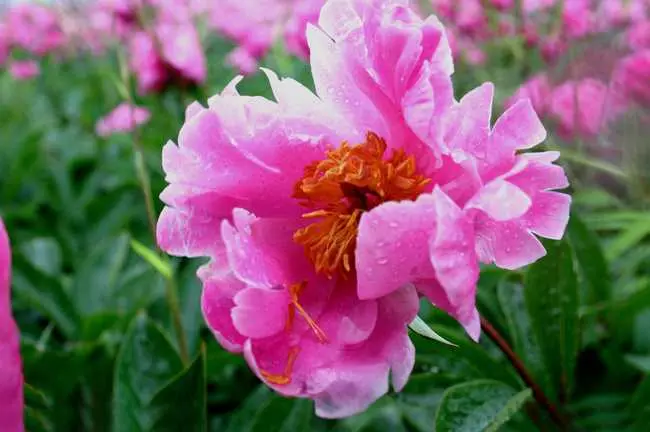
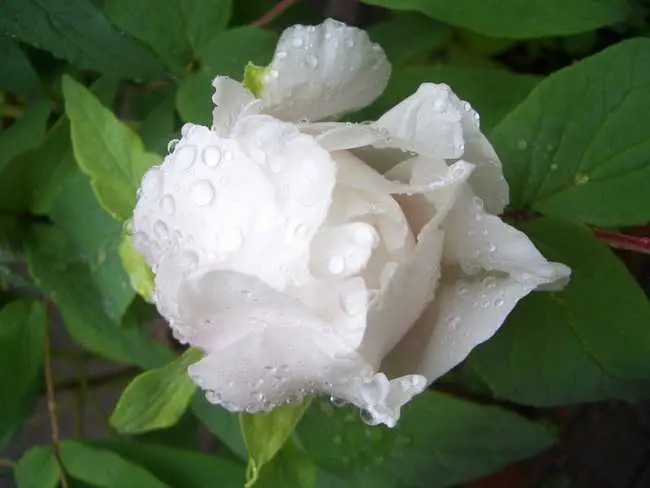
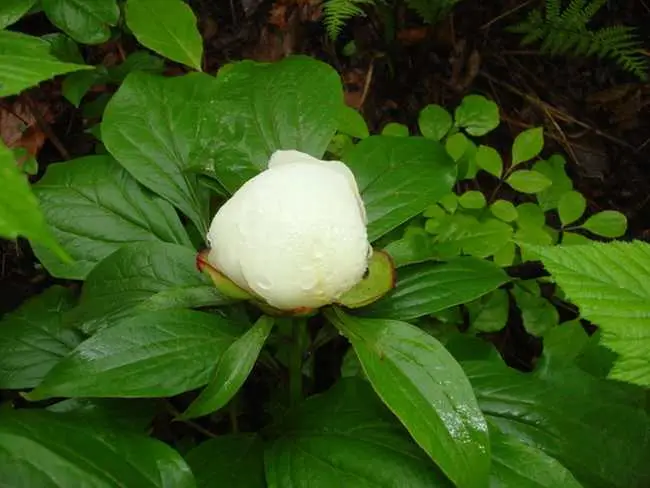
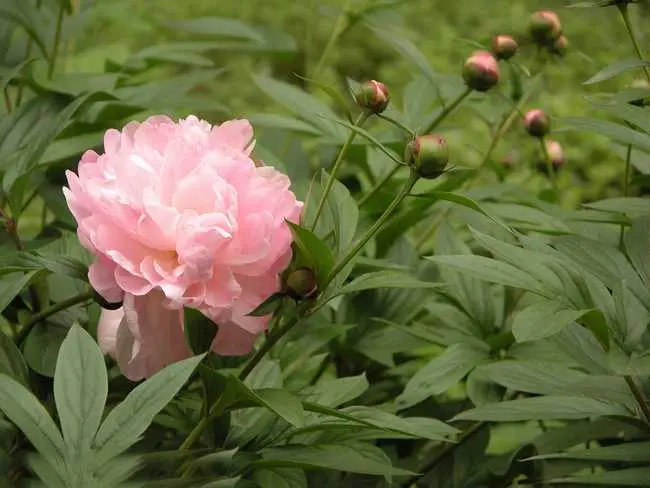
Photographs药材图片
Cultivation and authentication栽培与鉴别
7 cultivation notes and 6 authentication articles exist for this herb. They are long-form field material and are published in Chinese only.
Compiled from public Chinese materia medica sources for study and reference. Not medical advice.
Chinese version · All herbs
Chinese version · All herbs