Zedoary rhizome (E Zhu)
E Zhu
CURCUMAE RHIZOMA
Nature and flavorPungent and bitter, warm; enters the Liver and Spleen meridians.
Meridians enteredLiver and Spleen
Dosage6–9 g
Reference market price¥8 / kgBozhou market · spec common grade · 广西 · snapshot 2026-11-21
E Zhu is a warm, pungent and bitter rhizome used in traditional medicine to promote qi movement, invigorate blood and relieve pain.
Source药物来源
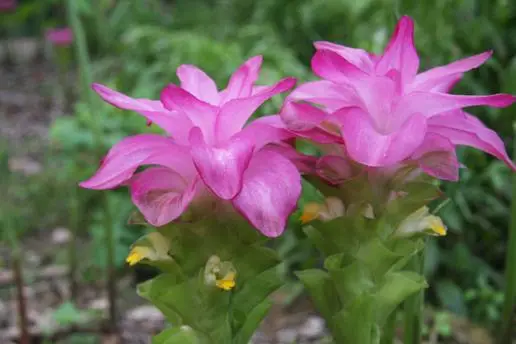
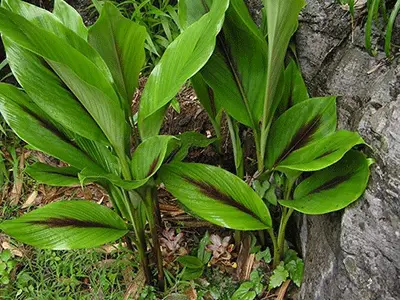
The dried rhizome of Curcuma phaeocaulis Val., Curcuma kwangsiensis S.G.Lee et C.F.Liang, or Curcuma wenyujin Y.H.Chen et C.Ling (Zingiberaceae); the latter is commonly called 'Wen Ezhu'.
Identification性状特征
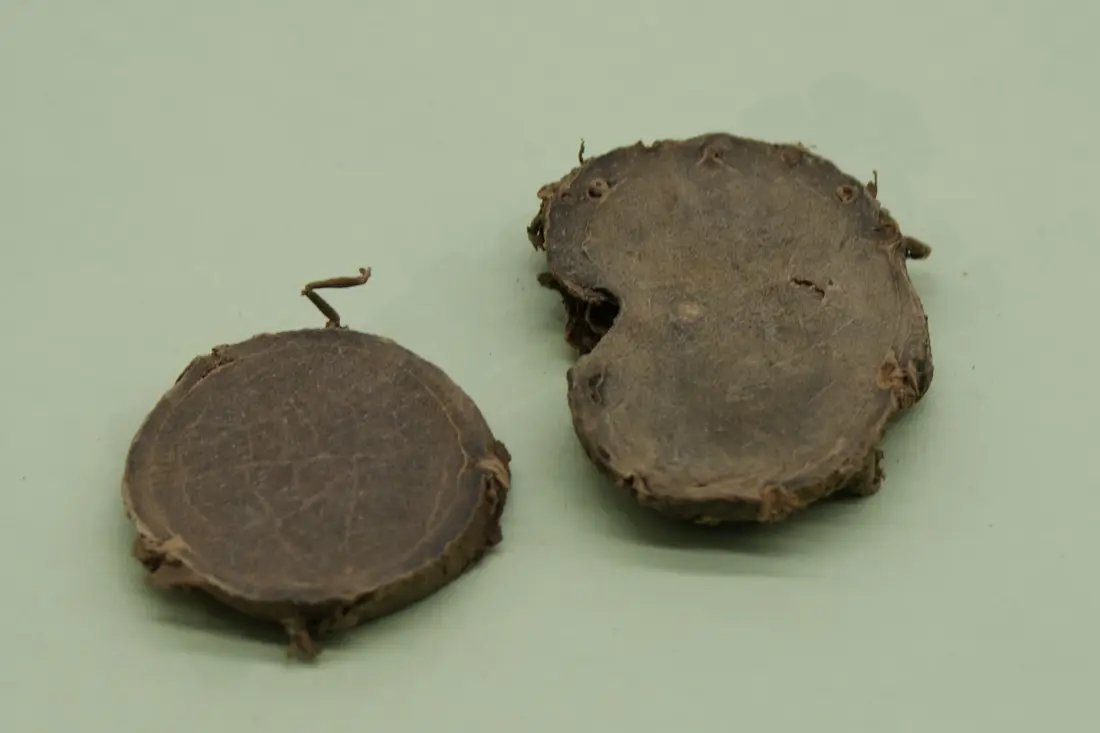
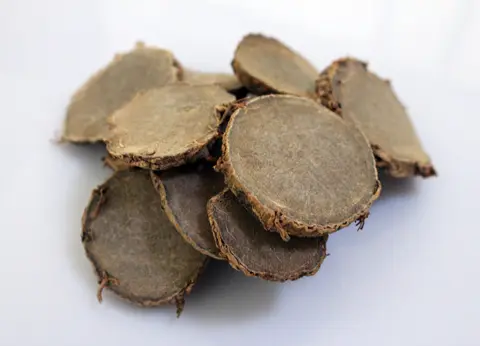
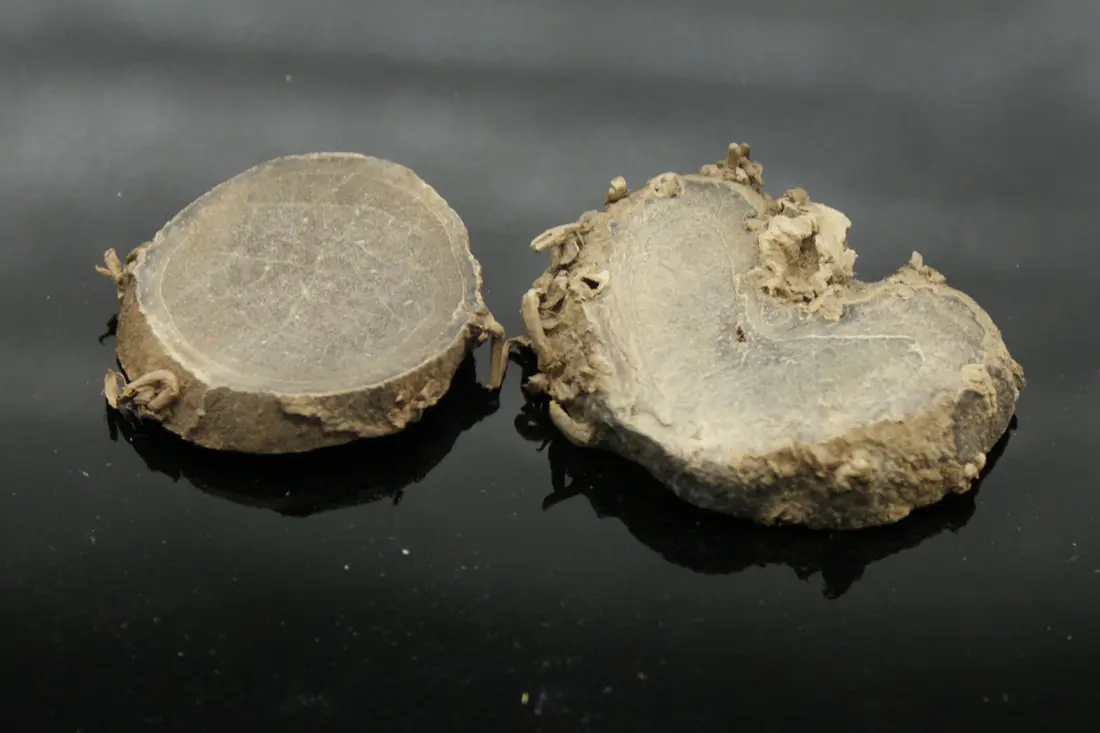
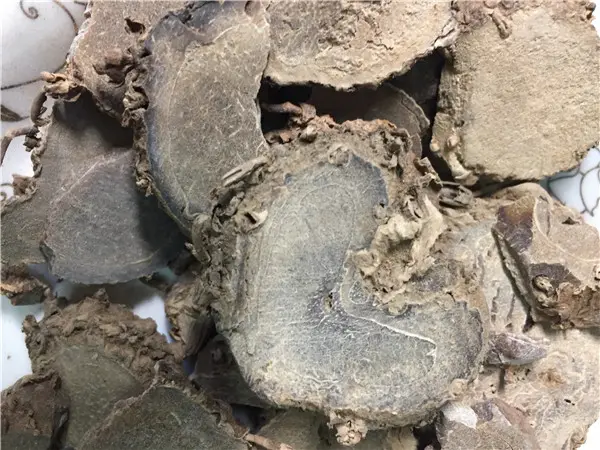
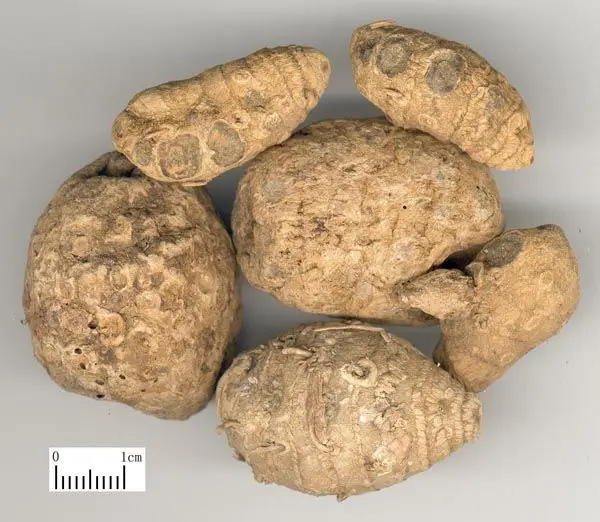
Phaeocaulis type: oval, oblong-oval, conical or long-fusiform, 2–8 cm long, 1.5–4 cm in diameter; surface greyish-yellow to greyish-brown, with raised annular nodes, circular rootlet scars or remnants, sometimes one row of depressed bud scars and circular lateral rhizome scars on each side, occasionally knife-cut marks. Heavy, solid; fracture greyish-brown to bluish-brown, waxy, often covered with greyish-brown powder; cortex easily separated from stele; endodermal ring brownish. Slight fragrance; taste slightly bitter and pungent. Kwangsiensis type: annular nodes slightly raised; fracture yellow-brown to brown, often with pale yellow powder; endodermal ring yellowish-white. Wenyujin type: fracture yellow-brown to brownish, often with pale yellow to yellowish-brown powder; fragrant or slightly fragrant.
Properties and actions性味与功效
ActionsPromote qi movement and break blood stasis · Reduce accumulation and relieve pain
IndicationsUsed for abdominal masses and concretions, blood stasis with amenorrhea, chest impediment and heart pain, and distending pain due to food accumulation.
Dosage6–9 g, decocted and taken orally.
CautionContraindicated in pregnancy and in patients with deficiency of qi and blood without stasis; use with caution in those with weakness of the spleen and stomach.
Processing炮制
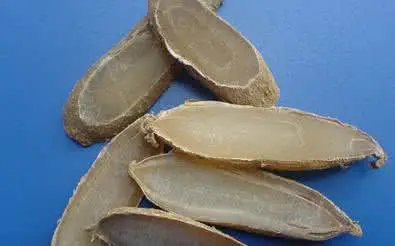
E Zhu (raw)Remove impurities, sort by size, soak for 2 hours, wash, soften thoroughly and slice thinly; or steam until steam rises, slice thinly while hot, dry and sift out fragments.
Vinegar-processed E ZhuSoak clean E Zhu in a measured amount of rice vinegar and water to cover, boil until the vinegar is absorbed and no white core remains, take out, air briefly, slice thickly, dry and sift. Use 20 kg rice vinegar per 100 kg E Zhu.
Modern research现代药理
Antithrombotic effectE Zhu has a certain antithrombotic action.
Antitumor and immunomodulatory effectsThe volatile oil can kill cancer cells; curcumol has antitumor activity; the oil can enhance host-specific immunity through the immune system and has radiosensitizing antitumor effects.
Effects on digestion and ulcersThe volatile oil increases digestive juice secretion, aids digestion, and has a marked therapeutic effect on various gastric ulcers.
Anti-early pregnancy and anti-implantation effectsE Zhu, its alcohol extract and sesquiterpene compounds have significant anti-early pregnancy and anti-implantation effects.
Antimicrobial effectIn vitro experiments show inhibitory effects on various cocci and bacilli.
Leukocyte protectionThe oil and curcumol have a marked protective effect on leukocytes.
Classical records历代本草
The Bencao Gangmu distinguishes E Zhu from Yujin and Jianghuang by its entry into the Liver and its action on blood within qi. The Bencao Mengquan and Bencao Jingshu emphasize its use for breaking accumulations and regulating qi, while the Bencao Jingshu warns against its use in qi-blood deficiency without stagnation.《本草纲目》:郁金入心,专治血分之病;姜黄入脾,兼治血中之气;莪术入肝,治气中之血,稍为不同。王执中《资生经》云:执中久患心脾疼,服醒脾药反胀。用耆域所载蓬莪术面裹炮熟研末,以水与酒醋煎服,立愈。盖此药能破气中之血也。
《本草蒙筌》:味苦、辛,气温。无毒。色黑属在血分,气中之血。专驱破痃癖,止心疼,通月经,消瘀血。治霍乱积聚,理恶疰邪伤。入气药仍发诸香,在女科真为要剂。丸求速效,磨酒单尝。
《开宝本草》:味苦、辛,温,无毒。主心腹痛,中恶疰忤鬼气,霍乱冷气,吐酸水,解毒,食饮不消,酒研服之。又疗妇人血气,丈夫奔豚。
《本草图经》:莪术,古方不见用者。今医家治积聚诸气,为最要之药。与荆三棱同用之良,妇人药中亦多使。
《本草经疏》:蓬莪术感夏末秋初之气,而得土金之味,故其味苦辛,其气温而无毒。阳中阴,降也。入足厥阴肝经气分,能破气中之血。入气药发诸香。主积聚诸气,为最要之药。与京三棱同用之良。心腹痛者,非血气不得调和,即是邪客中焦所致。中恶疰忤鬼气,皆由气不调和,脏腑壅滞,阴阳乖隔,则疫疠疰忤鬼气得以凭之。术气香烈,能调气通窍,窍利则邪无所容而散矣。解毒之义亦同乎是。其主霍乱,冷气吐酸水,乃饮食不消,皆行气之功也,故多用酒磨。又疗妇人血气结积,丈夫奔豚,入肝破血行气故也,多用醋磨。郁金入心亦入肝,专主血分,亦散肝郁;术与三棱专能行气破积,姜黄行气破血,入脾为多。
简误:蓬莪术行气破血散结,是其功能之所长,若夫妇人、小儿气血两虚,脾胃素弱,而无积滞者用之,反能损真气,使食愈不消而脾胃益弱。即有血气凝结,饮食积滞,亦录与健脾开胃,补益元气药同用,乃无损耳。
Cultivation and authentication栽培与鉴别
1 cultivation notes and 6 authentication articles exist for this herb. They are long-form field material and are published in Chinese only.
Read them in Chinese →