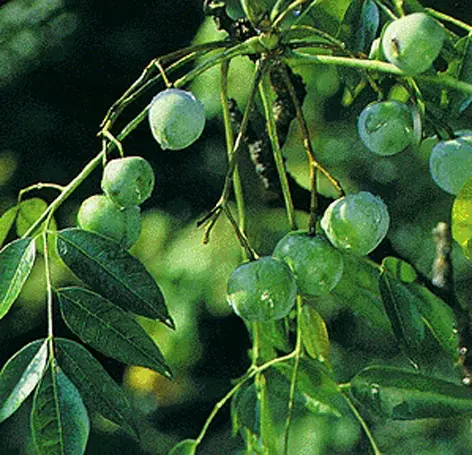
Chuan Lian Zi (Toosendan fruit)
Chuan Lian Zi
TOOSENDAN FRUCTUS
Nature and flavorBitter, cold; slightly toxic.
Meridians enteredLiver, Small Intestine, Bladder.
Dosage5-10g.
Reference market price¥3.7 / kgBozhou market · spec common grade · 四川 · snapshot 2026-11-21
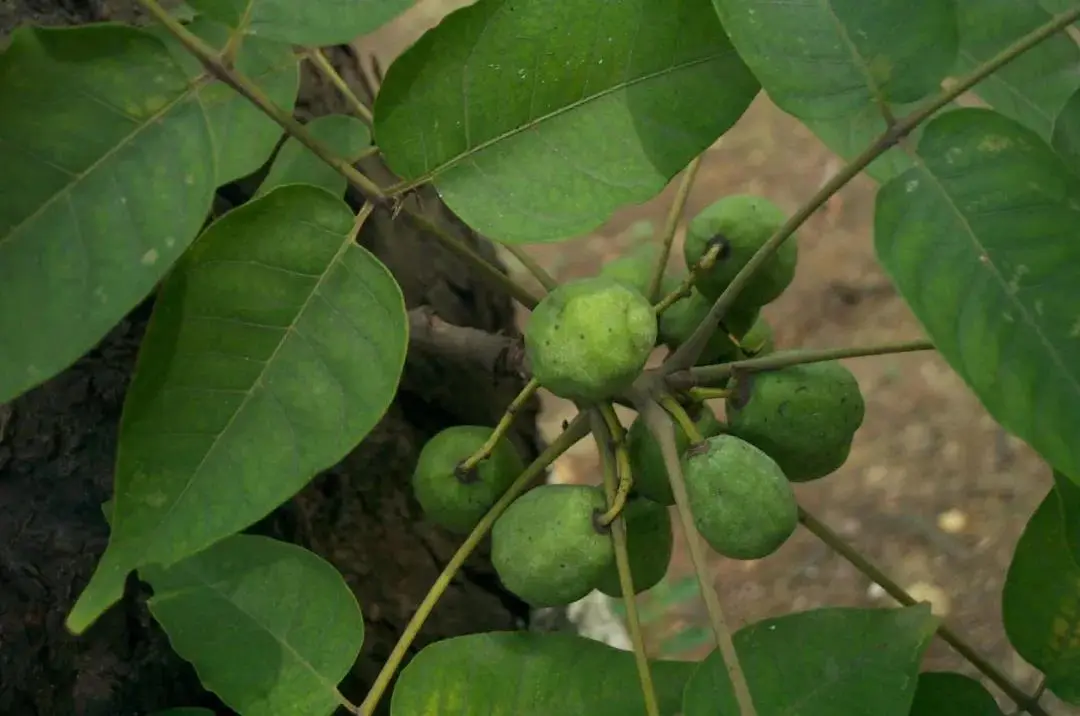
Chuan Lian Zi is the dried ripe fruit of Melia toosendan, used in TCM to promote qi movement, relieve pain, and expel parasites.
Source药物来源
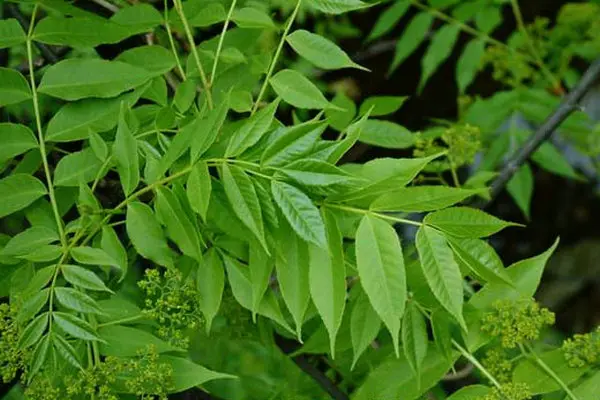
The dried ripe fruit of Melia toosendan Sieb. et Zucc. (family Meliaceae).
Identification性状特征
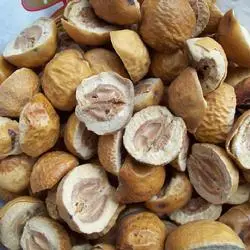
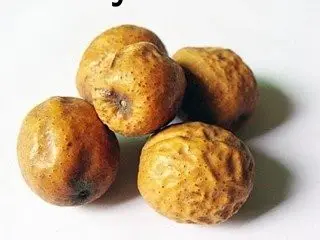
Subspherical, 2-3.2 cm in diameter. Surface golden yellow to brownish-yellow, slightly lustrous, occasionally sunken or wrinkled, with dark brown dots. Apex shows a stylar scar; base depressed with a pedicel scar. Exocarp leathery, often separated from the pulp by a gap; pulp soft, pale yellow, sticky when moistened. Stone spherical or ovoid, hard, truncate at both ends, with 6-8 longitudinal ridges, divided into 6-8 locules, each containing one dark brown oblong seed. Odor distinctive; taste sour and bitter.
Properties and actions性味与功效
ActionsPromote qi movement and relieve pain · Dispel heat from the liver · Expel parasites
IndicationsUsed for liver qi stagnation transforming into fire, distending pain in the chest, hypochondrium and epigastrium, hernia pain, and abdominal pain due to parasitic infestation.
Dosage5-10g, decocted and taken orally. For external use, apply an appropriate amount of the powdered drug mixed with liquid.
CautionUse with caution in patients with deficiency-cold of the spleen and stomach; not suitable for long-term use. Slightly toxic—overdose may cause adverse reactions.
Processing炮制
Chuan Lian Zi (raw)Remove impurities from the crude drug. Crush before use.
Jiao Chuan Lian Zi (stir-fried)Slice or crush the cleaned fruit into small pieces, place in a preheated wok, and stir-fry over medium heat until the surface is scorched yellow or scorched brown. Remove, cool, and sift out ash.
Yan Chuan Lian Zi (salt-processed)Mix the cleaned slices or pieces with salt water and let stand until absorbed. Stir-fry over gentle heat until deep yellow. Remove, cool, and sift out debris. Use 2 kg of salt per 100 kg of clean pieces.
Modern research现代药理
Antiparasitic effectIn vitro experiments show strong killing effects on Ascaris suum, earthworms, and leeches, and mild killing effect on Trichomonas vaginalis.
Antifungal effectInhibits fungi, Candida albicans, Cryptococcus neoformans, Microsporum ferrugineum, and Staphylococcus aureus.
Antitumor effectInhibits tumor cells.
Anti-inflammatory effectThe nimbidin contained in toosendan oil has significant anti-inflammatory action.
Choleretic effectUltrasound examination shows promotion of bile secretion and choleretic action.
Effect on intestinal smooth muscleExcites intestinal smooth muscle.
Anti-ulcer effectShows good efficacy against gastric ulcer.
Classical records历代本草
The Shen Nong Ben Cao Jing records it as bitter and cold, treating warm diseases, high fever with restlessness and mania, and expelling three types of worms. The Ben Cao Gang Mu notes it directs heat from the small intestine and bladder downward and is a key herb for heart and abdominal pain and hernia. The Ben Cao Jing Shu explains its bitter-cold nature clears heat and dries dampness, and warns that it is unsuitable for deficiency-cold of the spleen and stomach.《神农本草经》:味苦,寒。主治温疾,伤寒大热烦狂,杀三虫,疥疡,利小便水道。
《本草纲目》:楝实,导小肠,膀胱之热,因引心包相火下行,故心腹痛及疝气为要药。甄权所言不入汤使,则《本经》何以有治热狂,利小便之及耶?近方治疝,有四治、五治、七治以法,盖亦配合之巧耳。
治诸疝虫痔。
得酒煮,乃寒因热用也。茴香为之使。
《本草蒙筌》:楝音练实即金铃子,味苦,气寒。有小毒。主中湿伤寒大热烦狂,理膀胱小肠疝气吊痛。利小便水道,杀三虫疥疡。
《名医别录》:有小毒。治蛔虫,利大肠。
《本草经疏》:楝实禀天之阴气,得地之苦味,故其味苦气寒,极苦而寒,故其性有小毒。气薄味厚,阴也,降也。入足阳明,手足太阴经。经曰:冬伤于寒,春必病温。其主温疾、伤寒大热,烦狂者,总因寒邪郁久,至春变为温病,邪在阳明也。苦寒能散阳明之邪热,则诸证自除。膀胱为州都之官,小肠为受盛之官,二经热结,则小便不利。此药味苦气寒,走二经而导热结,则水道利矣。湿热郁积则内生诸虫,湿热浸淫则外为疥疡,得大寒极苦之物,则湿热散,故能疗诸虫及疥疡也。
简误:脾胃虚寒者不宜用。
Cultivation and authentication栽培与鉴别
2 cultivation notes and 5 authentication articles exist for this herb. They are long-form field material and are published in Chinese only.
Read them in Chinese →