Aucklandia root (Mu Xiang)
Mu Xiang
AUCKLANDIAE RADIX
Nature and flavorPungent, bitter, warm; enters the spleen, stomach, large intestine, sanjiao and gallbladder meridians.
Meridians enteredSpleen, stomach, large intestine, sanjiao, gallbladder
Dosage3–6 g
Reference market price¥12.5 / kgBozhou market · spec common grade · 云南 · snapshot 2026-11-21
Aucklandia root is a warm, pungent and bitter herb that promotes qi movement, relieves pain, strengthens the spleen and promotes digestion.
Source药物来源
The dried root of Aucklandia lappa Decne. (family Asteraceae). The name comes from its honey-like fragrance: 'originally called Mi Xiang (honey fragrance) because its aroma is like honey' (Bencao Gangmu). Native to India, Myanmar and Pakistan; formerly imported via Guangzhou, hence 'Mu Xiang'.
Identification性状特征
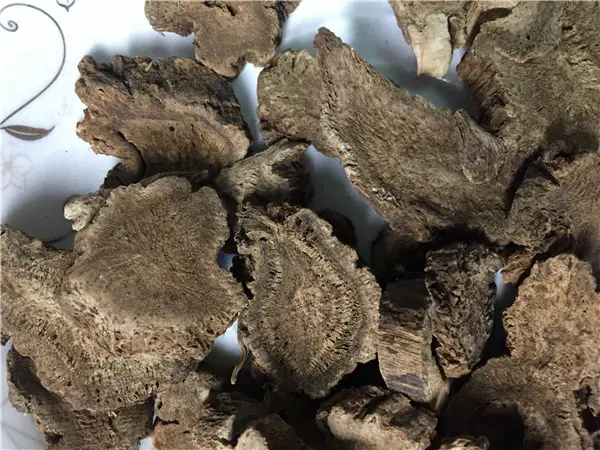
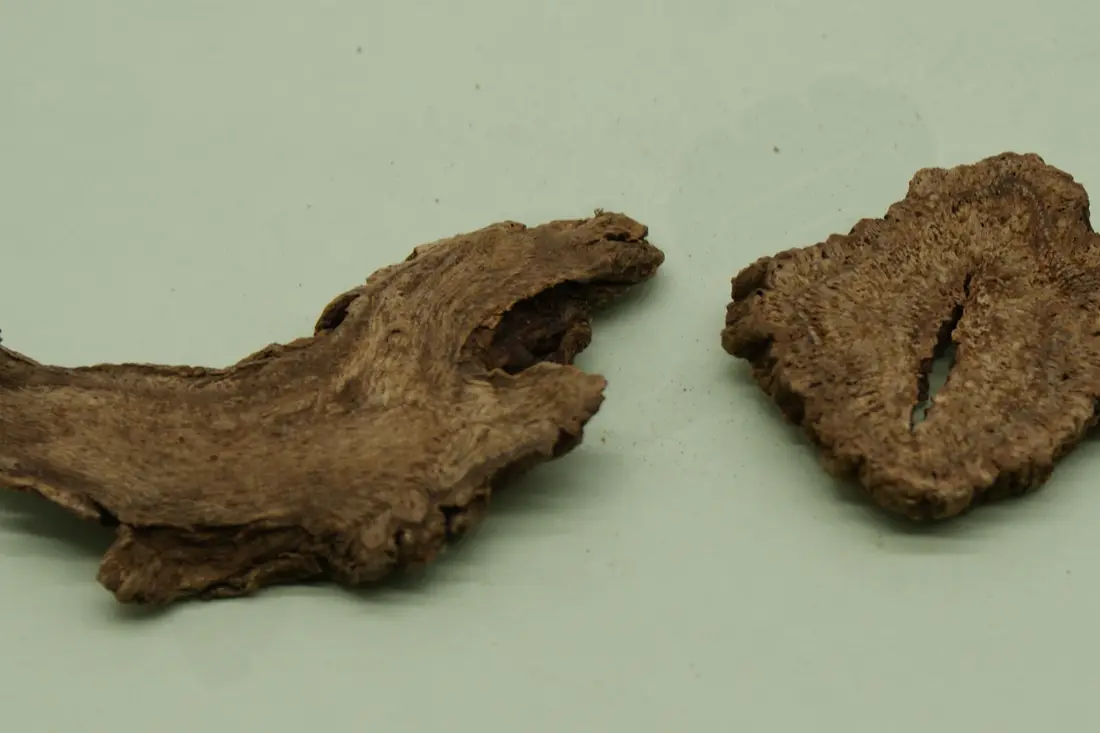
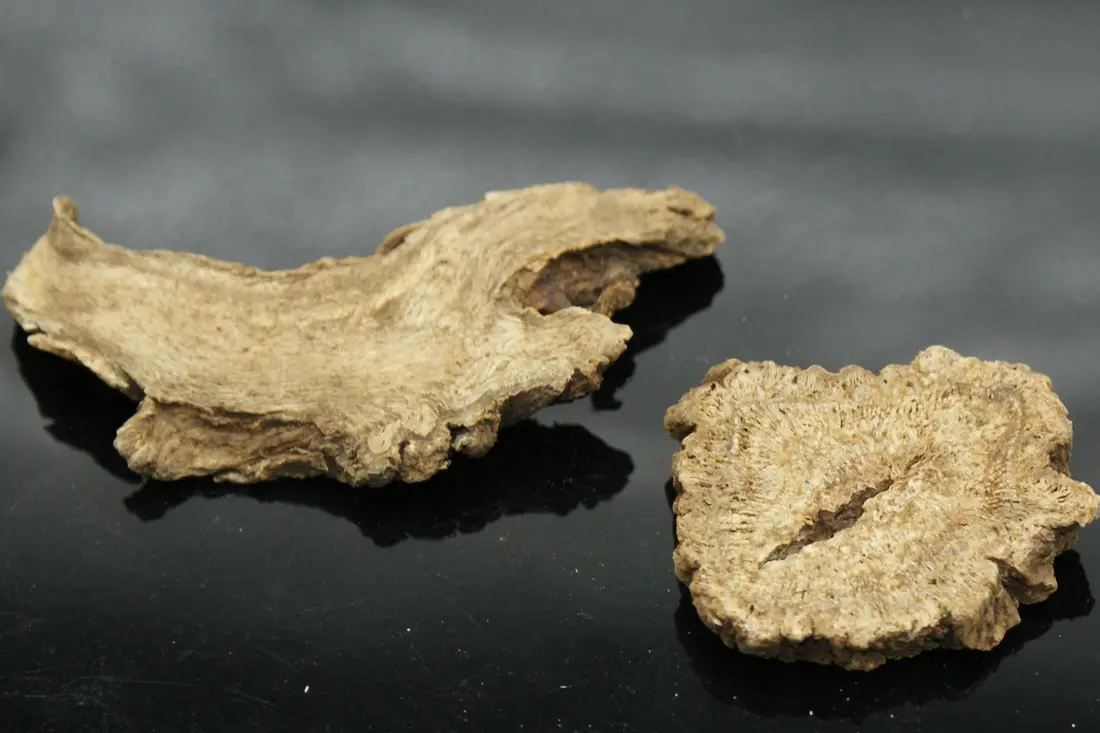
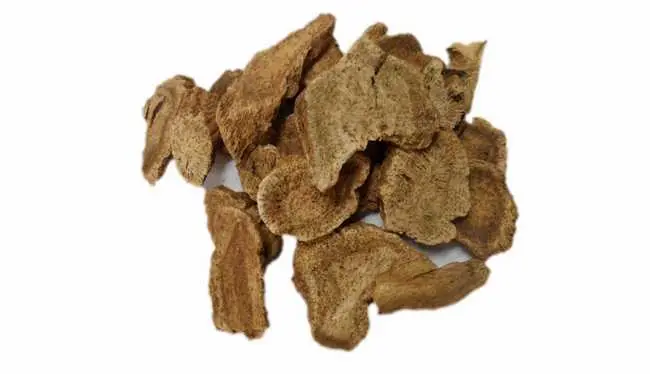
Cylindrical or semi-cylindrical, 5–10 cm long, 0.5–5 cm in diameter. Surface yellowish-brown to grayish-brown, with obvious wrinkles, longitudinal grooves and lateral root scars. Hard, difficult to break; fracture grayish-brown to dark brown, periphery grayish-yellow or light brownish-yellow, cambium ring brown, with radial striations and scattered brown dotted oil cavities. Odor strongly characteristic; taste slightly bitter.
Properties and actions性味与功效
Actionspromote qi movement and relieve pain · strengthen the spleen and promote digestion
IndicationsUsed for distending pain in the chest, hypochondrium and epigastrium; diarrhea and dysentery with tenesmus; indigestion with food stagnation; and lack of appetite. Roasted Aucklandia root firms the intestines and stops diarrhea; used for diarrhea with abdominal pain.
CautionBecause of its warm, pungent and drying nature, use with caution in cases of yin deficiency with heat or qi deficiency; do not use over a long period.
Processing炮制
Mu Xiang (raw)Remove impurities from the crude drug, sort by size, wash, soak briefly,闷透 (cover until penetrated), cut into thick slices, and dry in the air.
Roasted Mu Xiang (Wei Mu Xiang)Take undried slices, layer them with oil-absorbing paper in a wire tray, press with flat boards and tie firmly, then heat near a fire or in a drying room until the volatile oil permeates the paper. Remove, cool. Roasting removes part of the oil, enhancing the action of firming the intestines and stopping diarrhea.
Modern research现代药理
1The volatile oil without lactones, dihydrocostunolide and total lactones (saussurine) significantly inhibit the tone of the small intestine in dogs in vivo.
2Total lactones, costunolide, dihydrocostunolide and the volatile oil protect animals against inhaled lethal doses of histamine or acetylcholine aerosol.
3Small doses of water and alcohol extracts stimulate the isolated frog and dog heart; large doses inhibit. Saussurine also stimulates the cat heart. The volatile oil without lactones, total lactones, 12-methoxydihydrocostunolide and small doses of total alkaloids dilate blood vessels and increase blood flow. Water and alcohol extracts slightly raise blood pressure; the volatile oil without lactones, total lactones, costunolide, deoxycostunolide and 12-methoxydihydrocostunolide moderately lower blood pressure.
Classical records历代本草
The Shennong Bencao Jing first recorded its pungent, warm nature and use for pathogenic qi and epidemic toxins. The Bencao Gangmu describes it as a qi-regulating herb of the sanjiao, able to ascend and descend qi, and notes that raw Mu Xiang is used to regulate qi while roasted Mu Xiang firms the large intestine.《神农本草经》:味辛,温。主治邪气,辟毒疫温鬼,强志,治淋露。久服不梦寤魇寐。
《本草纲目》:木香乃三焦气分之药,能升降诸气。诸气膹郁,皆属于肺,故上焦气滞用之者,乃金郁则泄之也。中气不运,皆属于脾,故中焦气滞宜之者,脾胃喜芳香也。大肠气滞则后重,膀胱气不化则癃淋,肝气郁则为痛,故下焦气滞者宜之,乃塞者通之也。
理气宜生用,实大肠宜煨熟。
《本草蒙筌》:味甘、苦,气温。味厚于气,降也,阴中阳也。无毒。合丸散日际熏干,煎热汤临服投末。气劣气不足能补,气胀气窒塞能通。和胃气如神,行肝气最捷。散滞气于肺上膈,破结气于中下焦。驱九种心疼,逐积年冷气。药之佐使,亦各不同。破气使槟榔,和胃佐姜橘。止霍乱吐泻,呕逆翻胃;除痞癖癥块,脐腹胀疼。安胎健脾,诛痈散毒。和黄连治暴痢,用火煨实大肠。辟瘟疫邪,御雾露瘴。易老云:总谓调气之剂,不宜久久服之。
谟按:王海藏谓《本经》云:主气劣气不足。《药性论》谓:安胎健脾,是皆补也。《衍义》谓:泻胸腹窒塞,积年冷气。《日华子》谓:除痞癖癥块,是皆破也。易老总谓调气之剂,不言补,不言破。诸说不同何也?恐与补药为佐则补,与泻药为佐则泻,故云然也。
《开宝本草》:味辛,温,无毒。疗气劣,肌中偏寒,主气不足,消毒,杀鬼精物、温疟、蛊毒,行药之精。
《名医别录》:温,无毒。治气劣,肌中偏寒,主气不足,消毒,杀鬼、精物、温疟、蛊毒,行药之精。
《本草图经》:《续传信方》著仲景青木香丸,主阳衰诸不足。用昆仑青木香,六路诃子皮各二十两,捣筛,糖和丸梧子大,每空腹酒下三十丸,日再,其效尤速。郑附马去沙糖用白蜜,加羚角十二两,用药不类古方,而云仲景,不知何从而得之?
Culinary use民间药膳
Pomelo Peel with Fermented Glutinous RicePomelo peel (white part removed), Qing Mu Xiang and Chuanxiong in equal parts; fermented glutinous rice and brown sugar as needed.
Grind the first three herbs into a fine powder. For each small bowl of brown sugar fermented glutinous rice, add 3–6 g of the powder and take it warm, twice daily.
Regulates qi and relieves depression, harmonizes the stomach and relieves pain. Suitable for pain and distension in the chest and hypochondrium due to liver-stomach disharmony, with belching, hiccups, poor appetite, depression or irritability, and a wiry pulse.
Cultivation and authentication栽培与鉴别
8 cultivation notes and 20 authentication articles exist for this herb. They are long-form field material and are published in Chinese only.
Read them in Chinese →