Polyporus (Zhu Ling)
Zhu Ling
POLYPORUS
Nature and flavorSweet, bland, neutral. Enters the kidney and bladder meridians.
Meridians enteredKidney, Bladder
Dosage6–12 g
Reference market price¥90 / kgBozhou market · spec common grade · 陕西 · snapshot 2026-11-21
Polyporus is a fungus used in traditional medicine to drain dampness and promote urination.
Source药物来源
The dried sclerotium of the fungus Polyporus umbellatus (Pers.) Fries (family Polyporaceae).
Identification性状特征
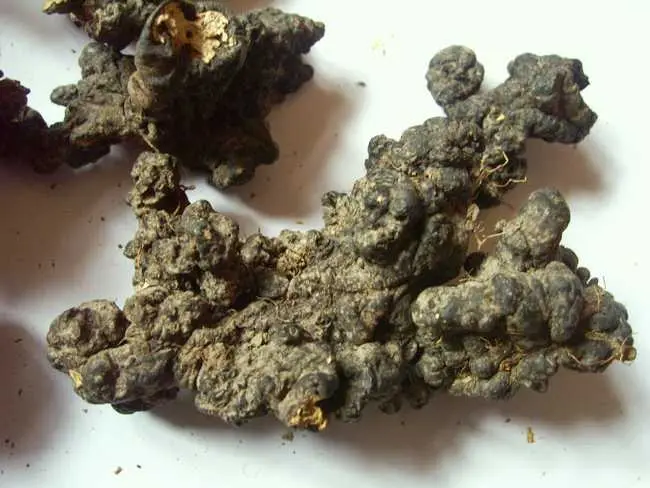
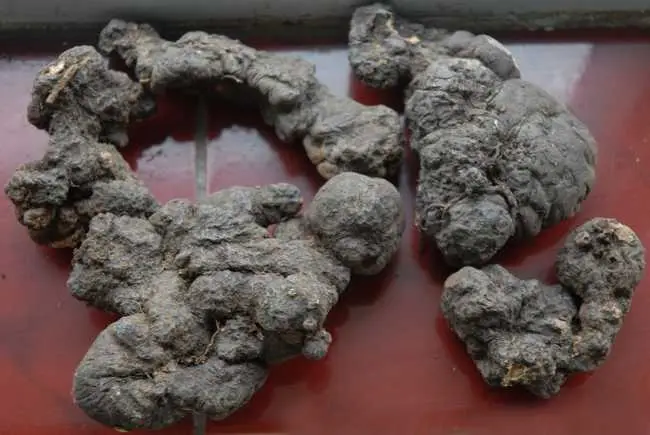
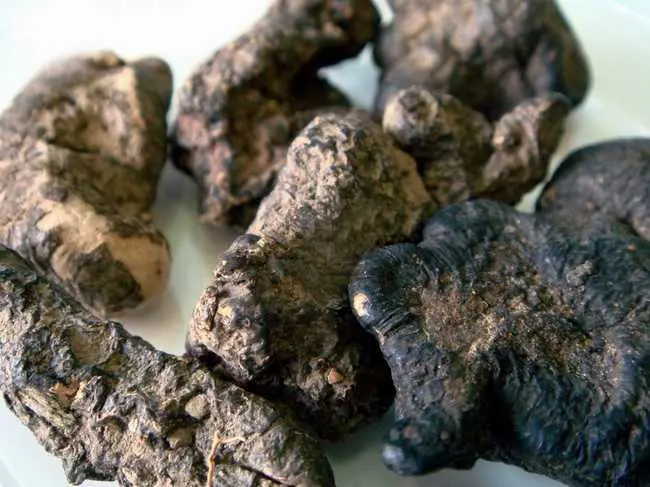
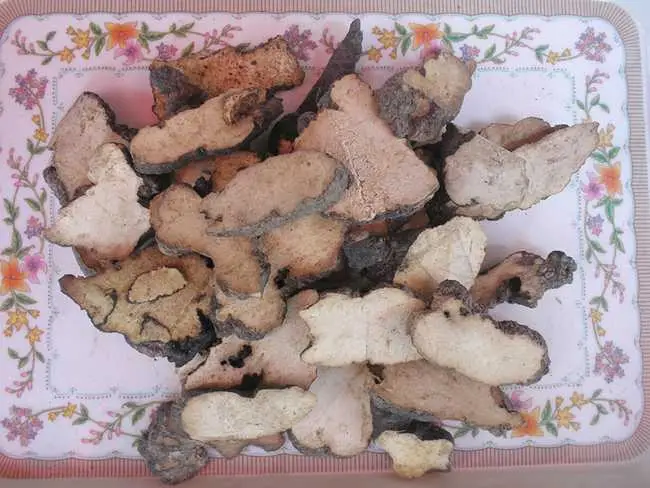
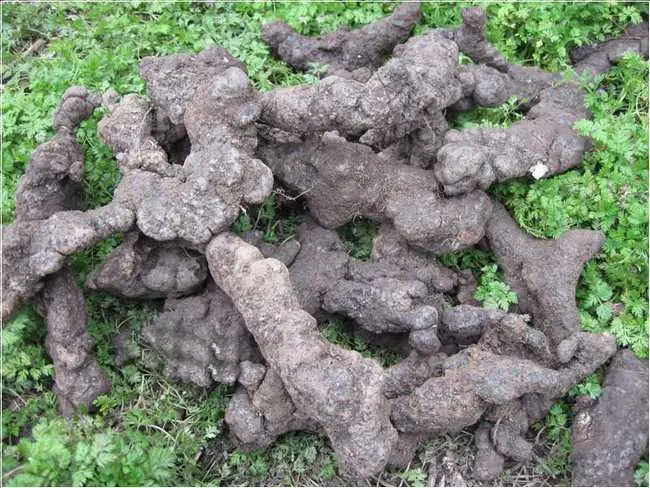
The sclerotium is bar-shaped, subglobose, or flattened, sometimes branched, 5–25 cm long, 2–6 cm in diameter. The surface is black, grayish-black, or brownish-black, wrinkled or with nodular protrusions. It is light in weight and hard in texture; the fracture is whitish or yellowish-white and slightly granular. It has a faint odor and a bland taste.
Properties and actions性味与功效
Actions
Promote urination and drain dampness
Indications
Promotes urination and drains dampness. Used for difficult urination, edema, diarrhea, strangury with turbid urine, and leukorrhea.
Dosage
6–12 g.
Caution
Use with caution in cases of yin deficiency with little dampness; long-term use may impair kidney qi and cause blurred vision.
Processing炮制
Raw Polyporus
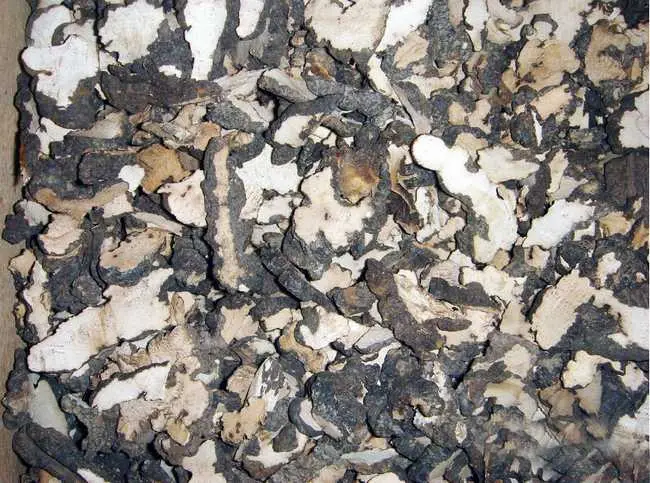
Remove impurities, soak, wash clean, soften thoroughly, slice into thick pieces, and dry.
Modern research现代药理
Anticancer and antimutagenic effects
Polyporus significantly inhibits chemical carcinogenesis in the bladder; Polyporus polysaccharides are antimutagenic and inhibit various tumor cells.
Anti-radiation effect
Polyporus polysaccharides have anti-radiation effects.
Immune enhancement
Polyporus polysaccharides also enhance immunity.
Hepatoprotective effect
Polyporus polysaccharides have a significant protective effect on the liver in toxic hepatitis.
Diuretic effect
Formulas with Polyporus as the main herb, such as Zhu Ling Tang and Wu Ling San, have diuretic effects.
Anti-aging effect
Polyporus polysaccharides have anti-aging effects.
Antibacterial effect
Polyporus extract inhibits Staphylococcus aureus and Escherichia coli.
Classical records历代本草
The Shennong Bencao Jing records Polyporus as sweet and neutral, treating malaria, resolving toxicity, and promoting water passage. The Bencao Gangmu notes that its blandness and seeping quality allow it to open interstitial spaces and promote urination, similar to Poria, but it is less suitable in tonifying formulas. The Bencao Mengquan warns that long-term use may damage the kidneys and blur vision, and the Bencao Jingshu advises against use when no dampness syndrome is present.
《神农本草经》:味甘,平。主治亥疟,解毒,辟蛊疰不祥,利水道。
《本草纲目》:猪苓淡渗,气升而又能降,故能开腠理,利小便,与茯苓同功。但入补药不如茯苓也。
开腠理,治淋肿脚气,白浊带下,妊娠子淋胎肿,小便不利。
《本草蒙筌》:味甘、苦、淡,气平。降也,阳也。无毒。作块类猪粪,故此名猪苓。经入膀胱与肾。通淋消肿满,除湿利小便。盖苦泄滞,甘助阳,淡利窍故尔。《衍义》又云:行水之功居多,大能燥亡津液。倘无湿证,勿轻用之。若久煎尝,损肾昏目。
《本草图经》:仲景治消渴脉浮、小便不利、微热者,猪苓汤发其汗。病欲饮水而复吐,名为水逆,冬时寒嗽如疟状者,亦与猪苓,此即五苓散也。多饮暖水,汗出即愈。利水道诸汤剂,无若此驶,今人皆用之。
《本草经疏》:猪苓禀戊土之阳气,得风木之阴气,《本经》谓其味甘,应兼淡苦,其气平而无毒。气味具薄,降也,阳中阴也。入足太阳、足少阴经。其主阂疟者,疟必由暑,暑必兼湿,淡以利窍,引暑湿之气以小便出,所以分消之也。淡涌之性,故利水道。湿胜则身重,湿去则身轻。解蛊毒疰不详,义将安出?亦未可尽信也。
简误:寇宗奭曰:猪苓利水之功多,久服必损肾气,昏人目。洁古曰:淡渗太燥,能亡津液,无湿证勿服。皆确论也。有湿尚宜暂用,久服断乎不可。
Audio and video语音与视频
Narration · Chinese · 7:34
Latin name · pronunciation
Photographs药材图片
Cultivation and authentication栽培与鉴别
15 cultivation notes and 7 authentication articles exist for this herb. They are long-form field material and are published in Chinese only.
Compiled from public Chinese materia medica sources for study and reference. Not medical advice.
Chinese version · All herbs
Chinese version · All herbs