Magnolia officinalis bark (Hou Po)Materia Medica

Magnolia officinalis bark (Hou Po)

Hou Po
MAGNOLIAE OFFICINALIS CORTEX
Nature and flavorBitter, pungent, warm. Meridian tropism: spleen, stomach, lung, large intestine.
Meridians enteredSpleen, stomach, lung, large intestine
Dosage3–10 g
Reference market price¥10 / kgBozhou market · spec 板皮 · 四川 · snapshot 2026-11-21

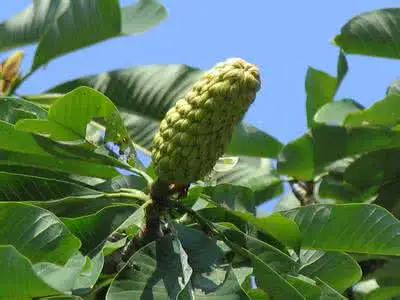
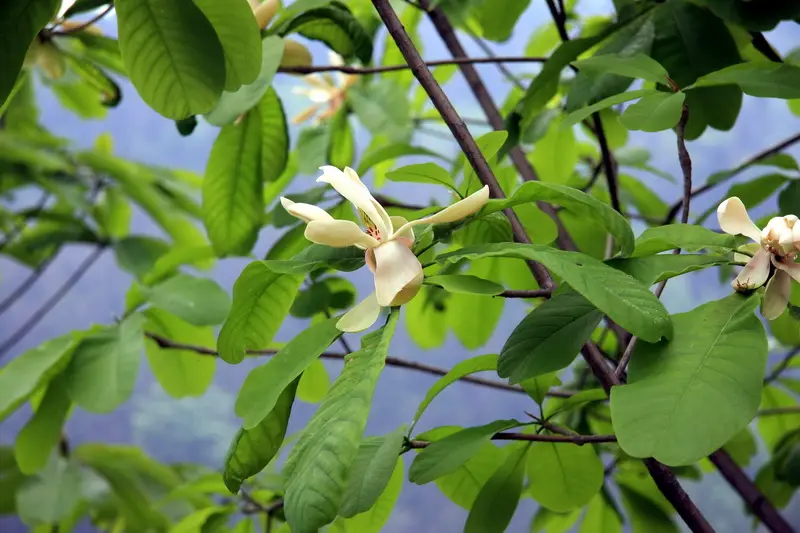
Hou Po is the dried bark of Magnolia officinalis or M. officinalis var. biloba, used to dry dampness, resolve phlegm, and move qi to relieve distention and fullness.

Source药物来源

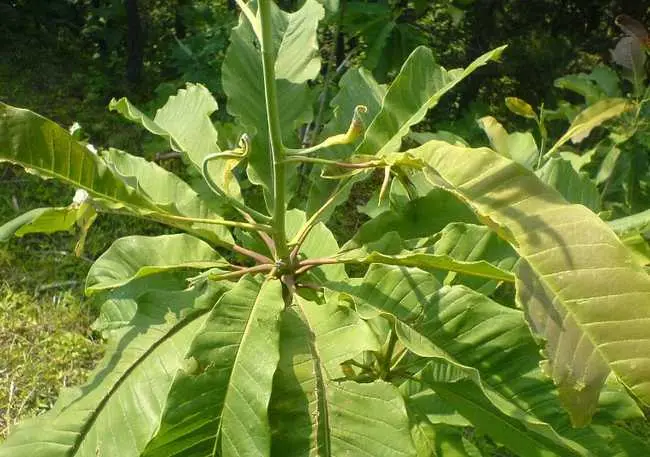
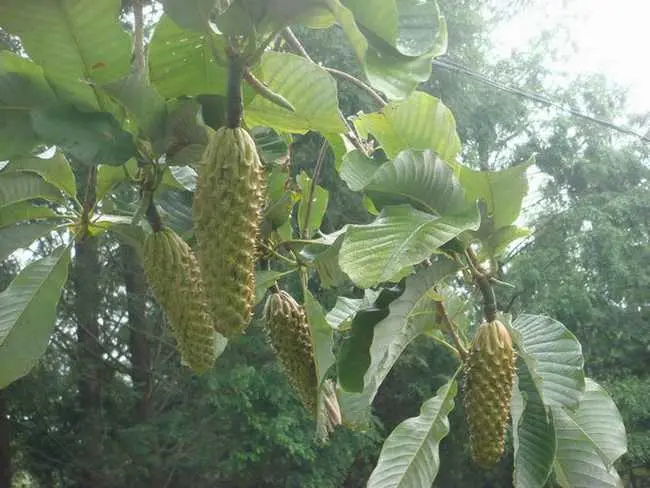
The dried trunk bark, root bark, and branch bark of Magnolia officinalis Rehd. et Wils. or Magnolia officinalis Rehd. et Wils. var. biloba Rehd. et Wils. (family Magnoliaceae). Name origin: 'Its wood is plain and its bark thick' (Bencao Gangmu).

Identification性状特征

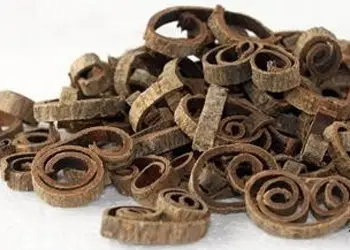
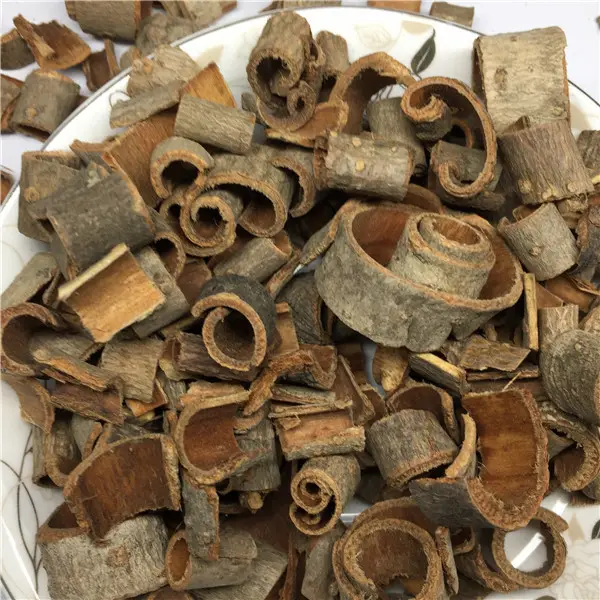
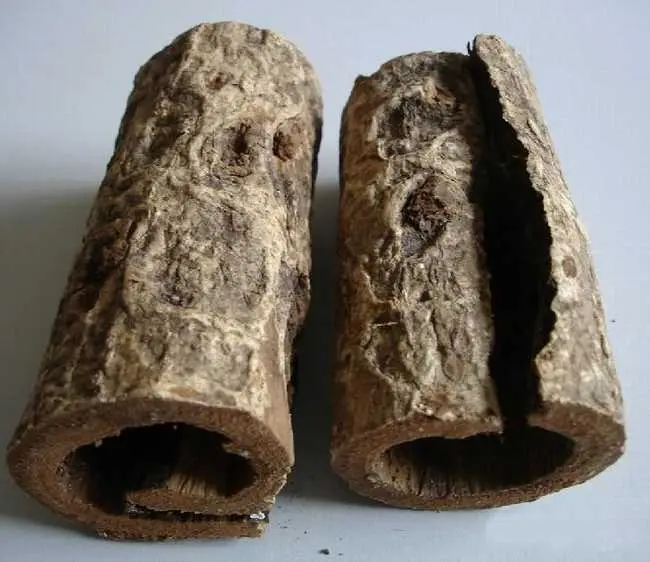
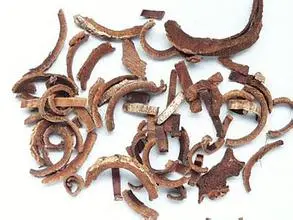
Trunk bark: rolled or double-rolled, 30–35 cm long, 0.2–0.7 cm thick, commonly called 'tong po'; trunk bark near the root opens like a trumpet at one end, 13–25 cm long, 0.3–0.8 cm thick, commonly called 'boot-leg tong po'. Outer surface grayish-brown or grayish-dark, rough, sometimes scaly and easily exfoliated, with distinct oval lenticels and longitudinal wrinkles; where coarse bark is scraped off, yellowish-brown. Inner surface purplish-brown or dark purplish-brown, smoother, with fine longitudinal striae; oil marks appear when scratched. Hard, difficult to break; fracture granular, outer layer grayish-brown, inner layer purplish-brown or brown, oily; some show many small bright dots. Odor fragrant; taste pungent, slightly bitter. Root bark (gen po): single-rolled or irregular pieces; some curved like chicken intestines, commonly called 'chicken-intestine po'. Hard, easier to break; fracture fibrous. Branch bark (zhi po): single-rolled, 10–20 cm long, 0.1–0.2 cm thick; brittle, easy to break; fracture fibrous.

Properties and actions性味与功效
Actions
Dry dampness and resolve phlegm · Direct qi downward and relieve fullness
Indications
Dampness retention injuring the middle, epigastric distention with vomiting and diarrhea, food accumulation with qi stagnation, abdominal distention and constipation, phlegm-fluid retention with cough and dyspnea.
Dosage
3–10 g.
Caution
Use with caution in deficiency-cold of the spleen and stomach; not recommended during pregnancy.
Processing炮制
Hou Po (raw)
Take the crude drug, scrape off coarse bark, wash, soften thoroughly, cut into shreds, dry, and sift out fragments.
Ginger-processed Hou Po
Take Hou Po shreds, mix with ginger juice, moisten until absorbed, then stir-fry with gentle heat until dry, remove and cool. Use 10 kg fresh ginger per 100 kg Hou Po.
Modern research现代药理
Gastrointestinal effects
Hou Po decoction stimulates isolated rabbit intestine; at higher concentrations, the excitatory effect on guinea pig intestine becomes inhibitory. Magnolia alkaloid reduces tension of the small intestine in vivo.
Anti-ulcer effects
Raw and ginger-processed Hou Po inhibit pylorus-ligated and stress-induced experimental gastric ulcers, with the processed form more effective. Magnolol and honokiol significantly inhibit HCl-ethanol-induced gastric mucosal ulcers.
Muscle relaxant effects
Magnolia alkaloid relaxes skeletal muscle. Magnolol and isomagnolol produce central muscle relaxation that is specific and long-lasting.
Central inhibitory effects
The ether extract of Hou Po, magnolol, and honokiol all exert central inhibitory effects.
Cardiovascular effects
Hou Po decoction inhibits the isolated heart; the aqueous solution of the tincture of Hou Po flower lowers blood pressure.
Antimicrobial effects
In vitro experiments show that Hou Po decoction has broad-spectrum antibacterial activity, with magnolol being notably effective.
Platelet aggregation and antitumor effects
Honokiol and magnolol significantly inhibit platelet aggregation and ATP release induced by aggregating agents. The methanol extract of Hou Po, magnolol, and its hydroxymethyl derivatives inhibit the promotion of two-stage skin tumors.
Classical records历代本草
Shennong Bencao Jing records it as bitter and warm, used for wind-stroke, cold damage, headache, chill and fever, palpitations, and blood-qi obstruction. Bencao Mengquan notes it is bitter, pungent, very warm, and emphasizes its use for distention and fullness, often with ginger. Bencao Fenjing describes it as entering the spleen and stomach, draining excess and dampness, and regulating the middle.
《神农本草经》:味苦,温。主治中风,伤寒,头痛,寒热,惊悸,气血痹,死肌,去三虫。 《本草蒙筌》:味苦、辛,气大温。属土,有火。阴中之阳,可升可降,无毒。恶寒水硝泽,寒水石、石、泽泻。使炮熟干姜。诸豆忌之,食则动气。主中风寒热,治霍乱转筋。止呕逆吐酸,禁泻痢淋露,消痰下气。与枳实大黄同用,实满能泄;温中益气,与陈皮苍术同用,湿满能除。与解利药同用,则治伤寒头疼;与泄痢药同用,则厚肠胃止泄。大抵味苦气温,故用苦测泄,用温则补。《衍义》云:平胃散中,用之最当。既温脾胃,又走冷气。再随证加减,妙不可胜言。洁古亦曰:治腹痛胀满,散结之神药也。倘患者虚弱,须斟酌少加。对证不真,误服太过,则反脱人元气,岂不慎哉!若气实人服多参芪,致成喘闷者,正此泄除,不在禁也。孕妇忌用。女科当知。 谟按:丹溪云:厚朴气药,温而能散,故泄胃中实也。平胃散用佐苍术,正乃泄去上焦之湿,不使胃土太过,得复其平致于和而已,非谓温补脾胃焉。习以成俗,皆谓之补。哀哉!然治腹胀者,因味辛能提其气故尔。 《开宝本草》:味苦,大温,无毒。温中益气,消痰下气,疗霍乱及腹痛,胀满,胃中冷逆,胸中呕逆不止,泄痢,淋露,除惊,去留热,止烦满,厚肠胃。 《名医别录》:大温,无毒。主温中,益气,消痰,下气,治霍乱及腹痛,胀满,胃中冷逆,胸中呕逆不止,泄痢,淋露,除惊,去留热,止烦满,厚肠胃。 《本草分经》:苦、辛,温,入脾胃。泻实满,散湿满,平胃调中,消痰化食,破宿血,散风寒,杀脏虫,治一切客寒犯胃、湿气侵脾之症。
Folklore本草传说

The Ming dynasty Bencao Huiyan states: 'Hou Po, pungent, bitter, warm, and drying, enters the spleen, stomach, and lung meridians; it disperses stagnation and regulates the middle, and is the first choice for such purposes.' Li Shicai of the Ming said: 'Hou Po is a spleen-stomach medicine; warming the middle and directing qi downward are its basic actions.' Yang Shitai of the Qing said: 'For all diseases caused by cold-dampness, it is truly the appropriate remedy.' Zhang Xichun said: 'For cold distention, using Hou Po together with greatly warming herbs is the wondrous method of dispersing bindings.' Zhu Danxi said: 'When stagnant qi is slightly moved, stop it; if remnant stagnation persists, use fried Zhi Ke and Chen Pi; however, Zhi Ke also consumes qi, being milder than Hou Po but stronger than Chen Pi.' The Wengong Shihua contains a verse: 'Standing until the shadow of the parasol tree fades, drinking all the Hou Po soup on the street.'
Culinary use民间药膳
Ju Luo Hou Po Tea
Tangerine pith 3 g, Hou Po 3 g, black tea 3 g, Dang Shen 6 g.
Grind the four ingredients into coarse powder, place in a cup, and infuse with boiling water for 10 minutes. Drink as desired, replenishing with hot water until the flavor fades. One dose per day.
Regulates qi, opens depression, resolves phlegm, and dissipates nodules. Suitable for globus hystericus.
Newly Modified Xiang Ru Drink
Xiang Ru 6 g, fresh hyacinth bean flower 10 g, Hou Po 6 g, Jin Yin Hua 10 g, Lian Qiao 10 g.
Decoct in water, take the liquid as a tea substitute.
Dispels summerheat, releases the exterior, clears heat, and transforms dampness.
Audio and video语音与视频
Narration · Chinese · 7:34
Latin name · pronunciation
Narration and video are shared by all language versions and are in Chinese; the images and footage themselves are language-independent.
Photographs药材图片
Magnolia officinalis bark (Hou Po)
Cultivation and authentication栽培与鉴别

4 cultivation notes and 10 authentication articles exist for this herb. They are long-form field material and are published in Chinese only.

Read them in Chinese →

Compiled from public Chinese materia medica sources for study and reference. Not medical advice.
Chinese version · All herbs