Lycopodium herb (Shen Jin Cao)
Shen Jin Cao
LYCOPODII HERBA
Nature and flavorSlightly bitter and pungent, warm; enters the liver, spleen and kidney meridians.
Meridians enteredLiver, spleen, kidney
Dosage3–12 g
Reference market price¥12 / kgBozhou market · spec common grade · 湖南 · snapshot 2026-11-21
Lycopodium herb is a wind-dampness dispelling crude drug used to relax sinews and free the collaterals.
Source药物来源
The dried whole herb of Lycopodium japonicum Thunb. (family Lycopodiaceae).
Identification性状特征
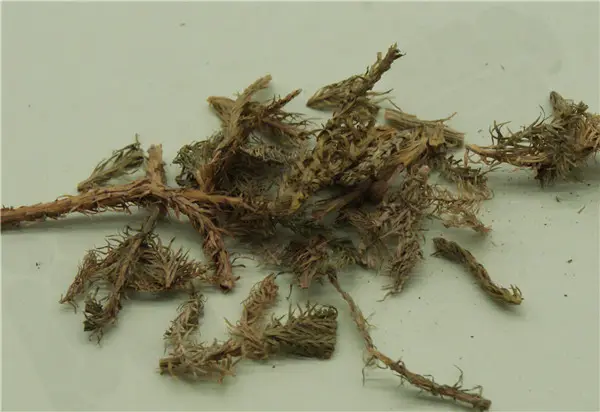
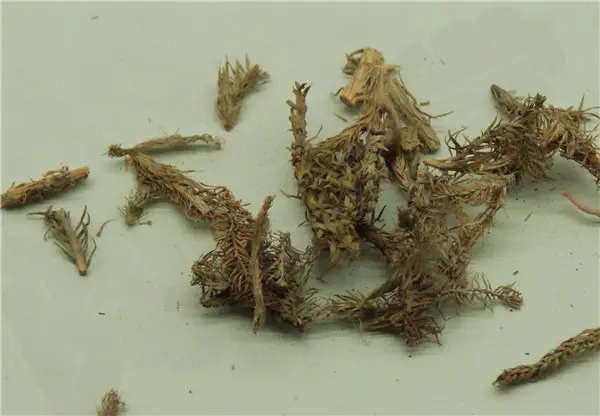
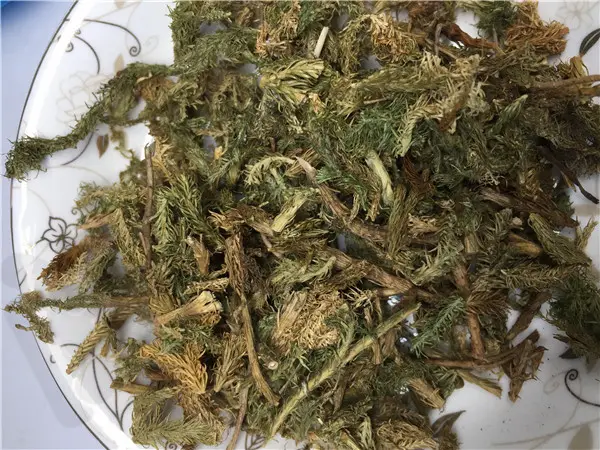
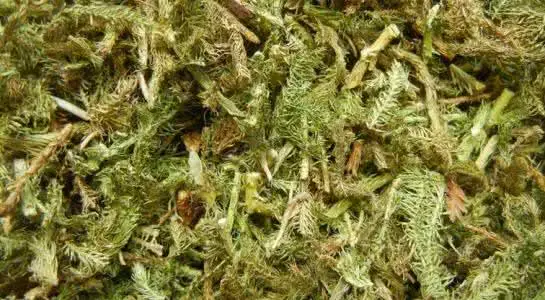
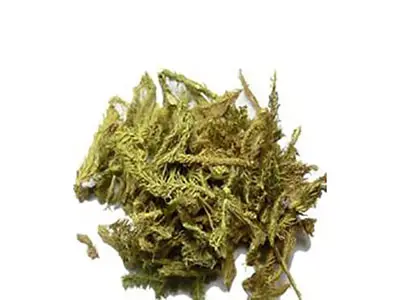
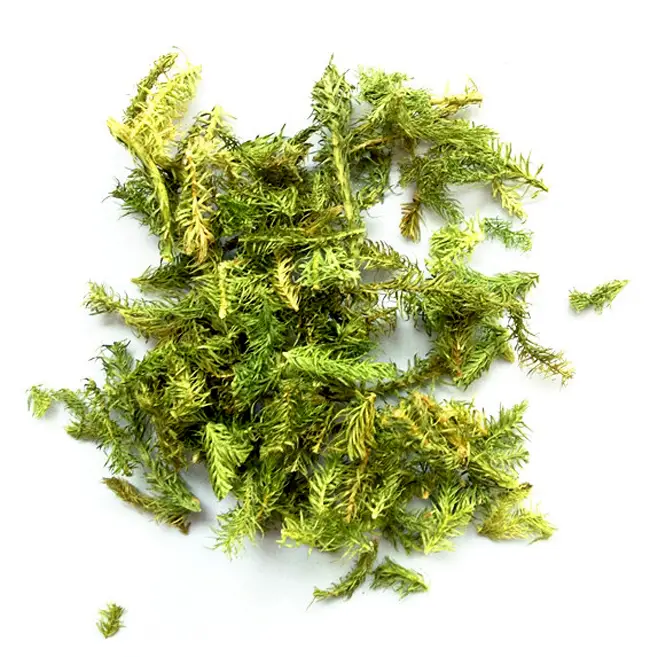
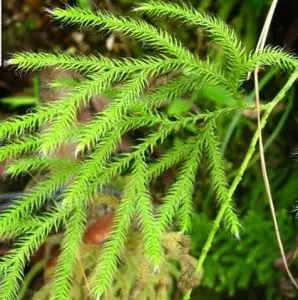
The creeping stem is slender, cylindrical, slightly curved, up to 2 m long and 1–3 mm in diameter, with pale yellow-white fine roots below; the upright stem branches dichotomously. Leaves are densely arranged on the stem in a spiral, wrinkled and curved, linear or needle-like, 3–5 mm long, yellow-green to pale yellow-brown, glabrous, with an awn-like apex and entire margin, easily broken. The texture is soft; the fracture shows a pale yellow bark and a nearly white wood. Odor slight; taste bland.
Properties and actions性味与功效
ActionsDispel wind and drain dampness · Relax the sinews and free the collaterals
IndicationsJoint aching and stiffness with difficulty in flexion and extension.
Dosage3–12 g, decocted and taken orally.
CautionUse with caution in individuals with yin deficiency or dryness-heat; follow professional guidance.
Processing炮制
Raw Lycopodium herbRemove impurities, wash, cut into segments and dry.
Modern research现代药理
Chemical constituentsVolatile oil, polysaccharides, lycopodine, lycodoline and shenjincaol.
Classical records历代本草
No classical citation is provided in the source.1、治风痹筋骨不舒:宽筋藤,每用三钱至一两,煎服。
2、治关节酸痛:石松三钱,虎杖根五钱,大血藤三钱。水煎服。
3、治关节酸痛,手足麻痹:凤尾伸筋草一两,丝瓜络五钱,爬山虎五钱,大活血三钱。水、酒各半煎服。
4、治小儿麻痹后遗症:凤尾伸筋、南蛇藤根、松节、寻骨风各五钱,威灵仙三钱,茜草二钱,杜蘅五分。煎服。
5、消水肿:过山龙五分,糠瓢一钱五分,槟榔一钱。 槟榔、糠瓢煨汤吃过山龙末,以泻为度。气实者用,虚者忌。
6、治带状疱疹:石松研粉,青油或麻油调成糊状,涂患处,一日数次。
Cultivation and authentication栽培与鉴别
0 cultivation notes and 2 authentication articles exist for this herb. They are long-form field material and are published in Chinese only.
Read them in Chinese →