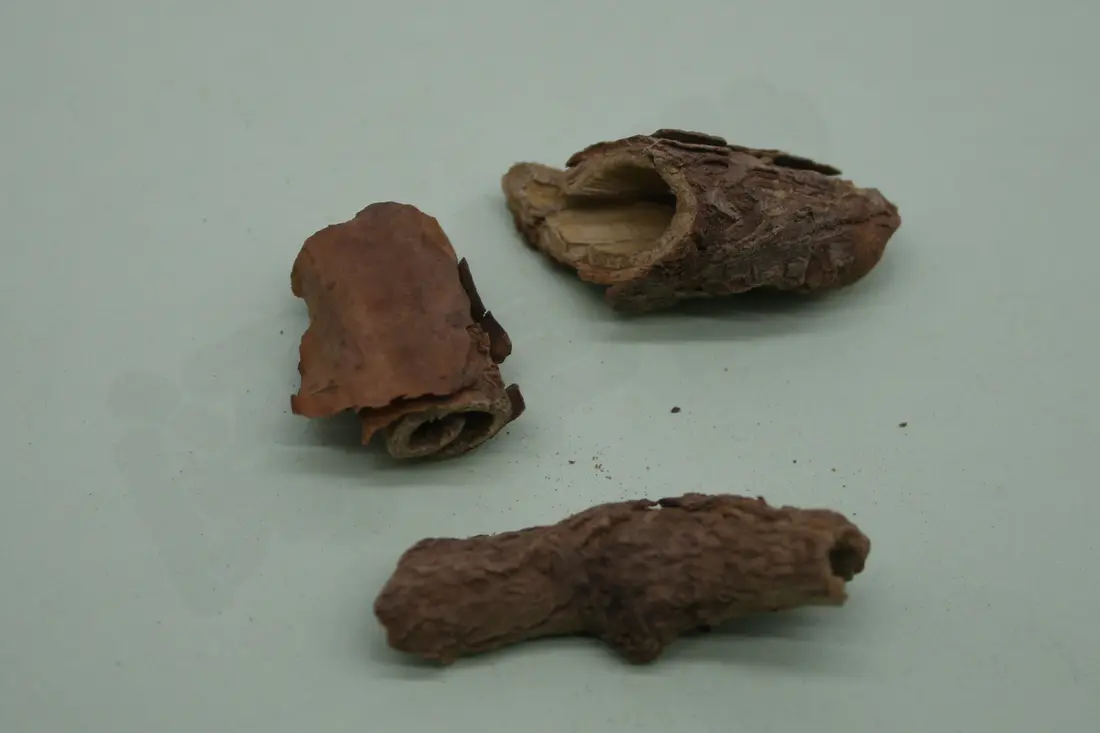
Acanthopanax root bark (Wu Jia Pi)
Acanthopanax root bark is a traditional Chinese herb used to dispel wind-dampness, tonify the liver and kidney, and strengthen sinews and bones.
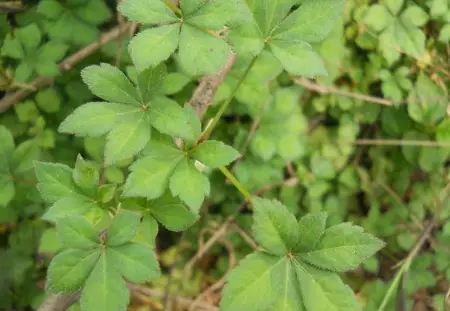
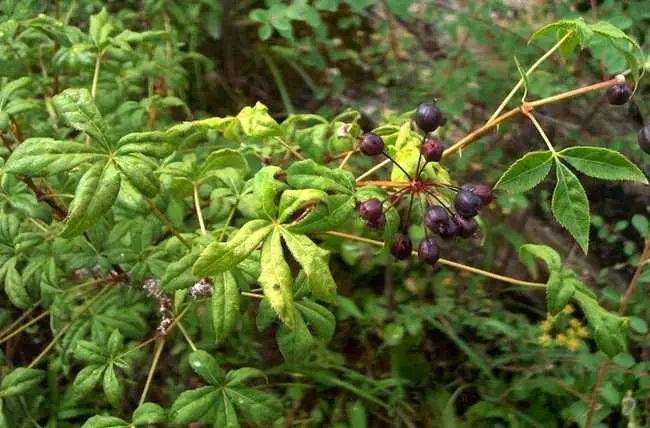
The dried root bark of Acanthopanax gracilistylus W. W. Smith (Araliaceae). Name origin: 'Wu Jia Pi, its tree has one branch with five leaves, showing an intersecting appearance, hence the name' (Bencao Bian Du). Because its root bark is used medicinally, it is called Wu Jia Pi.
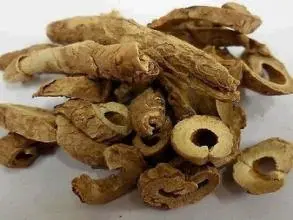
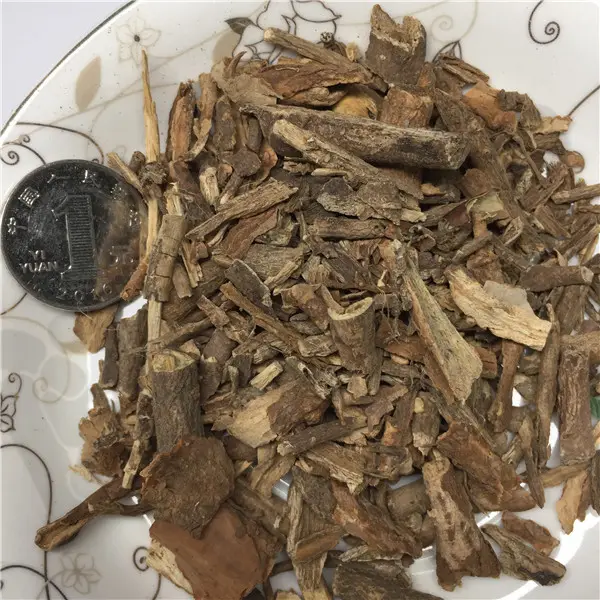
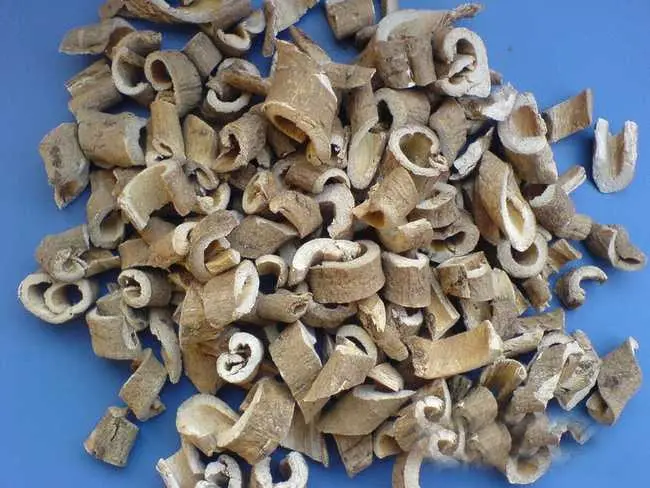
Irregularly curled, 5–15 cm long, 0.4–1.4 cm in diameter, about 0.2 cm thick. Outer surface grayish-brown, with slightly twisted longitudinal wrinkles and transversely elongated lenticel-like scars; inner surface pale yellow or grayish-yellow, with fine longitudinal striations. Light, brittle, easily broken, fracture uneven, grayish-white. Slight aromatic odor; taste slightly pungent and bitter.
Wu Jia Pi has been used as medicine for over 2,000 years. The Shennong Bencao Jing records: 'The five-leafed one is best; its root bark is used medicinally, hence Wu Jia Pi.' The Bashu Yiwu Zhi calls it 'Wenzhang Cao' and says: 'Wenzhang made into wine brings out its flavor; buying the herb with gold is not considered expensive.' It also says: 'Wu Jia is the essence of the Five Chariot stars.' As the saying goes, 'Better to have a handful of Wu Jia than a cartload of gold and jade.' Thus physicians and health practitioners all praise it. There is a famous story about 'Zhi Zhonghe Wu Jia Pi wine': long ago, by the Xin'an River in Dongguan Town, Yanzhou Prefecture, Zhejiang (now Jiande), lived a young man named Zhi Zhonghe, who was honest and had a family craft of winemaking. One day, the Fifth Princess of the Dragon King of the East Sea, Jiabi, came to the human world and fell in love with the simple and hardworking Zhi Zhonghe; they married and continued making wine. Seeing that local people suffered from rheumatism, the Fifth Princess suggested making a wine that both strengthens the body and treats illness. Under her guidance, he added Wu Jia Pi, Gan Song, Mu Gua, Yu Zhu, and other precious herbs to the wine, naming it 'Zhi Zhonghe Wu Jia Pi wine.' After its introduction, people from all walks of life came to taste it; the wine was fragrant and everyone praised it, so business flourished. Because the place belonged to Dongguan Town, Yanzhou Prefecture, some later called it 'Yan Dong Guan Wu Jia Pi wine.' This wine has a history of over 200 years and remains popular. Wu Jia Pi wine relieves fatigue, dispels wind-dampness, and strengthens the lower back and knees; it is good for treating muscle cramps, numbness of hands and feet, joint pain, and weakness of the lower back and legs. The wine is sweet and tasty, without a medicinal taste; healthy people who drink it regularly can strengthen bones and body and prolong life. In recent years, according to research, drinking a cup of Wu Jia Pi wine daily can prevent gallstones, fight cancer, and lower serum cholesterol, earning it the reputation of a 'health food.' Tao Hongjing (456–536 AD) said: 'Wu Jia Pi, decocted with its root and stem to make wine, benefits people.' Ancient physicians believed that many herbs can be steeped in wine, but 'only Wu Jia Pi harmonizes with wine and tastes delicious'; 'its qi is suitable for wine, and wine with it tastes better'; 'adding wine nourishes the brain, long-term use prolongs life, and its benefits are too many to describe'; 'In the past, Zhang Zisheng, Yang Yanhe, Wang Shuya, Yu Shiyan, and others all took Wu Jia Pi wine, did not abstain from sexual activity, and lived to 300 years old, with 20 children.' Select southern Wu Jia Pi, preferring thick, long, aromatic pieces without woody center; wash, decoct for juice, and mix with yeast to make wine, or chop and steep in wine in a bag. Wu Jia Pi is highly valued in Chinese medicine and health preservation. As the Guixiang Shi Zaji praises in a poem: 'White-haired child-faced old man, chasing horses before the mountain. Ask the old man what he obtained: he regularly takes Wu Jia tea.'
3 cultivation notes and 6 authentication articles exist for this herb. They are long-form field material and are published in Chinese only.
Chinese version · All herbs