Glauber's salt (Mang Xiao)
Mang Xiao
NATRII SULFAS
Nature and flavorSalty, bitter, cold. Enters the stomach and large intestine meridians.
Meridians enteredStomach, Large Intestine
Dosage6–12 g, generally not decocted; dissolve in the strained decoction. External use as appropriate.
Reference market price¥3.5 / kgBozhou market · spec common grade · 安徽 · snapshot 2026-11-21
Glauber's salt is a refined crystalline mineral used in TCM to purge heat, soften hardness, and reduce swelling.
Source药物来源
This product is the refined crystalline form of the mineral mirabilite (Mang Xiao group), a sulfate mineral.
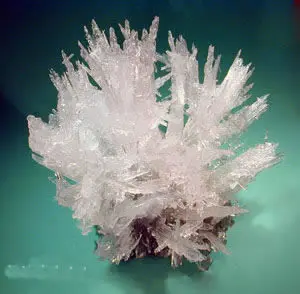
Name origin: The Bencao Gangmu states: "This substance disappears upon contact with water and can dissolve various things, hence called 'xiao' (dissolve)... When boiled and poured into a basin, the coarse sediment below is 'Pu Xiao', while the needle-like crystals on top are 'Mang Xiao'." Mang Xiao is the refined crystalline form of a natural sodium sulfate-containing mineral. "Mang" refers to the fine needle-like crystals forming on top; "Xiao" means to dissolve, indicating its function. The name derives from its form and action.
Identification性状特征
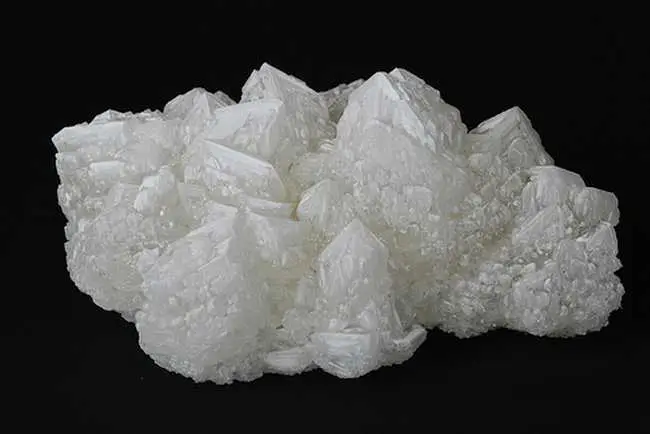
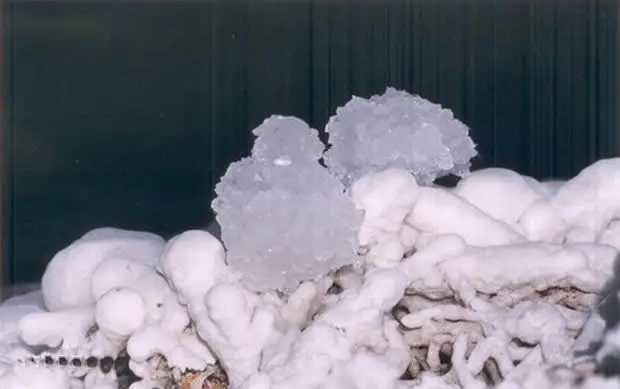
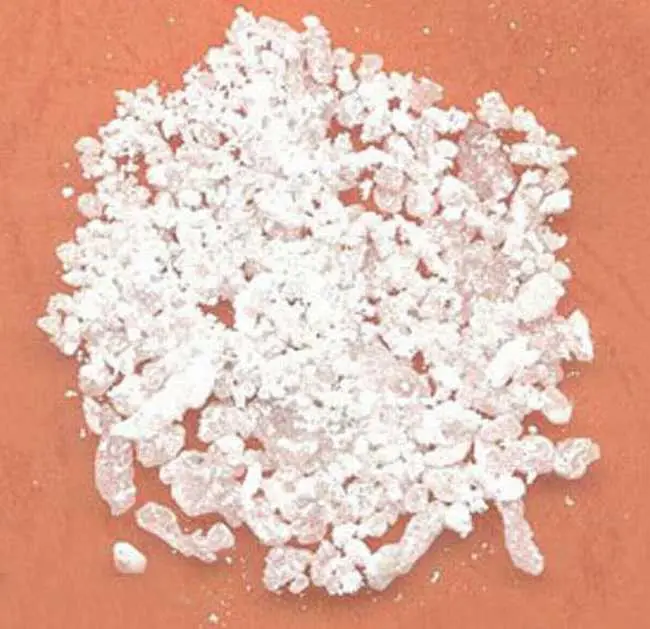
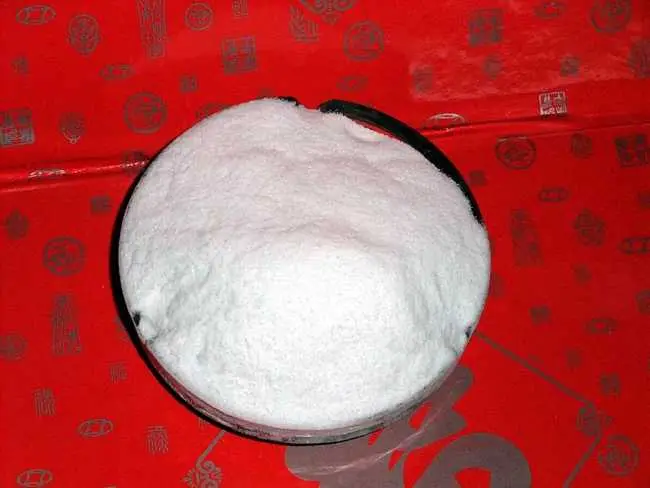
Prismatic, rectangular, irregular blocky or granular. Colorless, transparent or nearly white, translucent. Brittle, easily broken, fracture shows vitreous luster. Slight odor, salty taste.
Properties and actions性味与功效
ActionsPurgative, unblocks the bowels · Moistens dryness and softens hardness · Clears fire and reduces swelling
IndicationsUsed for excess heat accumulation with abdominal fullness and pain, dry bound stools, intestinal abscess with swelling and pain; externally for mastitis, hemorrhoids with swelling and pain.
Dosage6–12 g, generally not decocted; dissolve in the strained decoction. External use as appropriate.
CautionContraindicated in deficiency-cold of the spleen and stomach or yin deficiency; use with caution in the weak. Not for long-term use.
Processing炮制
Refined Glauber's salt (Mang Xiao)Take appropriate fresh radish, wash, slice, place in a pot, add water and boil thoroughly. Remove radish, add appropriate natural mirabilite (Pu Xiao) and boil until completely dissolved. Filter, allow to clarify, take the supernatant and cool. After most crystals precipitate, remove crystals, dry in a wind-protected place. The mother liquor can be concentrated to continue crystallization until no more crystals form. For every 100 kg of Pu Xiao, use 20 kg of radish. Finished product: prismatic, rectangular or irregular crystals, varying sizes. Colorless transparent or nearly white translucent. Brittle, fracture often uneven, vitreous luster. Odorless, salty taste. Purpose: The processing improves purity, moderates its salty-cold nature, and enhances the actions of moistening dryness, softening hardness, and promoting bowel movement. Internal use for excess heat constipation, dry bound stools, accumulation with abdominal pain, intestinal abscess; external for mastitis, hemorrhoids with swelling and pain.
Modern research现代药理
Purgative effectMang Xiao contains sodium sulfate (Na2SO4) with impurities. After oral administration, sulfate ions are poorly absorbed by the intestinal mucosa, creating a hypertonic state in the intestinal lumen that causes osmotic diarrhea; salts also chemically irritate the intestinal mucosa, contributing to stimulant laxative effect.
Cholagogue effectSmall frequent oral doses of Mang Xiao can stimulate the ampulla of the small intestine, reflexively causing gallbladder contraction and relaxation of the sphincter of Oddi, facilitating bile excretion.
Antitumor effectMang Xiao has antitumor activity.
Anti-infective and anti-inflammatory effectMang Xiao has anti-infective and anti-inflammatory effects.
Tissue dehydration effectOral Na2SO4 solution can cause pyloric spasm, delaying gastric emptying, and draw water from tissues into the intestinal lumen, thereby treating tissue edema.
Classical records历代本草
The Shennong Bencao Jing records Mang Xiao as bitter and cold, treating various diseases, eliminating cold-heat pathogenic qi, and resolving accumulations and fixed masses in the six fu organs. The Bencao Gangmu discusses the difference between Pu Xiao (coarse) and Mang Xiao (refined), noting that Mang Xiao is preferred for decoctions and powders, and cautions against use in spleen-stomach deficiency-cold.《神农本草经》:芒硝,味苦,寒。主治百病,除寒热邪气,逐六腑积聚,结固留癖。能化七十二种石。
《本草纲目》:朴消澄下,消之粗者也,其质垂浊。芒硝结于上,消之精者也,其质清明。玄明粉、甜消,则又芒硝之去气味而甘缓轻爽者也。故朴消可施于卤莽之人,及傅涂之药。若汤、散服,必须芒硝为佳。仲《伤》不用朴硝而用芒硝即此义也。消,禀太阴之精,水之子也。气寒味咸,走血而润下,荡涤三焦肠胃实热阳强之病,乃折治火邪药也。唐时,腊月赐群臣紫雪、红雪、碧雪、皆用此消炼成,道治积热诸病有神效,贵在用者中的尔。
后人制为玄明粉,煅炼多偏,佐以甘草,去其咸寒之毒。遇有三焦肠胃实热积滞,少年气壮者,量与服之,亦有速效。若脾胃虚冷,及虚火动者,服之是速其咎矣。
(芒硝/硝石)朴消属水,味咸而气寒,其性下走,不能上升,阴中之阴也,故惟荡涤肠胃积滞,折治三焦邪火。消石属火,味辛劳苦微咸,而气大温,其性上升,水中之火也,故能破积散坚,治诸热病,升散三焦火郁,调和脏腑虚寒。与硫黄同用,则配类二气,均调阴阳,有升降水火之功,治冷热缓急之病。煅制礞石,则除积滞疾饮。盖硫黄之性暖而利,其性下行。消石之性暖而散,其性上行。礞石之性寒而下,消石以性暖而上,一升一降,一阴一阳,此制方之妙也。《雷公炮炙论》云:脑痛欲死,鼻投消末,是亦取其上升辛散,乃从治之义。《本经》言其寒,《别录》言大寒,正与龙脑性寒之误相似。凡辛苦物未有大寒者,况此物得火则焰生,与樟脑,火酒之性同,安有性寒大寒之理哉?《史·仓公》云:王美人怀子不乳,召淳于意。意往饮以莨宕药一撮,以酒饮之,旋乳。意复诊其脉躁,躁者有余病,即饮以消石一剂,出血,豆比五、六枚而安,此去血结之验也。
(消石/芒硝)治伏暑伤冷,霍乱吐利,五种淋疾,女劳黑疽,心肠疠痛,赤龈肿痛,牙痛。
(芒硝/石硝)辛苦微咸小毒,阴中之阳也。得陈皮,性疏爽。
(风化消)甘缓轻浮,故治上焦心肺痰热,而不泄利。以人乳和涂,去眼睑赤肿,及头面暴热肿痛。煎黄连、点赤目。
《本草蒙筌》:甚消痰癖,更通月经。延发漆疮可敷,难产子胞可下。洗心肝明目,涤肠胃止疼。经云:热淫于内,治以咸寒,佐以苦寒。古方因之,每用大黄、芒硝,相须而为使也。
《开宝本草》:味辛、苦,大寒。主五脏积聚,久热、胃闭,除邪气,破留血,腹中痰实结搏,通经脉,利大小便及月水,破五淋,推陈致新。生于朴消。
《名医别录》:味辛、苦,大寒。主治五脏积聚,久热、胃闭,除邪气,破留血、腹中淡实结搏,通经脉,利大小便及月水,破五淋,推陈致新。