Pokeweed root (Shang Lu)
Shang Lu
PHYTOLACCAE RADIX
Nature and flavorBitter, cold; toxic. Enters the lung, spleen, kidney, and large intestine meridians.
Meridians enteredLung, spleen, kidney, large intestine
Dosage3–9 g; appropriate amount for external use
Reference market price¥5.8 / kgBozhou market · spec common grade · 湖北 · snapshot 2026-11-21
Pokeweed root is a toxic herb used in traditional Chinese medicine to drive out water and reduce swelling, with strict dosage limits.
Source药物来源
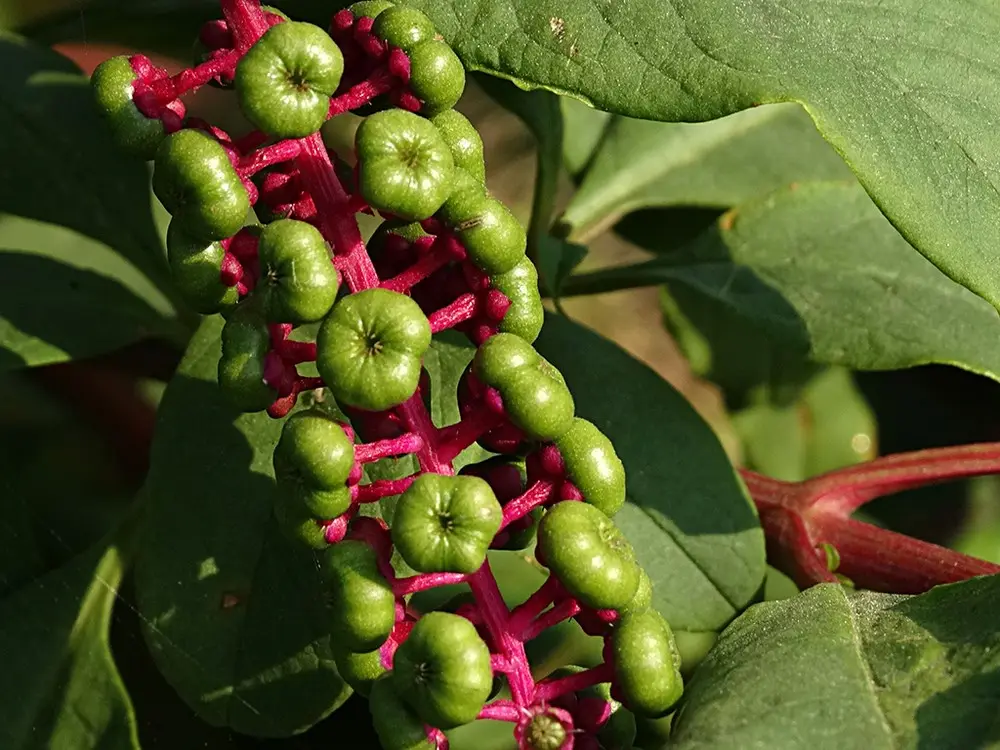
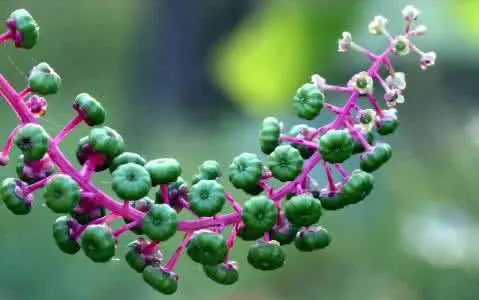
The dried root of Phytolacca acinosa Roxb. or Phytolacca americana L. (Phytolaccaceae).
Identification性状特征
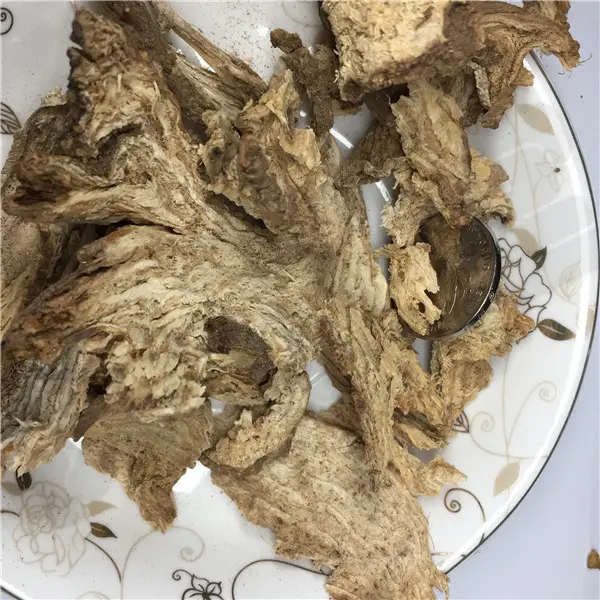
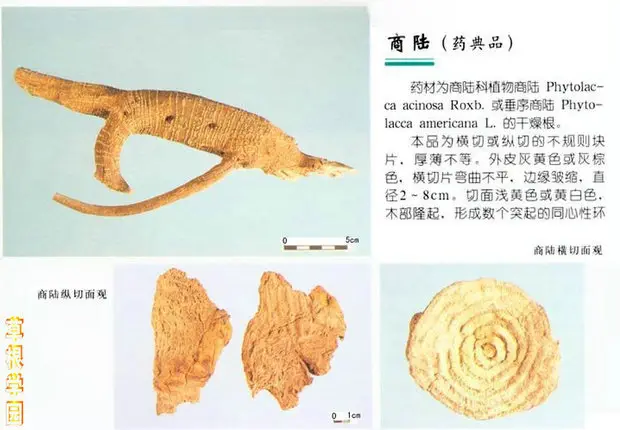
Irregular transverse or longitudinal slices of varying thickness.
Outer bark grayish-yellow or grayish-brown. Transverse slices curved and uneven, with wrinkled edges, 2–8 cm in diameter; cut surface pale yellow-brown or yellowish-white, wood raised forming several concentric rings.
Longitudinal slices curved or rolled, 5–8 cm long, 1–2 cm wide, wood in parallel ridges. Hard. Slight odor; taste slightly sweet, numbing tongue after prolonged chewing.
Properties and actions性味与功效
ActionsDrive out water and reduce swelling · Unblock the bowels and promote urination · Resolve toxicity and dissipate nodules (external use)
IndicationsEdema and distension with difficult urination and defecation; externally for carbuncles, swellings, boils and sores.
Dosage3–9 g. For external use, appropriate amount, decoct and fumigate-wash.
CautionToxic; use with caution. Contraindicated in deficiency-cold of the spleen and stomach and in pregnancy.
Processing炮制
Raw pokeweed rootRemove impurities, wash, soften thoroughly, cut into thick slices or pieces, and dry.
Vinegar-processed pokeweed rootMix clean slices with a fixed amount of rice vinegar,闷润 until absorbed, stir-fry over gentle heat until dry, remove and cool. Use 30 kg rice vinegar per 100 kg slices. Processing reduces toxicity and moderates drastic purgation.
Modern research现代药理
Diuretic effectExtracts increase urine output in frogs and toads, possibly by stimulating the vasomotor center and increasing renal blood flow.
Expectorant, antitussive, antiasthmaticActive components include phytolaccic acid and methyl phytolaccate.
AntimicrobialDecoction and tincture inhibit Pneumococcus, Shigella flexneri, Shigella sonnei, Shigella dysenteriae, and Haemophilus influenzae; ethanol extract inhibits Mycobacterium tuberculosis (37Rv) in vitro; water decoction (1:4) inhibits some dermatophytes.
AntihypertensiveActive constituents include γ-aminobutyric acid and histamine.
ImmunomodulatoryPolysaccharide-1 enhances macrophage phagocytosis and lymphocyte proliferation, and induces IL-2 secretion; total saponins improve specific immune function.
Anti-radiation100% decoction shows some anti-radiation effect.
Other effects (Phytolacca americana)Emetic and purgative; extract contains hemagglutinin, leukoagglutinin, and mitogen.
Classical records历代本草
Shennong Bencao Jing records it for water swelling and hernia; Bencao Gangmu notes it is bitter-cold, descending, and contraindicated in weak stomach qi; Bencao Mengquan distinguishes white root for internal use and red root for topical application.《神农本草经》:味辛,平。主治水胀,疝瘕痹,熨除痈肿,杀鬼精物。
《本草纲目》:商陆苦寒,沉也,降也,阴也。其性下行,专于行水;与大戟、甘遂、盖异性而同功,胃气虚弱者不可用。方家治肿满,小便不利者,以赤根捣烂,入麝香三分,贴于脐心,以帛束之,得小便利则肿消。又治湿水,以指画肉上,随散不成文者。又用白商陆,香附子炒干,出火毒以酒浸一夜,日干为末,每服三钱,米饮下。
《本草蒙筌》:味辛、甘、酸,气温。有毒。花赤者根赤相同,花白者根白无异。白根入药剂,专利水对证可煎;赤根见鬼神,其有毒贴肿堪用。倘卤莽误服,必痢血丧身。
谟按:白根治水,方载多般。或取根杂鲤鱼熬汤,或咀粒搀粟米煮粥,或捣生汁调酒,或和诸药为丸。空心服之,并可获效。赤根贴肿,方亦不同。喉痹窒塞不通,醋熬敷外肿处。石痈坚如石者,捣擦取软成脓。如或捣烂加盐,总敷无名肿毒。古赞云:其味酸辛,其形类人,疗水贴肿,其效如神。斯言尽之矣。
《开宝本草》:味辛、酸,平,有毒。疗胸中邪气,水肿,痿痹,腹满洪直,疏五脏,散水气。
《名医别录》:味酸,有毒。主治胸中邪气,水肿,痿痹,腹满洪直,疏五藏,散水气。
Cultivation and authentication栽培与鉴别
4 cultivation notes and 7 authentication articles exist for this herb. They are long-form field material and are published in Chinese only.
Read them in Chinese →