Rhubarb root and rhizome (Da Huang)Materia Medica

Rhubarb root and rhizome (Da Huang)

Da Huang
RHEI RADIX ET RHIZOMA
Nature and flavorBitter, cold. Meridian tropism: spleen, stomach, large intestine, liver, pericardium.
Meridians enteredSpleen, stomach, large intestine, liver, pericardium
Dosage3–15 g
Reference market price¥19 / kgBozhou market · spec 马蹄统 · 甘肃 · snapshot 2026-11-21

Rhubarb root and rhizome is a potent purgative and heat-clearing herb used in many traditional formulas.

Source药物来源

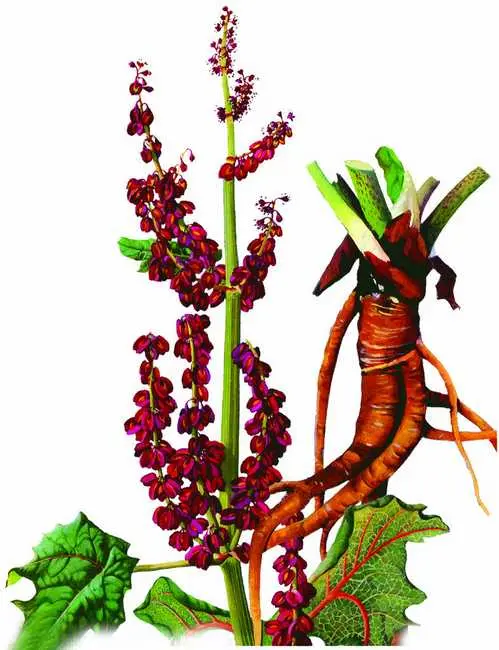
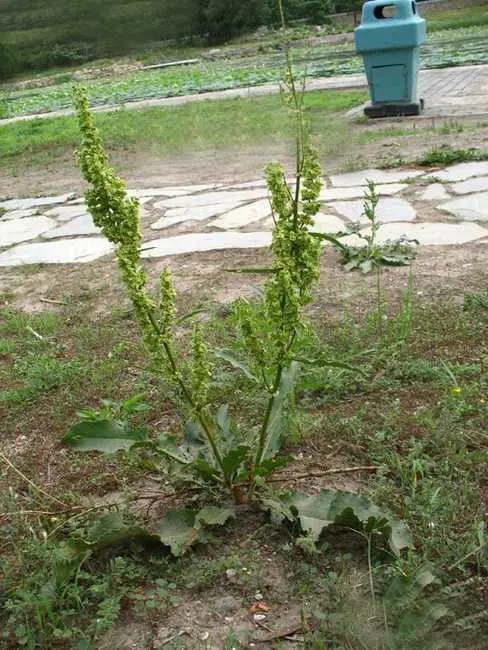
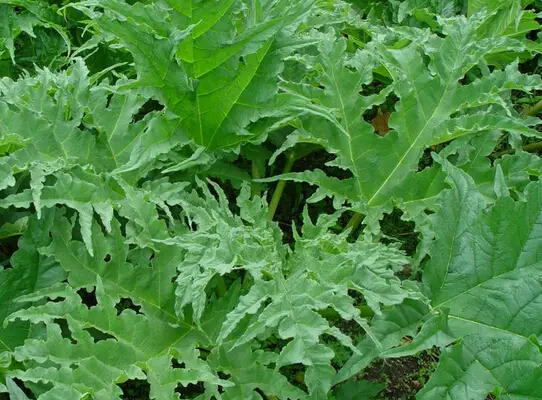
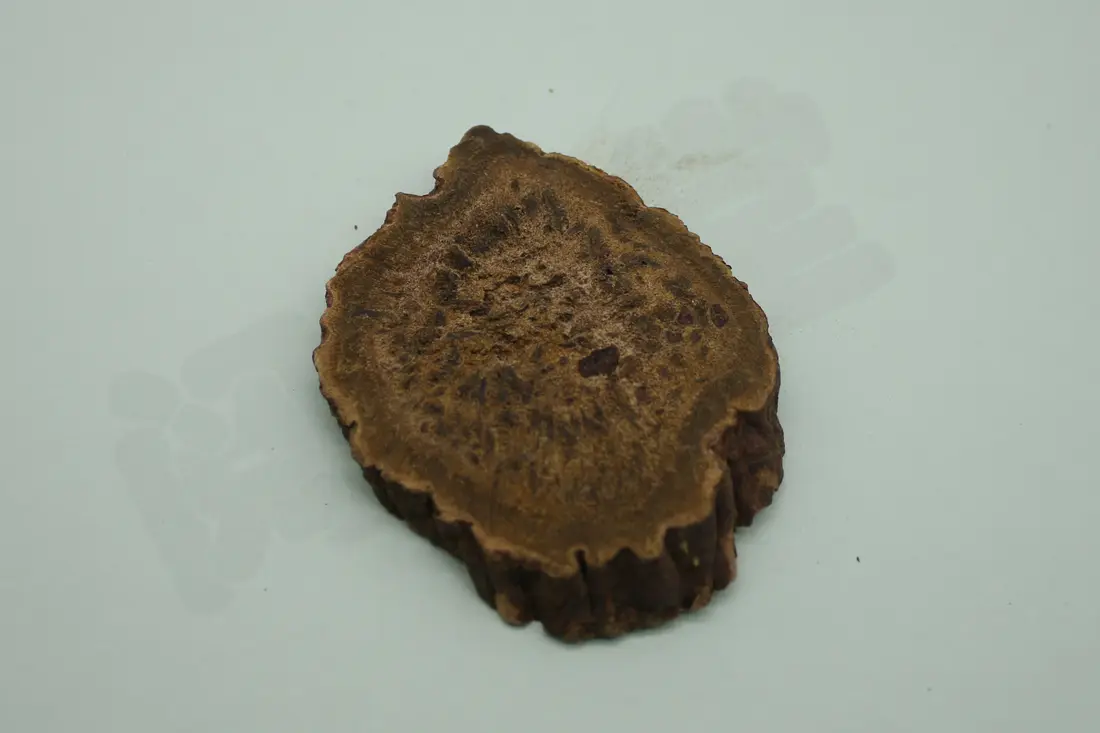
Dried root and rhizome of Rheum palmatum L., Rheum tanguticum Maxim. ex Balf., or Rheum officinale Baill. (Polygonaceae). Name origin: yellow color; called 'general' for its drastic purgative action; 'brocade pattern' for the patterned cross-section of superior quality.

Identification性状特征

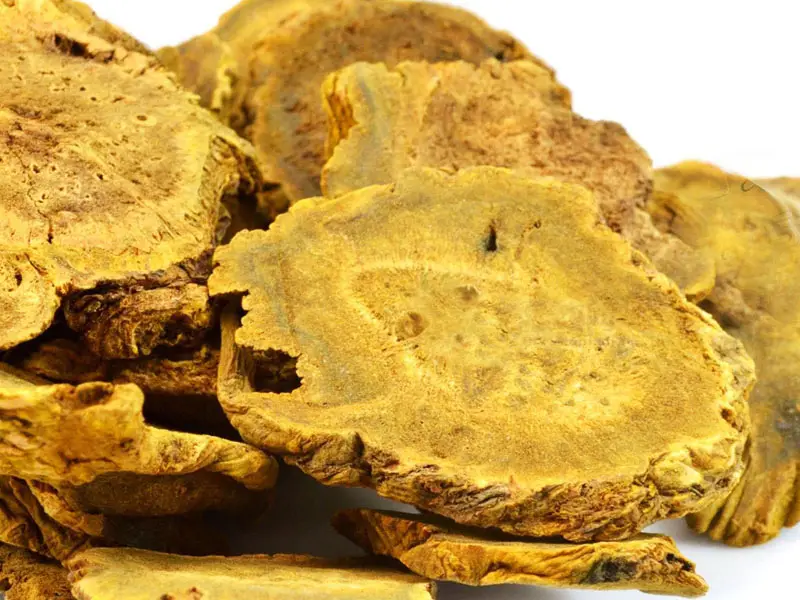
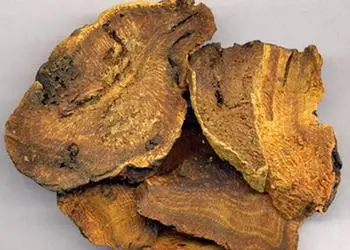
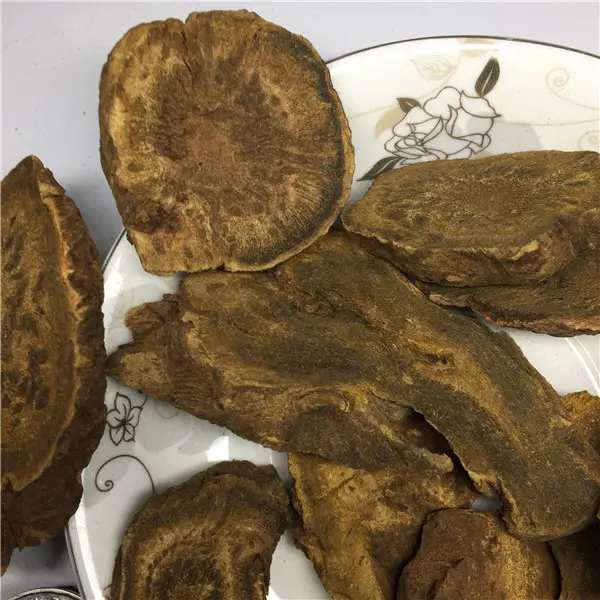
Cylindrical, conical, ovate, or irregular blocks, 3–17 cm long, 3–10 cm diameter. Surface yellow-brown to red-brown; some show whitish reticulate patterns and star spots (abnormal vascular bundles). Remaining outer bark brown, with rope holes and coarse wrinkles. Heavy, firm; fracture pale red-brown or yellow-brown, granular; rhizome pith broad with star spots in a ring or scattered; root wood well developed, with radial striations and a distinct cambium ring, no star spots. Fragrant odor; taste bitter and slightly astringent, chews sticky with a gritty feel.

Properties and actions性味与功效
Actions
Purgative, attacks accumulation · Clears heat and drains fire · Cools blood and resolves toxicity · Invigorates blood and unblocks menstruation · Drains dampness and relieves jaundice
Indications
Used for constipation due to excess heat and accumulation; vomiting and nosebleed due to blood heat; red eyes and swollen throat; carbuncles, swellings, boils and sores; intestinal abscess with abdominal pain; amenorrhea due to blood stasis; postpartum blood stasis; traumatic injuries; damp-heat dysentery; jaundice with dark urine; strangury; edema; topically for burns. Wine-processed Da Huang clears heat-toxin in the blood aspect of the upper jiao, used for red eyes, swollen throat, and swollen painful gums. Cooked Da Huang has a milder purgative effect and clears fire and resolves toxicity, used for fire-toxin sores and ulcers. Da Huang charcoal cools blood, resolves stasis, and stops bleeding, used for bleeding due to blood heat with stasis.
Dosage
3–15 g; for purgation, do not decoct for long. Appropriate amount for external use, grind into powder and apply to the affected area.
Caution
Contraindicated in deficiency-cold of the spleen and stomach, and used with caution during pregnancy and postpartum. Prolonged use may damage yin and consume qi. Overdose may cause severe diarrhea and poisoning; use under professional guidance.
Processing炮制
Da Huang (raw)
Remove impurities, wash, soften thoroughly, cut into thick slices or pieces, dry.
Wine-processed Da Huang
Spray clean Da Huang pieces with yellow wine, mix well, moisten until absorbed, stir-fry over gentle heat until dry and color darkens. 10 kg wine per 100 kg Da Huang.
Cooked Da Huang
Mix clean pieces with yellow wine, seal, steam in a water bath for 24–32 hours until black inside and out, then dry. 30 kg wine per 100 kg Da Huang.
Da Huang charcoal
Stir-fry clean pieces over strong heat until the surface is charred black and the interior is焦褐 (charred brown), then cool.
Vinegar-processed Da Huang
Mix clean pieces with rice vinegar, moisten until absorbed, stir-fry over gentle heat until dry. 15 kg vinegar per 100 kg Da Huang.
Modern research现代药理
Effects on the digestive system
Purgative effect mainly due to anthraquinone glycosides, especially dianthrones (sennosides). Promotes pancreatic secretion. Small doses (0.6–0.9 g) of powder promote gastric secretion and aid digestion. Biphasic effect on gastrointestinal motility: initial excitation then inhibition; low concentration excites, high concentration inhibits.
Effects on the blood system
Hemostatic effect: fast, reliable, via d-catechin and gallic acid promoting platelet adhesion and aggregation. Invigorates blood: increases plasma osmotic pressure, lowers blood viscosity, improves microcirculation. Hypolipidemic effect.
Anti-infective effects
Antimicrobial: active against anaerobes, Staphylococcus aureus (MIC 1.56 mg/ml), Neisseria gonorrhoeae, streptococci, etc. Anti-inflammatory: inhibits exudation and edema in early inflammation and connective tissue proliferation in late inflammation. Immunomodulatory: anthraquinones suppress immune function, while polysaccharides enhance it.
Anticancer effects
Anthraquinone derivatives, rhein, emodin, and aloe-emodin show obvious anticancer activity.
Diuretic effects
Rhein and emodin have significant diuretic effects; aloe-emodin and chrysophanol are weaker.
Antioxidant effects
Scavenges reactive oxygen species and free radicals, inhibits lipid peroxidation; basis for anti-aging.
Expectorant effect
Total anthraquinone aglycones have an expectorant effect in mice, possibly via M-cholinergic receptor activation.
Effect on uric acid formation
Emodin inhibits xanthine oxidase, affecting uric acid formation; provides rationale for gout treatment.
Intestinal mucosal protection
Promotes proliferation of goblet cells, increases mucus secretion.
Classical records历代本草
Shennong Bencao Jing records it as bitter, cold, used for blood stasis, abdominal masses, and clearing the intestines. Bencao Gangmu emphasizes its use for blood aspect disorders of five meridians, and warns against use in qi aspect or in stomach cold, blood deficiency, pregnancy, and postpartum.
《神农本草经》:味苦,寒。主下瘀血,下闭,寒热,破癥瘕积聚,留饮宿食,荡涤肠胃,推陈致新,通利水谷道,调中化食,安和五脏。 《本草纲目》:大黄乃足太阴、手足阳明、手足厥阴五经血分之药,凡病在五经血者,宜用之。若在气分用之,是谓诛伐无过矣。 泻心汤治心气不足吐衄者,乃真心之气不足,而手厥阴包络、足厥阴肝、足太阴脾、足阳明胃之邪火有余也。虽曰泻心,实泻四经血中之伏火也。又仲景治心下痞满、按之软者,用大黄黄连泻心汤主之,此亦泻脾胃之湿热,非泻心也。病发于阴而反下之,则作痞满,乃寒伤营血,邪气乘虚结于上焦,胃之上脘在心,故曰泻心,实泻脾也。《素》云:太阴所至为痞满。又云:浊气在上,则生撑胀。病发于阳而反下之,则成结胸,乃热邪陷入血分,亦在上脘分野。大陷肠汤、丸皆用大黄,亦泻脾胃血分之邪,而降其浊气也。若结肠在气分,则只用小陷胸汤。痞满在气分,则用半夏泻心汤矣。成无己注解伤寒,亦不知分别此义。 下痢亦白,里急腹痛,小便淋沥,实热燥结,潮热谵语,黄疸诸火疮。 凡病在气分,及胃寒血虚,并妊娠产后,并勿轻用。其性苦寒,能行元气、耗阴血故也。 《本草蒙筌》:味苦,气大寒。味极厚。阴中之阴,降也。无毒。使黄芩一味,入阳明二经。欲使上行,须资酒制。酒浸达巅顶上,酒洗至胃脘中。并载舟楫桔梗少停,仍缓国老甘草不坠。有斯佐助,才去病邪。如欲不行,务分缓速。欲速生使,投滚汤一泡便吞;欲缓熟宜,同诸药久煎方服。入剂多寡,看人实虚。盖性惟沉不浮,故用直走莫守。调中化食,霎时水谷利通;推陈致新,顷刻肠胃荡涤。夺土郁,无壅滞,定祸乱,建太平。因有峻烈威风,特加将军名号。仍导瘀血,更滚顽痰。破癥坚积聚止疼,败痈疽热毒消肿。勿服太过,下多亡阴。若研末鸡清调稠,可敷上火疮取效。 谟按:大黄极寒,硫黄极热。二黄气味悬隔,何号将军相同?盖硫黄系至阳之精,大黄乃至阴之类。一能破邪归正,挺出阳精;能一推陈致新,戡定祸乱。并有过乎诸药之能,宜其同得居上之号也。 《开宝本草》:味苦,大寒,无毒。平胃下气,除痰实,肠间结热,心腹胀满,女子寒血闭胀,小腹痛,诸老血留结。 《名医别录》:大寒,无毒。平胃下气,除痰实,肠间结热,心腹胀满,女子寒血闭胀,小腹痛,诸老血留结。 《本草图经》:本经言大黄,推陈致新,其效最神,故古方下积滞多用之,仲景治伤寒用处尤多。古人用毒药攻病,必随人之虚实寒热而处置,非一切轻用也。染武帝因发热欲服大黄,姚僧坦言:大黄,乃是快药,至尊年高,不可轻用。帝弗从,几至委顿。梁元帝常有心腹疾,诸医咸谓宜用平药,可渐宣通。僧坦言:脉洪而实,此有宿妨,非用大黄无瘥理。帝从之遂愈。以此言之,今医用一毒药而攻众病,其偶中,便谓此方神奇。其差误,则不言用药之失,可不戒哉?
Folklore本草传说

Da Huang has long been famous internationally; introduced to Japan by Jianzhen in 753 AD, then to Korea, Italy, and Europe. Russia regarded it as a superior medicine. In the Qing dynasty, Zhao Yi's notes record that banning Da Huang export deterred Russia. Yuan Mei cured his dysentery with prepared Da Huang after ginseng and astragalus worsened it, and wrote a poem thanking it. Another story tells of a physician Yao Sengyuan who advised Emperor Wu of Liang against Da Huang due to old age; the emperor took it and worsened, later cured by mild tonics. When Emperor Yuan of Liang had abdominal fullness and pain, Yao boldly used Da Huang and cured him. Huang Tuian's medical talks record Tang Jie'an being nicknamed 'Tang Da Huang' for his skillful use. Xue Fucheng's notes tell of a court official who, to prove Da Huang was not lethal, took about 20 g and died from severe diarrhea at age 44, showing that overdose can be toxic.
Culinary use民间药膳
Peach Blossom Porridge
Peach blossom 6 g, raw Da Huang 3 g, japonica rice 50 g
Boil peach blossom in 200 ml water to 120 ml, add Da Huang, boil to 60 ml, set aside. Cook rice porridge, add the decoction when nearly done, simmer briefly. Add brown sugar to taste.
Purgative, clears heat, promotes urination.
Toothache Tea
Da Huang 15 g, raw gypsum 30 g
Place herbs in a cup, pour boiling water, infuse. One dose can be infused 2–3 times.
Clears heat, drains fire, relieves pain.
Audio and video语音与视频
Narration · Chinese · 7:34
Latin name · pronunciation
Narration and video are shared by all language versions and are in Chinese; the images and footage themselves are language-independent.
Photographs药材图片
Rhubarb root and rhizome (Da Huang)
Cultivation and authentication栽培与鉴别

11 cultivation notes and 8 authentication articles exist for this herb. They are long-form field material and are published in Chinese only.

Read them in Chinese →

Compiled from public Chinese materia medica sources for study and reference. Not medical advice.
Chinese version · All herbs