Qin Pi (Fraxinus bark)
Qin Pi
FRAXINI CORTEX
Nature and flavorBitter, astringent, cold; enters Liver, Gallbladder, Large Intestine meridians.
Meridians enteredLiver, Gallbladder, Large Intestine
Dosage6-12 g; appropriate amount for external use, decoct and wash the affected area.
Reference market price¥9.5 / kgBozhou market · spec common grade · 陕西 · snapshot 2026-11-21
A bitter-cold herb used to clear heat and dry dampness, stop diarrhea and leukorrhea, and improve vision.
Source药物来源
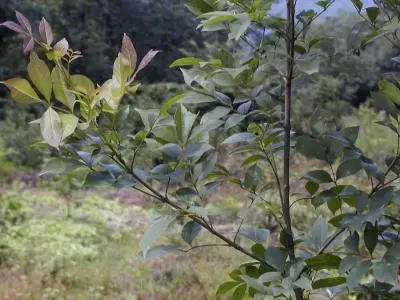
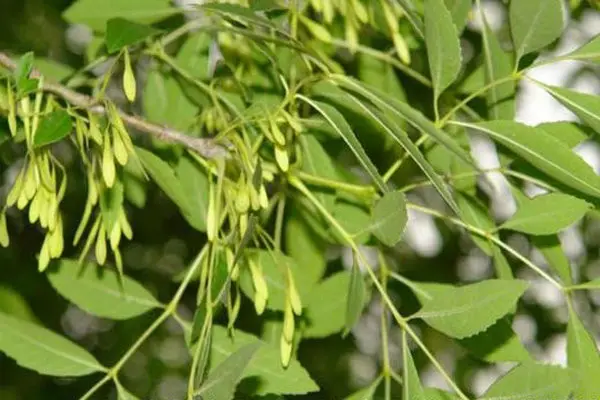
The dried branch bark or trunk bark of Fraxinus rhynchophylla Hance, Fraxinus chinensis Roxb., Fraxinus szaboana Lingelsh., or Fraxinus stylosa Lingelsh. (family Oleaceae). Note: 'Walnut catalpa bark' refers to the dried branch bark of Juglans mandshurica (family Juglandaceae).
Identification性状特征
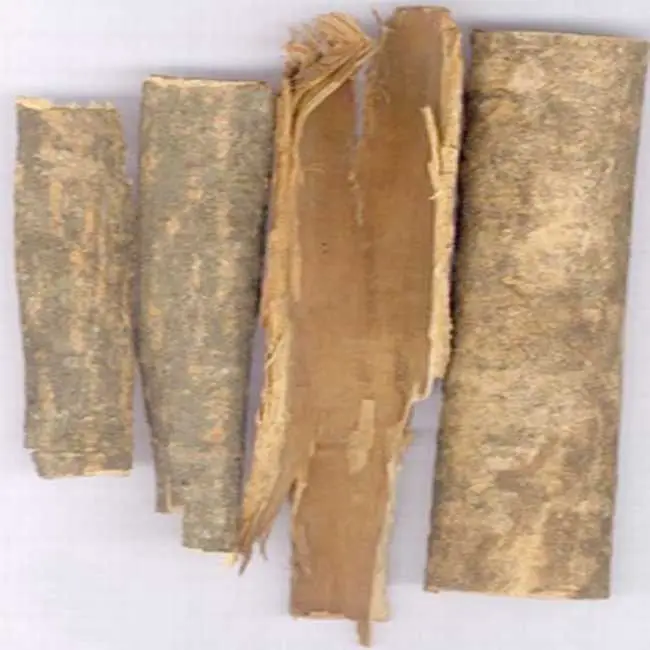
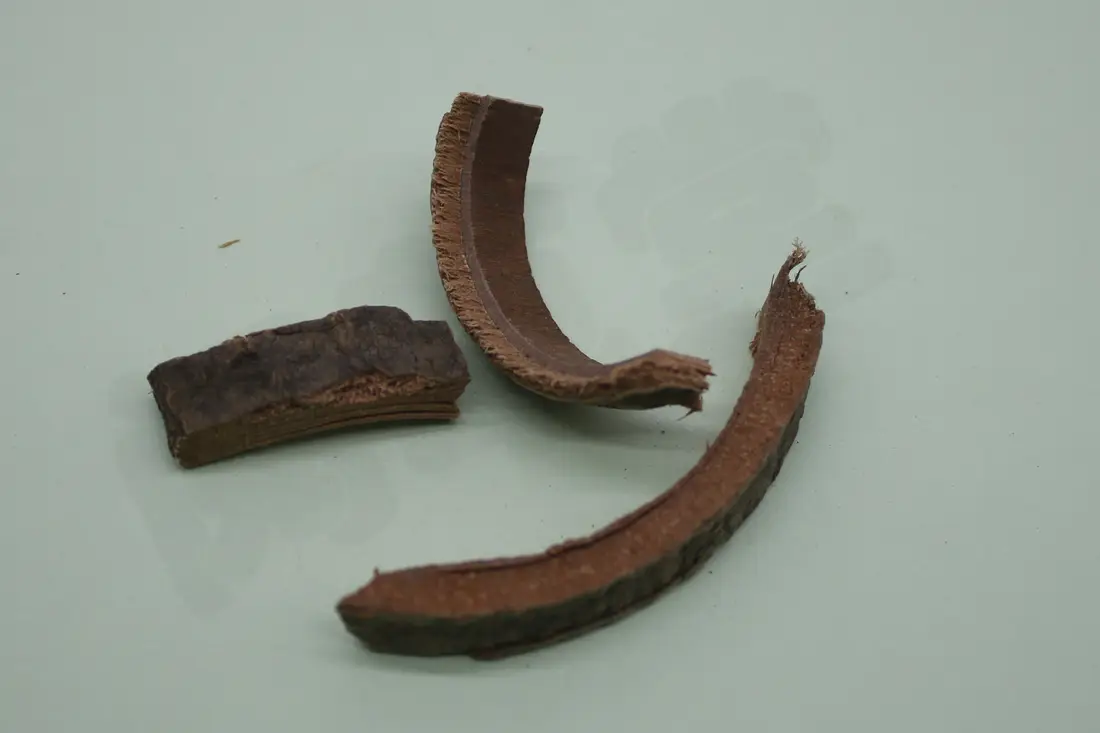
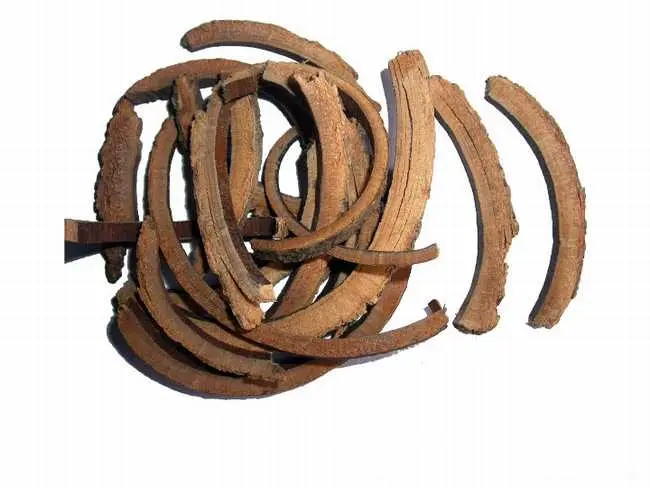
Branch bark: cylindrical or trough-shaped, 10-60 cm long, 1.5-3 mm thick. Outer surface grayish-white, grayish-brown to blackish-brown or mottled, smooth or slightly rough, with grayish-white dot-like lenticels and fine oblique wrinkles, sometimes with branch scars. Inner surface yellowish-white or brown, smooth. Hard and brittle; fracture fibrous, yellowish-white. Slight odor; bitter taste. Trunk bark: long strips, 3-6 mm thick. Outer surface grayish-brown with fissured grooves and reddish-brown round or transverse lenticels. Hard; fracture strongly fibrous.
Properties and actions性味与功效
Actionsclear heat and dry dampness · astringe and stop diarrhea · stop leukorrhea · brighten the eyes
IndicationsUsed for damp-heat diarrhea and dysentery, red and white vaginal discharge, red, swollen and painful eyes, and corneal opacity.
Dosage6-12 g; appropriate amount for external use, decoct and wash the affected area.
CautionContraindicated in deficiency-cold of the spleen and stomach.
Processing炮制
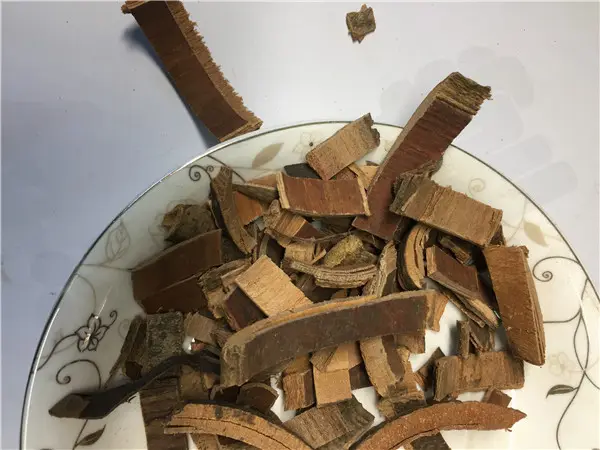
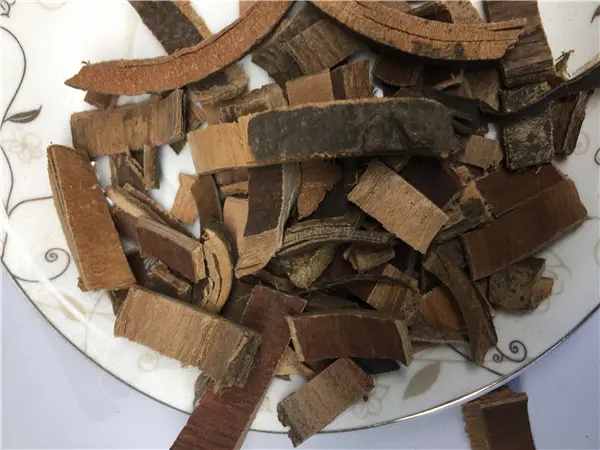
RawRemove impurities, wash, soften thoroughly, cut into shreds, and sun-dry.
Modern research现代药理
Anti-pathogenic microorganism effectQin Pi has an anti-pathogenic microorganism effect. Its constituent fraxin inhibits Staphylococcus aureus, Cardobacterium, alpha-hemolytic streptococcus, and Neisseria gonorrhoeae. The decoction also inhibits herpes simplex virus.
Antitussive, expectorant, and antiasthmatic effectsQin Pi has antitussive, expectorant, and antiasthmatic effects. Its constituents aesculetin and fraxin have good antitussive, antiasthmatic, and expectorant effects in experimental animals; scopoletin has a spasmolytic effect on guinea pig tracheal smooth muscle.
Diuretic and uric acid excretion-promoting effectsQin Pi has diuretic and uric acid excretion-promoting effects; the active constituent is fraxin.
Effect on blood circulationQin Pi affects blood circulation. Aesculin and aesculetin have anticoagulant and circulation-promoting effects, inhibit histamine-induced changes in capillary permeability, and cause vasoconstriction and blood pressure elevation in rabbits.
Inhibitory effect on intestinal peristalsisQin Pi inhibits intestinal peristalsis. At a concentration of 1:2500, aesculetin inhibits isolated rabbit intestinal muscle, reducing contraction amplitude, prolonging relaxation, and decreasing frequency.
Classical records历代本草
The Shennong Bencao Jing records its bitter taste and slightly cold nature, treating wind-damp arthralgia, dispelling cold, and removing eye opacity. The Bencao Gangmu notes its green color, cold qi, bitter taste, and astringent nature, acting on the Liver and Gallbladder meridians to treat eye diseases, convulsions, diarrhea, and leukorrhea.《神农本草经》:味苦,微寒。主治风寒湿痹,洗洗寒气,除热,目中青翳白膜。久服头不白。
《本草纲目》:秦皮,色青气寒,味苦性涩,乃厥阴肝,少阳胆药也。故治目病,惊痫,取其平木也。治下痢,崩带,取其收涩也。又能治男子少精,益精有子,取其涩所补也。故《老子》云:天道贵涩。此药乃惊痫崩痢所宜,而人止知治目一节,良为可惋。
《本草蒙筌》:味苦、气寒。沉也,阴也。无毒。专眼科,去肝中久热。煎汁澄净,点洗无时。白膜遮明,视物不见者旋效;赤肿作痛,流泪无休者殊功。益男子精衰,止妇人带下。小儿发热痫搐,亦可作汤浴身。风寒湿痹兼驱,热痢后重且却。《经》云:以苦坚之,故用白头翁、黄柏、秦皮之苦剂也。久服发黑,亦使身轻。
《开宝本草》:味苦,大寒,无毒。疗男子少精,妇人带下,小儿痫身热,可作洗目汤。皮肤光泽,肥大有子。
《名医别录》:大寒,无毒。主治男子少精,妇人带下,小儿痫,身热,可作洗目汤。久服皮肤光泽,肥大,有子。
Cultivation and authentication栽培与鉴别
0 cultivation notes and 5 authentication articles exist for this herb. They are long-form field material and are published in Chinese only.
Read them in Chinese →