Sulfur (Liu Huang)
Liu Huang
SULFUR
Nature and flavorSour, warm; toxic. Enters the kidney and large intestine meridians.
Meridians enteredKidney, Large Intestine
DosageExternal use: appropriate amount. Internal use: 1.5–3 g, processed, in pills or powder.
Sulfur is a mineral used in traditional Chinese medicine for external skin conditions and internal cold-deficiency syndromes.
Source药物来源
This product is natural sulfur from the sulfur family of native elements. After mining, it is heated and melted to remove impurities; or it is processed from sulfur-containing minerals.
Identification性状特征
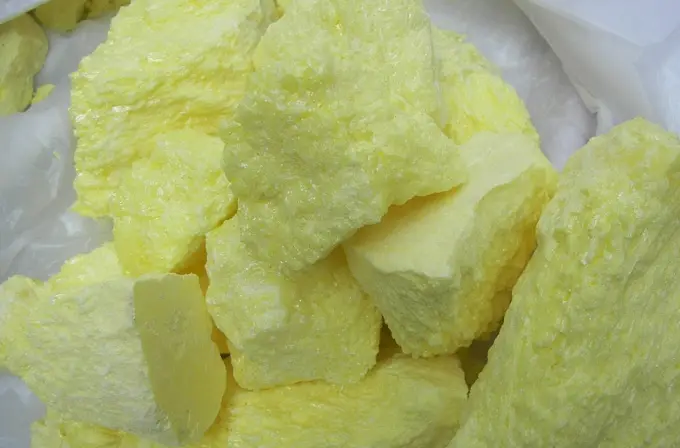
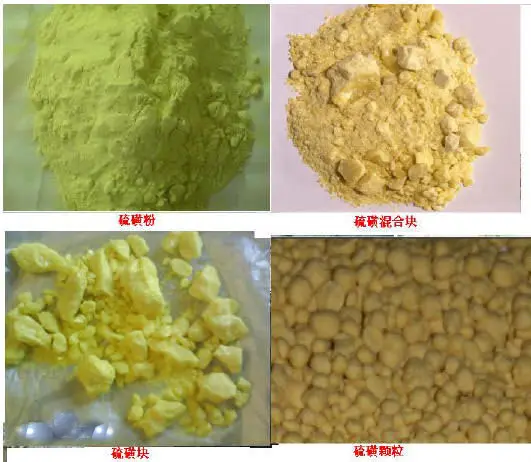
Irregular lumps. Yellow or slightly greenish-yellow. Uneven surface with greasy luster and numerous small pores. When held tightly to the ear, a faint crackling sound may be heard. Light, loose, brittle; fracture often shows needle-like crystals. Characteristic odor; taste weak.
Properties and actions性味与功效
ActionsExternal use: resolve toxicity, kill parasites, and treat sores · Internal use: tonify fire, support yang, and unblock the bowels
IndicationsExternal use for scabies, tinea, bald sores, and yin abscesses and malignant sores; internal use for impotence with cold feet, deficiency asthma and cold wheezing, and deficiency-cold constipation.
DosageExternal use: appropriate amount, grind into powder and apply with oil to the affected area. Internal use: 1.5–3 g, processed, taken in pills or powder.
CautionToxic; use with caution. Contraindicated in yin deficiency with heat and in pregnant women. Do not overdose or use long-term. Use only under professional guidance.
Processing炮制
SulfurRemove impurities and break into small pieces.
Processed SulfurTake clean sulfur pieces and boil with tofu until the tofu turns blackish-green. Remove, rinse clean, and dry in the shade.
Modern research现代药理
Gastrointestinal effectsSulfur stimulates the intestines, promotes peristalsis, softens feces, and produces a mild laxative effect.
Expectorant and diaphoretic effectsAfter partial absorption, sulfur is excreted through the lungs and skin, exerting expectorant and diaphoretic effects.
Topical effectsWhen applied externally, sulfur reacts with skin secretions to form sulfides, which soften the epidermis and kill parasites.
Effects on the brainstemSulfur has an effect on the brainstem.
Antitussive and anti-inflammatory effectsSulfur has certain antitussive, expectorant, and therapeutic effects on formaldehyde-induced arthritis in mice.
Classical records历代本草
The Shennong Bencao Jing records sulfur as sour and warm, used for gynecological erosion, hemorrhoids, and hair loss. Bencao Mengquan notes its toxicity and use for cold-deficiency, emphasizing that it should be stopped once the condition improves and not overdosed.《神农本草经》:味酸,温。主治妇人阴蚀,疽痔,恶血,坚筋骨,除头秃。
《本草蒙筌》:味酸,气温,大热。有毒。体系至阳之精,能化五金奇物。状兴阳道,若下焦虚冷,元阳将绝者殊功;禁止寒泻,或脾胃衰微,垂命欲死者立效。中病便已,过剂不宜。塞痔血,杀疥虫,坚筋骨,除头秃。去心腹痃癖,却脚膝冷疼。仍除格拒之寒,亦有将军之号。盖因功能破邪归正,返滞还清,挺出阳精,化阴魄而生魂也。
谟按:硫磺性热,每用治其格拒之寒。倘或此证兼有伏阴在内,须加阴药为佐才妙也。古方太白丹、来复丹、各有硝石之类。是皆至阳,佐以至阴,正合宜尔。若无伏阳,单患阴证,此又不必例拘,惟在用其阳药也。
《开宝本草》:味酸,大热,有毒。疗心腹积聚,邪气冷癖在胁,咳逆上气,脚冷疼弱无力,及鼻衄,恶疮,下部匿疮,止血,杀疥虫。
《名医别录》:大热,有毒。主治心腹积聚,邪气冷癖在肋,咳逆上气,脚冷疼弱无力,及鼻衄,恶疮,下部匿疮,止血,杀疥虫。
《药性论》:君,有大毒。能下气,治脚弱腰肾久冷,除冷风顽痹。又云生用治疥癣,及疗寒热咳逆。
《药性解》:味酸,性大热,有毒,入命门经。主下焦虚冷,阳绝不起,头秃、疽痔、癣疥,心腹痃癖,脚膝冷疼,虚损泄精。莹净无夹石者良,畏朴硝、细辛、飞廉,忌百般禽兽血。
按:硫磺为火之精,宜入命门补火。盖人有真火,寄于右肾,苟非此火,则不能有生;此火一熄,则万物无父。非硫磺孰与补者?《太清》云:硫禀纯阳,号为将军,破邪归正,返浊还清,挺立阳精,消阴化魄。戴元礼云:热药皆燥,惟硫磺不燥,则先贤尝颂之矣。今人绝不用之,诚虞其热毒耳。然有火衰之证,舍此莫疗,亦畏而遗之,可乎?中其毒者,以猪肉、鸭羹余、甘草汤解之。
Folklore本草传说
Sulfur, also known as stone sulfur, yellow tooth, and other names, is a mineral mainly containing sulfur. It is traditionally processed by boiling with tofu. In ancient texts, Kou Zongshi and Li Shizhen praised its use for severe cold-deficiency and collapse. Sun Sheng's Tan Pu mentions taking it in summer for accumulations, and the Taiping Huimin Heji Jufang includes a formula for warming the dantian, but it should not be taken long-term.
Culinary use民间药膳
Huangdan and Wubeizi WaterHuangdan 12g, calcined alum 12g, alum 12g, Wubeizi 15g, Baibu 15g, realgar 6g, Angelica dahurica 6g, Dictamnus dasycarpus 6g, sulfur 6g, cinnabar 3g, calomel 3g, Cnidium monnieri 9g, Bai Fuzi 9g, Impatiens balsamina 9g, aged rice vinegar 1500ml.
Grind each into powder. Boil the vinegar in an iron pot, add Huangdan and stir, then add the powders of Wubeizi, Baibu, Cnidium, Bai Fuzi, Angelica, Dictamnus, and Impatiens, stir well, then slowly add the remaining six powders, stir, and remove from heat.
For various tinea, goose-web wind, and onychomycosis.
Cultivation and authentication栽培与鉴别
0 cultivation notes and 2 authentication articles exist for this herb. They are long-form field material and are published in Chinese only.
Read them in Chinese →