Glehnia root (Bei Sha Shen)
Bei Sha Shen
GLEHNIAE RADIX
Nature and flavorSweet, slightly bitter, slightly cold. Enters the lung and stomach meridians.
Meridians enteredLung and stomach meridians
Dosage5–12 g
Reference market price¥19 / kgBozhou market · spec common grade · 河北 · snapshot 2026-11-21
Glehnia root is a yin-nourishing herb used for dry cough due to lung heat and insufficient stomach yin.
Source药物来源
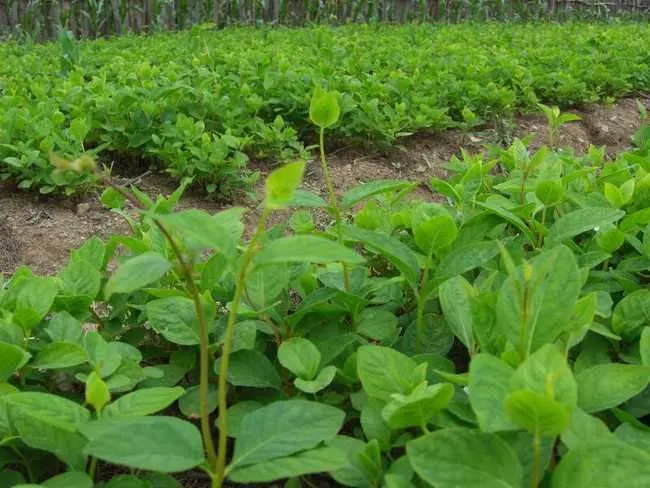
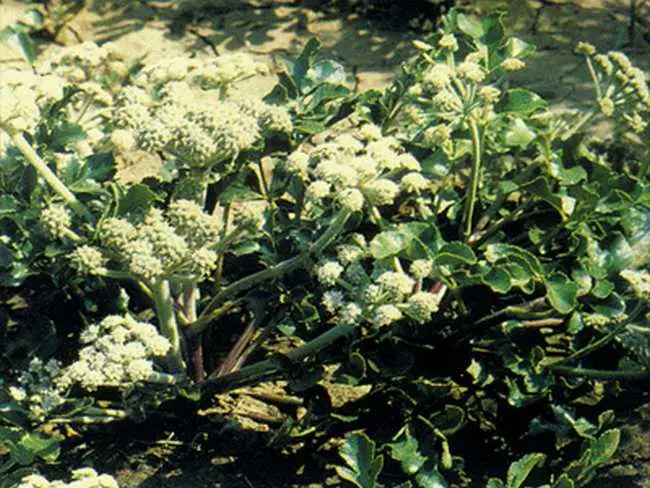
The dried root of Glehnia littoralis Fr. Schmidt ex Miq. (family Apiaceae).
Identification性状特征
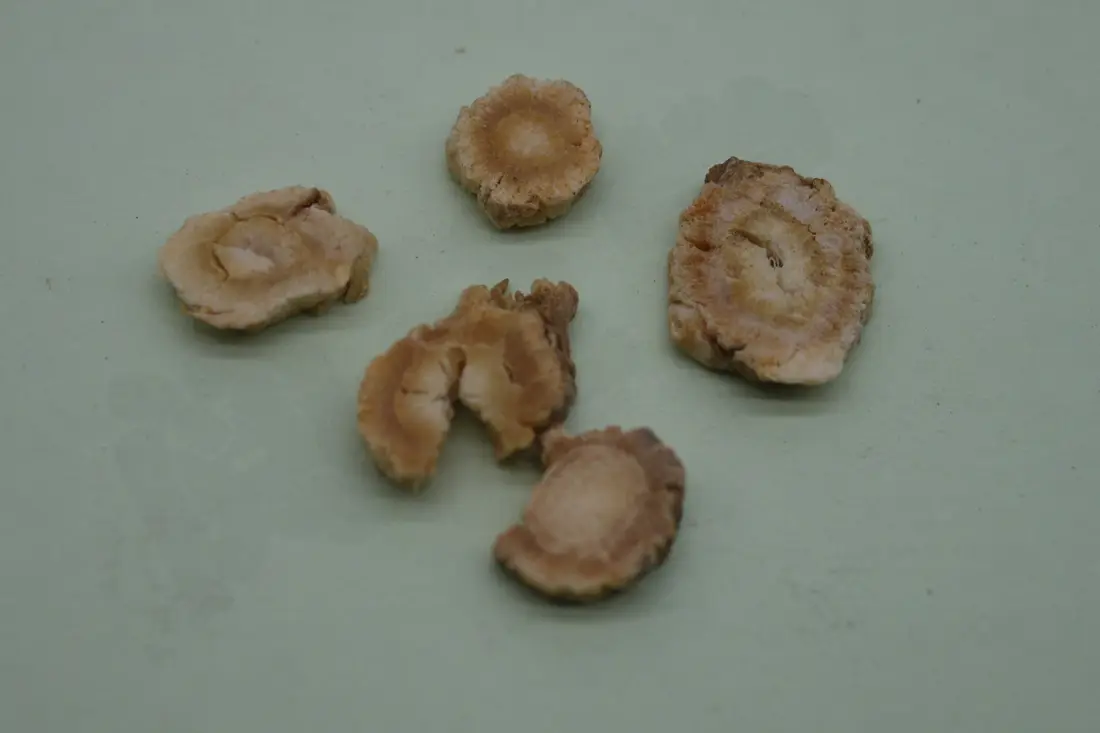
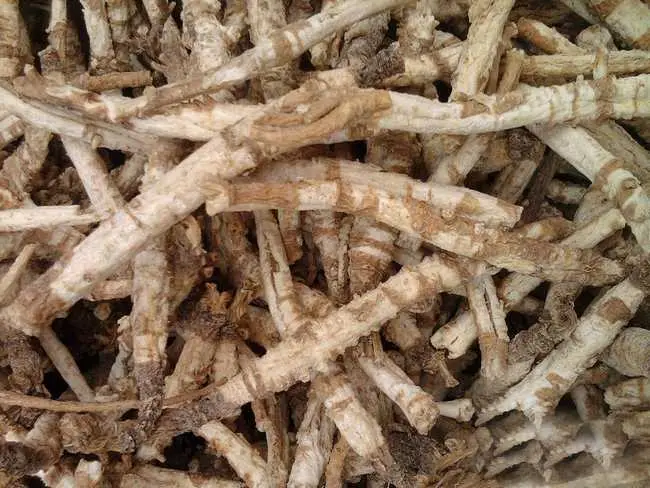
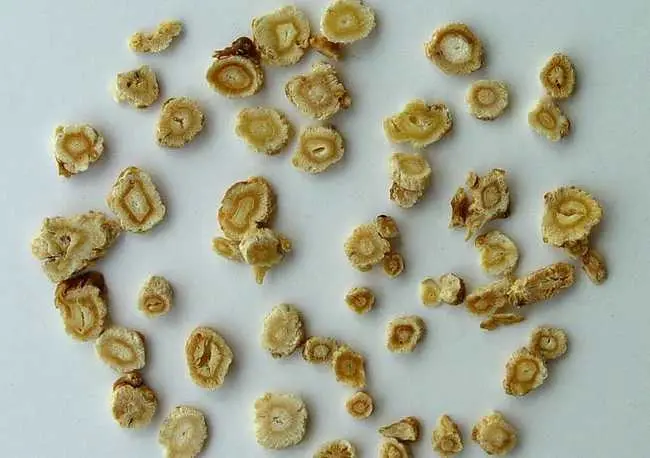
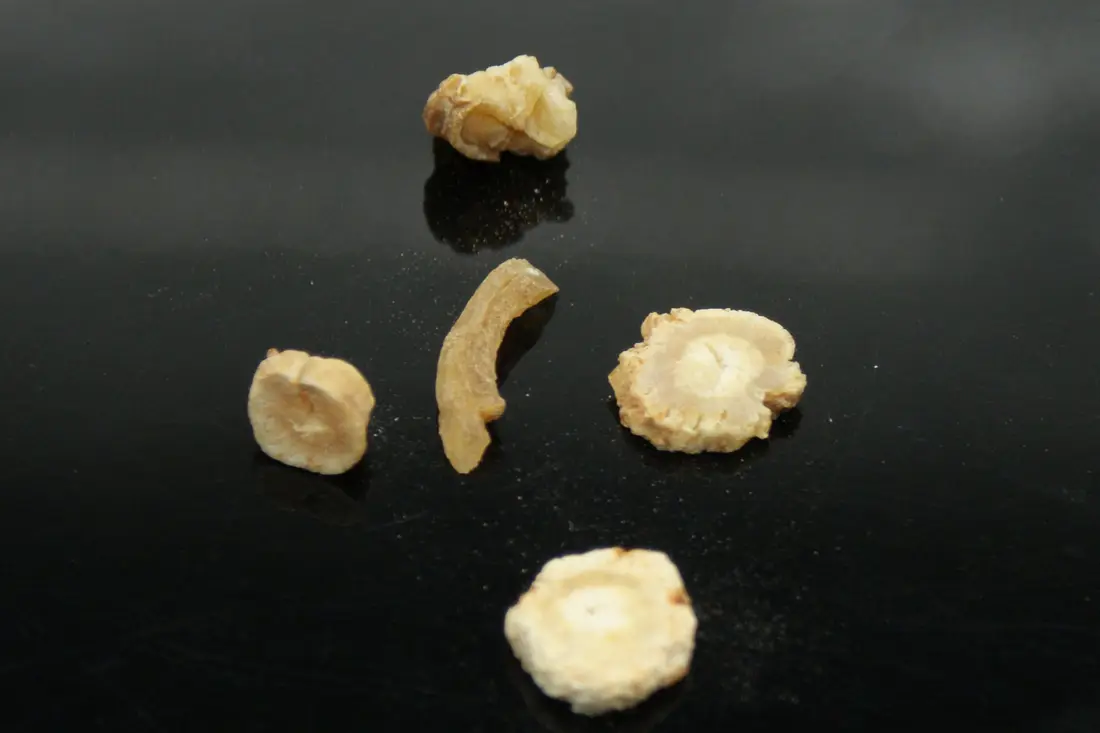
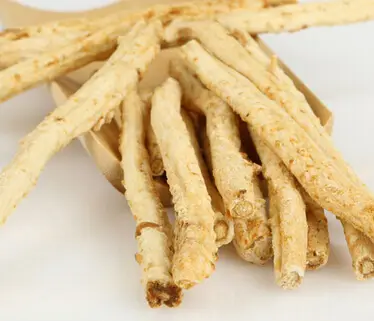
Slender cylindrical, occasionally branched, 15–45 cm long, 0.4–1.2 cm in diameter. Surface pale yellowish-white, slightly rough, occasionally with remnant outer bark; unpeeled surface yellowish-brown. Fine longitudinal wrinkles and grooves throughout, with brownish-yellow dotted rootlet scars; apex often retains a yellowish-brown rhizome base; upper part slightly slender, middle slightly thick, lower part gradually tapering. Brittle, easily broken; fracture shows pale yellowish-white cortex and yellow wood. Odor distinctive; taste slightly sweet.
Properties and actions性味与功效
ActionsNourish yin and clear lung heat · Benefit the stomach and generate fluids
IndicationsDry cough due to lung heat, consumptive cough with phlegm and blood, insufficient stomach yin, fluid damage in febrile disease, dry throat and thirst.
Dosage5–12 g, decocted and taken orally.
CautionSlightly cold in nature; use with caution in cases of deficiency-cold of the spleen and stomach.
Processing炮制
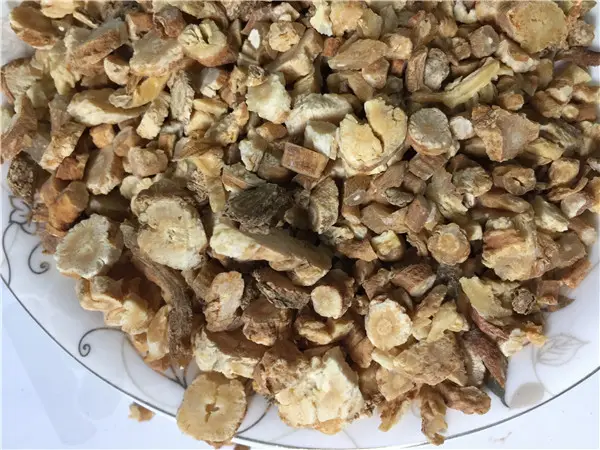
RawRemove residual stems and impurities, moisten briefly, cut into sections, and sun-dry.
Modern research现代药理
1Adenophora root (Nan Sha Shen) has an expectorant effect.
2Both Nan Sha Shen and Bei Sha Shen increase cardiac amplitude and have a cardiotonic effect; Bei Sha Shen slightly raises blood pressure.
3Nan Sha Shen enhances cellular and non-specific immunity and suppresses humoral immunity, while Bei Sha Shen suppresses both humoral and cellular immunity.
4Nan Sha Shen has some antibacterial effect.
5Bei Sha Shen has antipyretic and analgesic effects.
Classical records历代本草
The Shennong Bencao Jing records it as bitter and slightly cold, used for blood accumulations, fright, and to supplement the middle and benefit lung qi. The Bencao Gangmu explains its name and distinguishes it from ginseng.《神农本草经》:味苦,微寒。主治血积,惊气,除寒热,补中,益肺气。
《本草纲目》:沙参白色,宜于沙地,故名。
人参甘苦温,其体重实,当补脾胃元气,因而益肺与肾,故内伤元气者宜之。沙参甘淡而寒,其体轻虚,专补肺气,因而益脾与肾,故金能受火克者宜之。一补阳而生阴,一补阴而制阳,不可不辨之也。
清肺火,治久咳肺痿。
《本草蒙筌》:味苦、甘,气微寒。无毒。反藜芦,恶防己,乃足厥阴本经药也。治诸毒排脓消肿,安五脏益肺补肝。止疝气绞疼,散浮风瘙痒。除邪热,去惊烦。易老用代人参,形实不同。盖取味之苦甘,泻中兼补,略相类尔。
《开宝本草》:味苦,微寒,无毒。疗胃痹心腹痛,结热邪气,头痛,皮间邪热,安五脏,补中。
《名医别录》:无毒。主治胃痹,心腹痛,结热,邪气,头痛,皮间邪热,安五藏,补中。
Culinary use民间药膳
Ophiopogon teaOphiopogon tuber, Codonopsis root, Bei Sha Shen, Polygonatum odoratum, and Trichosanthes root, 9 g each.
Grind the herbs into coarse powder, brew with boiling water as tea. Take one dose daily.
Soothes the liver, nourishes yin, and clears heat. Indicated for gastritis of the stomach-heat and yin-deficiency type.
Cultivation and authentication栽培与鉴别
13 cultivation notes and 9 authentication articles exist for this herb. They are long-form field material and are published in Chinese only.
Read them in Chinese →