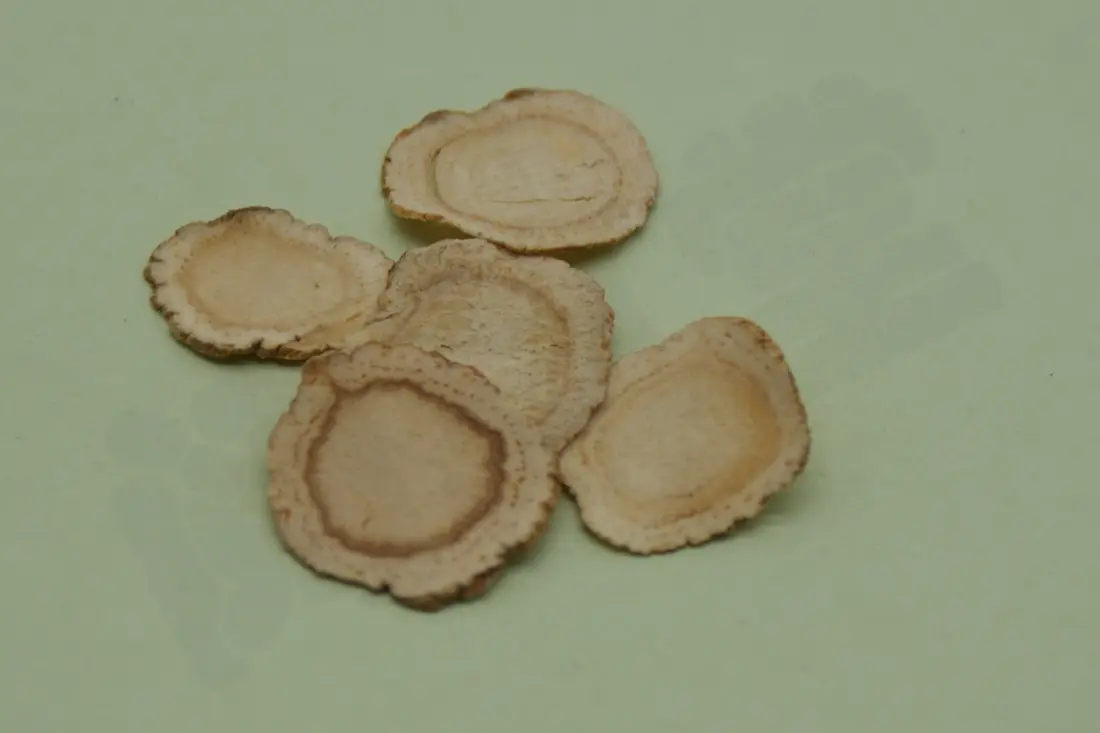
American ginseng (Xi Yang Shen)
American ginseng is a cooling tonic that supplements qi and yin while clearing heat and generating fluids.
The dried root of Panax quinquefolium L. (Araliaceae).
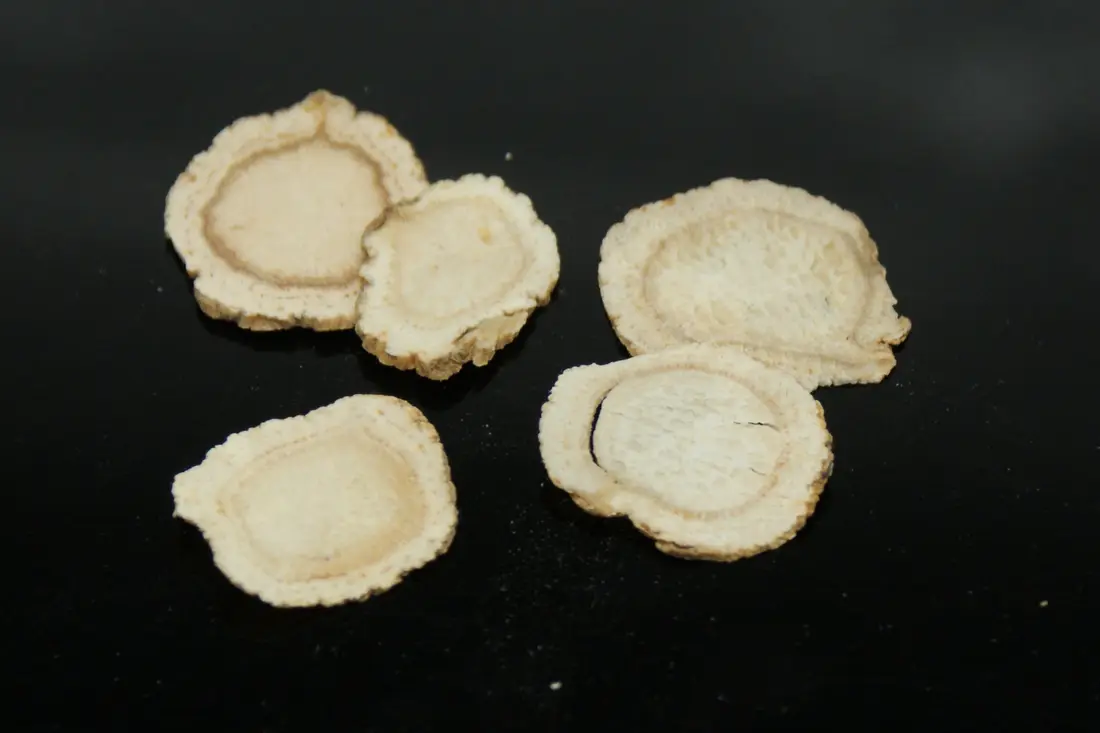
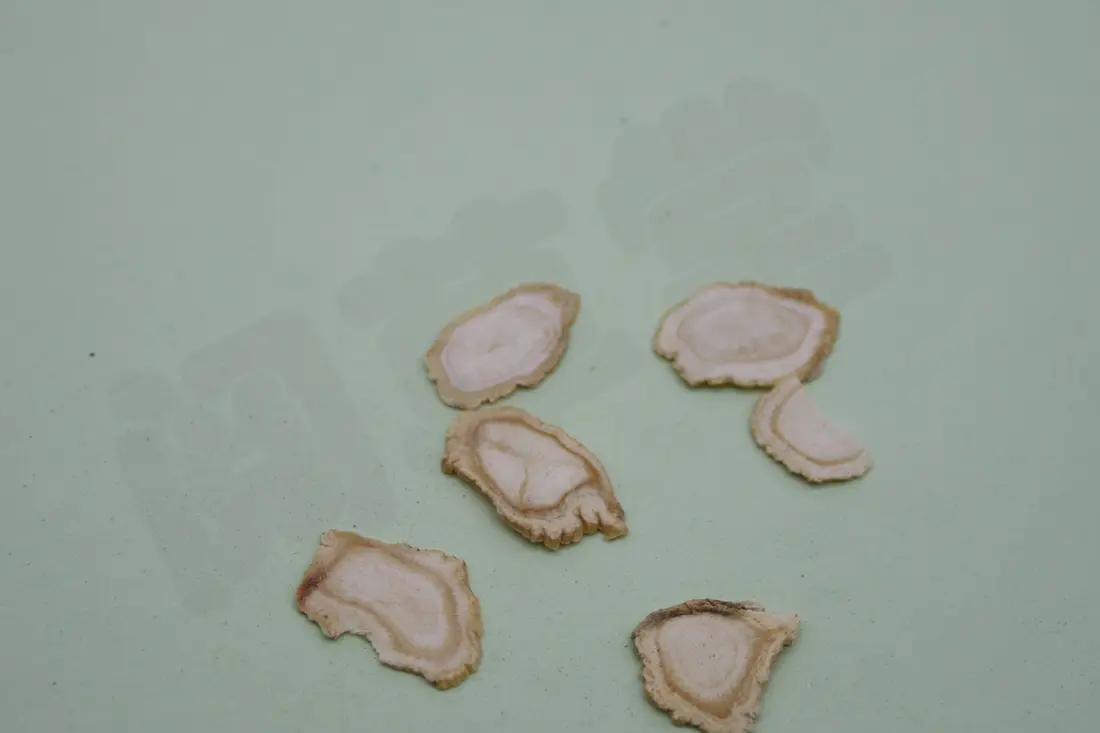
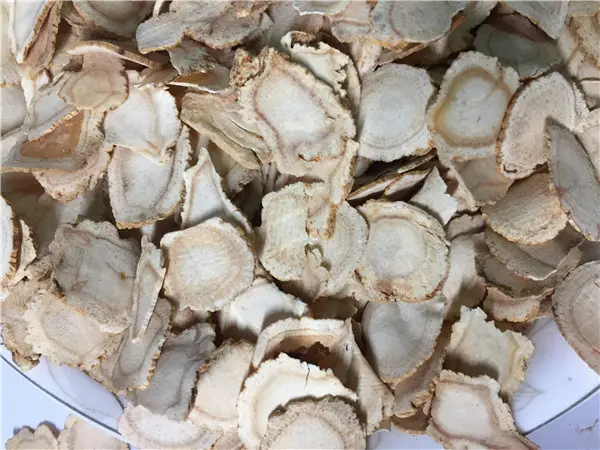
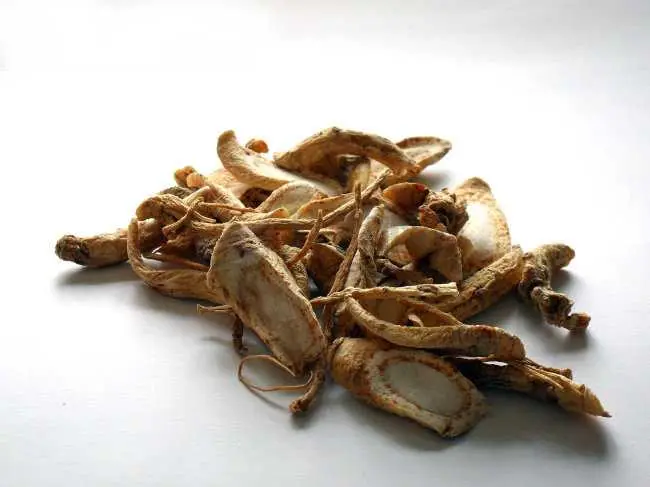
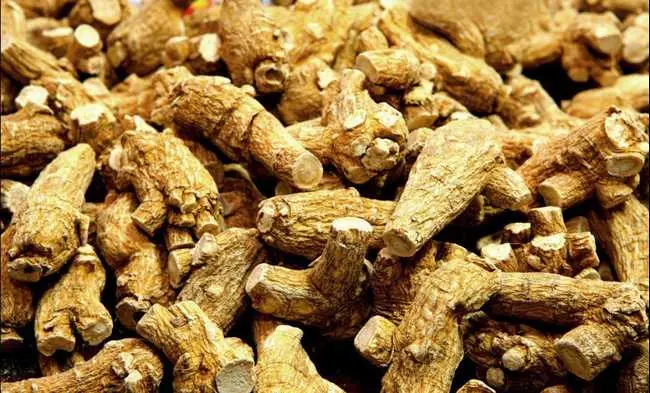
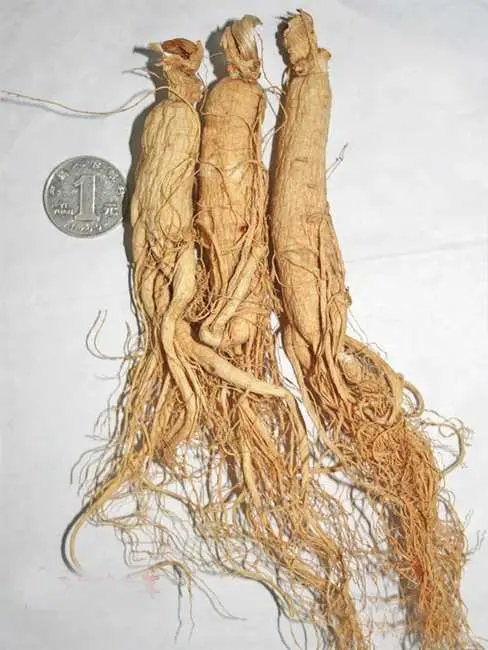
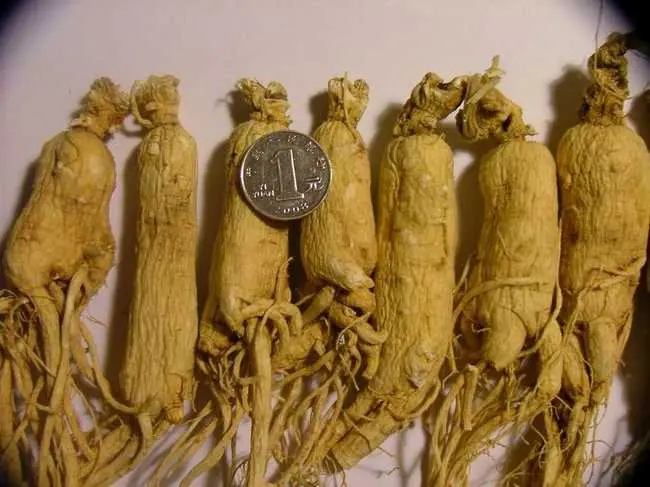
Spindle-shaped, cylindrical, or conical, 3–12 cm long, 0.8–2 cm in diameter. Surface light yellowish-brown or yellowish-white, with transverse rings, linear lenticel-like protrusions, fine longitudinal wrinkles, and rootlet scars. One to several lateral roots on the middle-lower part, mostly broken. Some have a rhizome (rhizoma) at the upper end with distinct nodes, circular or semicircular stem scars (rhizome bowls), and adventitious roots (rootlets) or broken. Heavy, solid, hard to break; fracture flat, light yellowish-white, slightly powdery; yellowish-brown dotted resin canals visible in the cortex; cambium ring brownish-yellow; xylem slightly radially striate. Odor slight but distinctive; taste slightly bitter and sweet.
American ginseng was introduced to China in the 17th century, native to southern Canada and northern United States. Its discovery is linked to the use of Chinese ginseng. In 1642, a person named Semedo wrote a report on Chinese ginseng based on merchants' descriptions. In 1697, a scholar named Bauderon presented Semedo's report on the medical uses of Chinese ginseng at the French Academy of Sciences, alerting the West to its value. In 1914, a British missionary in China wrote a paper on 'Ginseng of the Far East' published in the proceedings of the Royal Society. Soon after, a French priest in Quebec, Canada, studied translations and specimens, and after two years of searching in forests with similar natural conditions to the Far East, found a similar plant—American ginseng. It was widely cultivated and quickly entered Chinese and Southeast Asian markets. Since the Qing dynasty, it was recorded in Wu Yiluo's Bencao Congxin and Zhao Xuemin's Bencao Gangmu Shiyi, and gradually came into use in Chinese medicine. It is said that around the 21st year of Guangxu, Empress Dowager Cixi often had spleen deficiency with dampness, and imperial physicians often used American ginseng with Codonopsis. In 1784, the first American merchant ship after independence, the Empress of China, sailed to Guangzhou; by the 19th century, China was a major export destination for American ginseng. From 1948 to 1980, China successfully introduced and cultivated it, establishing production bases in Jilin, Beijing, Hebei, and later expanding to Liaoning, Heilongjiang, Shandong, Shaanxi, Yunnan, Fujian, etc.
17 cultivation notes and 26 authentication articles exist for this herb. They are long-form field material and are published in Chinese only.
Chinese version · All herbs