Codonopsis root (Dang Shen)Materia Medica

Codonopsis root (Dang Shen)

Dang Shen
CODONOPSIS RADIX
Nature and flavorSweet, neutral. Enters the spleen and lung meridians.
Meridians enteredSpleen, Lung
Dosage9–30 g
Reference market price¥35 / kgBozhou market · spec common grade · 甘肃 · snapshot 2026-11-21

Codonopsis root, known as Dang Shen, is a gentle qi tonic used in traditional medicine to support spleen and lung function and to build blood and fluids.

Source药物来源

This product is the dried root of Codonopsis pilosula (Franch.) Nannf., Codonopsis pilosula Nannf. var. modesta (Nannf.) L.T.Shen, or Codonopsis tangshen Oliv. (Campanulaceae).

Identification性状特征

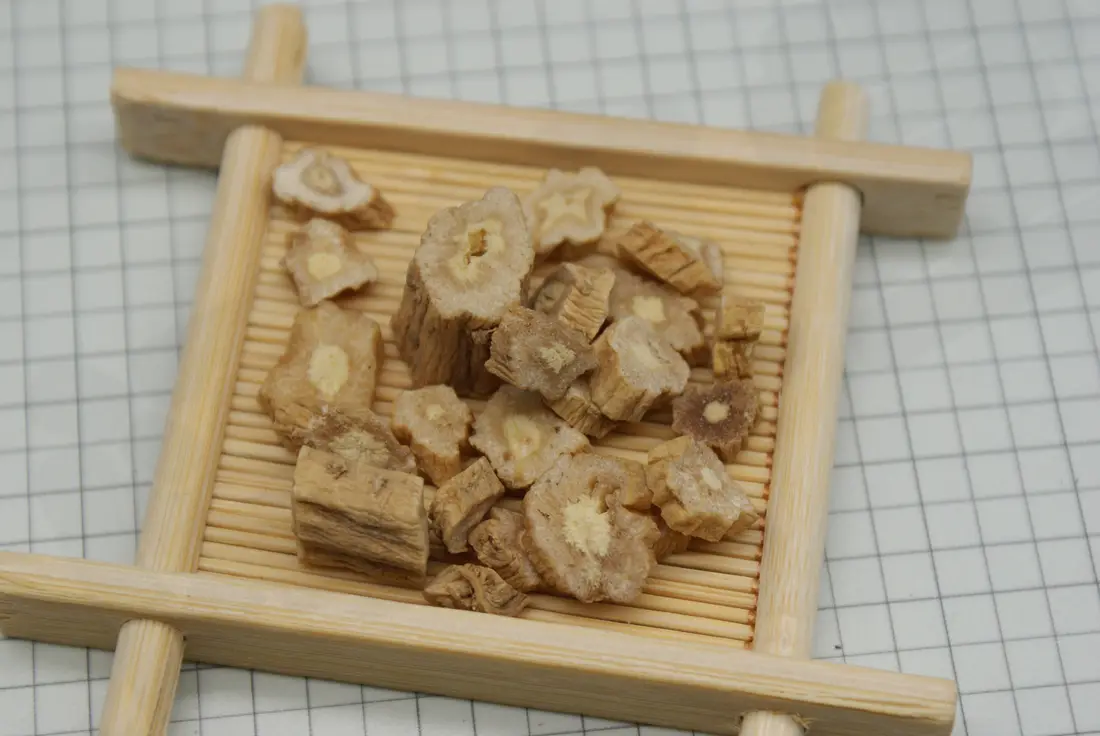
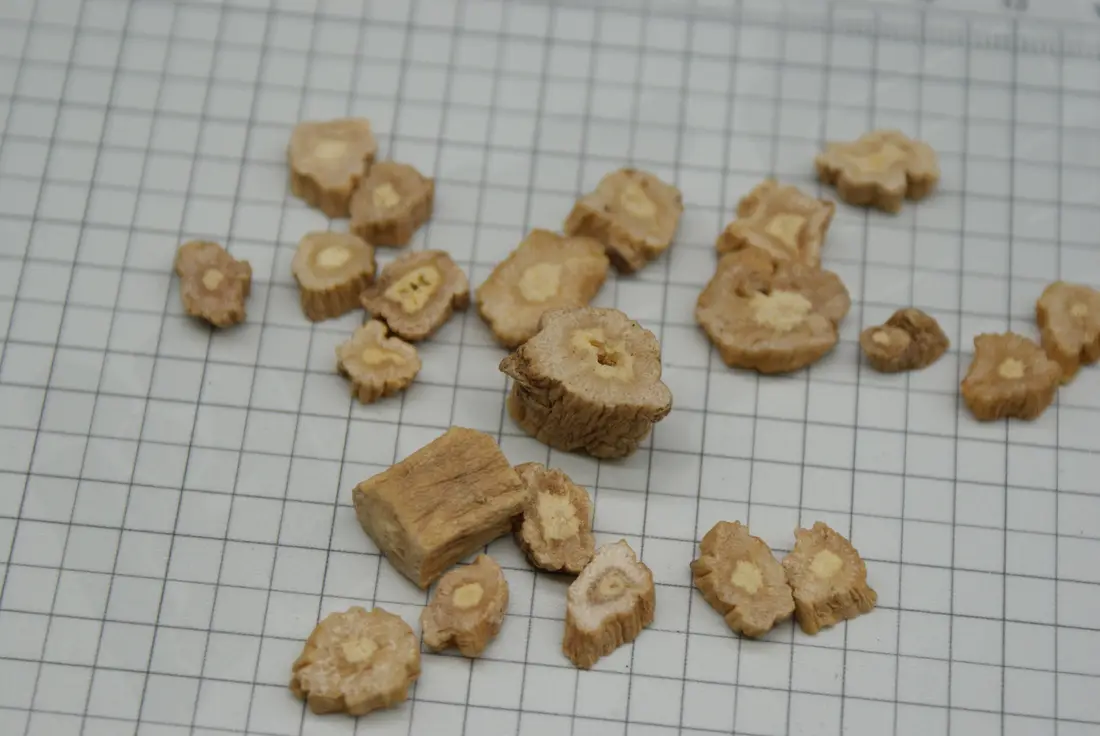
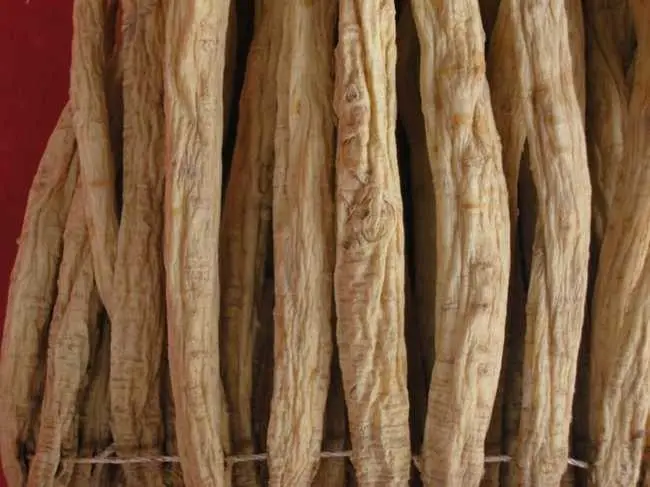
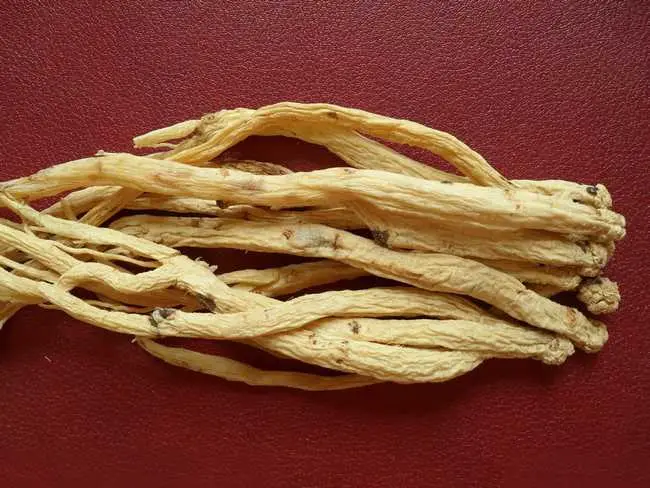
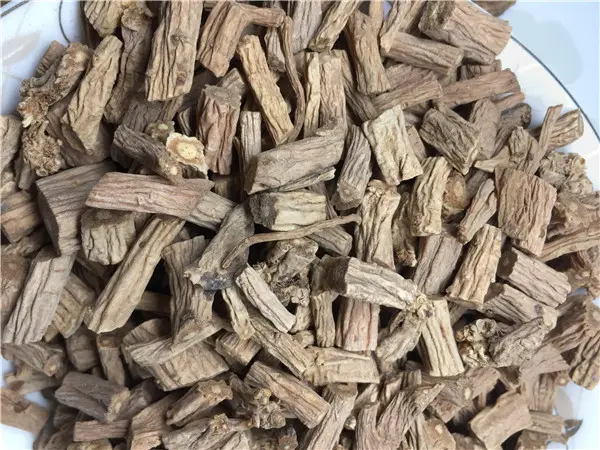
Dang Shen is long cylindrical, slightly curved, 10–35 cm long and 0.4–2 cm in diameter. The surface is grayish-yellow, yellowish-brown to grayish-brown. The root head has numerous warty stem scars and buds, each with a depressed dot at the tip. Below the root head are dense annular transverse wrinkles, gradually sparser downward, sometimes extending to half the length; cultivated products have few or no annular wrinkles. The whole surface has longitudinal wrinkles and scattered transversely elongated lenticel-like protrusions; blackish-brown gelatinous matter is often found at broken lateral root sites. The texture is slightly soft or slightly hard with some toughness; the fracture is relatively smooth, with fissures or radial striations; the cortex is pale brownish-yellow to yellowish-brown, and the wood is pale yellow to yellow. It has a characteristic aroma and a slightly sweet taste. Codonopsis pilosula var. modesta (Xi Dang Shen): 10–35 cm long, 0.5–2.5 cm in diameter. Surface yellowish-white to grayish-yellow; dense annular transverse wrinkles below the root head often extend to more than half the total length. Fracture with more fissures; cortex grayish-white to pale brown. Codonopsis tangshen: 10–45 cm long, 0.5–2 cm in diameter. Surface grayish-yellow to yellowish-brown, with obvious irregular longitudinal grooves. Texture relatively soft but firm; fracture with fewer fissures; cortex yellowish-white.

Properties and actions性味与功效
Actions
Strengthen the spleen and benefit the lungs · Nourish blood and generate fluids
Indications
Used for spleen and lung qi deficiency with poor appetite and fatigue, cough with deficiency panting, qi and blood insufficiency with sallow complexion, palpitations and shortness of breath, fluid damage with thirst, and internal heat with wasting-thirst.
Dosage
9–30 g.
Caution
Contraindicated in cases of qi stagnation with excess fire. Use with caution in individuals with yin deficiency and heat or in those with excess heat patterns.
Processing炮制
Dang Shen (raw)
Take the raw medicinal material, remove impurities, wash clean, moisten thoroughly, cut into thick slices, and dry.
Rice-fried Dang Shen
Place rice in a preheated container, heat over medium fire until smoking, add cleaned Dang Shen and stir-fry until yellow (coated with fire color), sift out the rice, and cool. For every 100 kg of cleaned Dang Shen slices, use 20 kg of rice.
Honey-fried Dang Shen
Dilute refined honey with an appropriate amount of boiling water, mix evenly with cleaned Dang Shen, moisten thoroughly, place in a preheated container, heat over gentle fire, stir constantly until yellowish-brown and no longer sticky to the touch, then remove and cool. For every 100 kg of cleaned Dang Shen slices, use 20 kg of refined honey.
Modern research现代药理
Gastrointestinal effects
Dang Shen can significantly reduce gastric juice, gastric acid secretion, and pepsin activity; it has anti-ulcer and anti-gastric mucosal injury effects and also influences gastrointestinal motility.
Effects on learning, memory, and sedation
Dang Shen enhances learning and memory in mice, inhibits spontaneous activity, synergizes with low-dose chlorpromazine sedation, but antagonizes the central inhibitory effect of high-dose chlorpromazine; it also affects the rabbit electroencephalogram.
Antipyretic and analgesic effects
Dang Shen in compound formulas can lower body temperature in the yingfen pattern. The methanol extract of Lu Dang Shen has obvious analgesic effects, while Wen Dang and Banqiao Dang do not.
Adaptogenic effects
Dang Shen has anti-fatigue, cold-resistant, heat-resistant, and hypoxia-resistant effects, and protects against radiation damage.
Cardiovascular effects
Dang Shen improves myocardial energy metabolism, tonifies qi and strengthens the heart, enhances myocardial hypoxia tolerance in animals, and has a protective effect against acute myocardial ischemia induced by pituitrin; it lowers blood pressure and improves microcirculatory disturbances in animals.
Hematological effects
Dang Shen reduces white blood cell count, increases red blood cells and hemoglobin, inhibits platelet aggregation, and has an antithrombotic effect.
Blood sugar effect
Dang Shen has a certain blood sugar-raising effect.
Uterine effects
Dang Shen can significantly enhance the contraction of isolated uterus and has a good fetus-calming effect.
Anti-aging effect
Dang Shen has anti-aging effects.
Pulmonary protective effect
Dang Shen maintains effective oxygen uptake function of the lungs, protects rat alveolar epithelial tissue and capillary endothelial cells, and essentially normalizes the diffusion of cells through the air-blood barrier.
Classical records历代本草
The Bencao Congxin states that Dang Shen tonifies the middle and benefits qi, harmonizes the spleen and stomach, and relieves restlessness and thirst; it is suitable for mild qi deficiency. The Bencao Qiuzhen warns that Dang Shen is not equivalent to ginseng and should not replace it in severe deficiency, and that it should not be used as a daily tea by the wealthy, as it may deplete the lungs.
《本草纲目》:《从新》:补中益气,和脾胃,除烦渴。中气微弱,用以调补,甚为平妥。 《本草求真》:[批]宣肺寒,清肺热。 人参而有上党之号,专入肺。盖缘隋文帝时,上党有人宅后,每夜闻人呼,求之不得,去宅一里许,见参异常,掘得人参,一如人体,四肢毕备,呼声遂绝。又上党人参,根颇纤长,根下垂有及一尺余者,或十岐者,其价与银相等,辽东高丽、百济诸参,均莫及焉。李时珍云:上党潞州也。民以人参为地方害,不复采取,今所用者,皆是辽参。观此则知诸参惟上党为最美,而上党既不可采,岂复别有党参之谓哉。近因辽参价贵,而世好奇居异,乃以山西太行山出之苗,及以防风、桔梗、荠苨伪造,相继混行[批]防风党、桔梗党、荠苨党。讵知参有不同,性有各异。防风、桔梗及属表散风寒伤气之味;人参甘温乃属补肺益气之味,即山西太行山新出之党考之,张璐亦谓甘平清肺,并非等于真正党参确有补益。今人但见参贵,而即以此代参,不亦大相径庭乎。且余常见虚弱之症,亟当人参峻补,以救垂绝,而医猥用党参替代,以致病卒不起。并令豪贵之家朝夕代茶,以致肺受剥削,病潜滋长,此皆误用之害,人但习而不察耳。附记以为世之粗工妄用党参戒。 《本草纲目拾遗》:《本经逢原》云:产山西太行山者,名上党人参。虽无甘温峻补之功,却有甘平清肺之力。不似沙参之性寒,专泄肺气也。 味甘性平,治肺虚,能益肺气。 《得配本草》:甘,平。入手足太阴经气分。补养中气,调和脾胃。 得黄芪,实卫;配石莲,止痢。群当归,活血;佐枣仁,补心。 补肺,蜜拌蒸熟;补脾,恐其气滞,加桑皮数分,或加广皮亦可。 气滞,怒火盛者,禁用。 《本草分经》:甘,平。补中益气,和脾胃,性味重浊,滞而不灵。止可调理常病,若遇重症断难恃以为治。
Folklore本草传说

Shangdang in Shanxi (modern-day Changzhi area) was historically a producer of ginseng, but due to historical reasons, the ginseng there disappeared. Some believe that the ancient ginseng of Shangdang was actually what we now call Dang Shen. In 1981, Japanese professor Shibata proposed that the ginseng used by Zhang Zhongjing and Jianzhen was actually Codonopsis. However, after chemical analysis of Tang dynasty ginseng specimens preserved in Japan, he confirmed that they were true ginseng (Panax ginseng) and admitted his error. In fact, both Shangdang ginseng and Jilin ginseng were tribute items during the Tang and Song dynasties, and by the Ming dynasty, the Hongwu Emperor ordered the cessation of ginseng tribute to reduce the burden on the people.

Culinary use民间药膳
Eight Treasures Rice
Euryale seed 6 g, Chinese yam 6 g, lotus seed 6 g, Poria 6 g, Dang Shen 6 g, Atractylodes macrocephala 6 g, Coix seed 6 g, white hyacinth bean 6 g, glutinous rice 150 g, rock sugar to taste.
First decoct Dang Shen, Atractylodes, and Poria to obtain the liquid; wash the glutinous rice; crush the Euryale seed, yam, lotus seed, Poria, Coix seed, and hyacinth bean into coarse powder and mix with glutinous rice; add the decoction and rock sugar, steam until cooked. Alternatively, cook directly with water. Serve as a staple food.
Benefit qi and strengthen the spleen, promote health and longevity. Suitable for those with spleen deficiency and weak constitution, poor appetite, loose stools, and fatigue.
Qi-Tonifying Zhengqi Porridge
Honey-fried Astragalus 30 g, ginseng 3 g (or Dang Shen 15 g), japonica rice 100 g, a little white sugar.
Cut Astragalus and ginseng (or Dang Shen) into thin slices, soak in cold water for half an hour, then decoct in a clay pot, bring to a boil, then simmer to a thick juice; strain and repeat with water to obtain a second decoction. Combine both decoctions, divide into two portions, and cook with japonica rice and appropriate amount of water into porridge each morning and evening. When the porridge is ready, add a little white sugar and simmer briefly. Ginseng can also be made into powder and added to the Astragalus porridge. Take one dose daily, 3–5 days as a course, with a 2–3 day interval before the next course.
Tonify vital qi, treat deficiency, and strengthen the spleen and stomach.
Dang Shen and Astragalus Stewed Winter Melon Soup
Chicken breast 200 g, Dang Shen 6 g, Astragalus 6 g, winter melon 200 g, Shaoxing wine, refined salt, and MSG to taste.
Wash the chicken breast and shred it; peel the winter melon, wash and slice; wash Dang Shen and Astragalus with clean water. Place a clay pot on the fire, add chicken shreds, Dang Shen, and Astragalus, add 500 ml of water, simmer over low heat until nearly cooked, then add winter melon slices, salt, wine, and MSG, and continue simmering until the winter melon is tender. Serve alone or with meals.
Strengthen the spleen and tonify qi, lighten the body and reduce weight. Suitable for obesity due to spleen deficiency and weak qi, with symptoms of fatigue, lethargy, poor appetite, loose stools, or facial and limb puffiness.
Dang Shen and Jujube Rice
Dang Shen 15 g, glutinous rice 250 g, jujube 30 g, white sugar 50 g.
Decoct Dang Shen and jujube to obtain the medicinal liquid; wash the glutinous rice, place in a porcelain bowl with appropriate amount of water, cook until done, and invert onto a plate; then place the cooked Dang Shen and jujube on top of the rice; finally add white sugar to the medicinal liquid, decoct to a thick juice, and pour over the jujube rice. Consume on an empty stomach.
Tonify the middle and benefit qi, nourish blood and calm the spirit.
Dang Shen and Astragalus Stewed Fresh Placenta
One fresh placenta, Astragalus 60 g, Lu Dang Shen 60 g, angelica body 20 g, fresh ginger 15 g.
Cut open the blood vessels of the fresh placenta, wash and rinse clean with clean water, blanch in boiling water for 2–3 minutes, remove promptly, and place in a pot; add washed Dang Shen, Astragalus, and angelica body, add appropriate amount of water, heat over high fire until about to boil, skim off the foam; then add washed and crushed fresh ginger, switch to low fire, and stew until the placenta is thoroughly cooked. Eat the placenta and soup while hot. Can be consumed in several portions, 2–3 times a day.
Tonify and benefit qi and blood.
Angelica and Dang Shen Stewed Hen
Angelica body 15 g, Dang Shen 15 g, hen 1500 g, ginger, scallion, cooking wine, and salt to taste.
Slaughter the hen, remove feathers and internal organs, wash clean; wash and slice angelica and Dang Shen, place inside the chicken cavity, put in a clay pot, add scallion, ginger, cooking wine, etc., add appropriate amount of water, bring to a boil over high fire, then simmer over low fire until the chicken is tender. Eat the meat and soup in portions.
Nourish blood and benefit qi, strengthen the spleen and warm the middle.
Tangerine Peel and Magnolia Bark Tea
Tangerine pith 3 g, magnolia bark 3 g, black tea 3 g, Dang Shen 6 g.
Grind the above four ingredients into coarse powder, place in a teacup, and brew with boiling water for 10 minutes. Drink as desired, replenishing with boiling water until the flavor fades, one dose daily.
Regulate qi and relieve depression, resolve phlegm and dissipate nodules. Suitable for globus hystericus.
Tribulus and Rehmannia Decoction
White tribulus 10 g, sand tribulus 10 g, raw rehmannia 10 g, prepared rehmannia 10 g, ophiopogon 10 g, Dang Shen 10 g, schisandra 10 g, mung bean coat 12 g, scrophularia 12 g, Astragalus 30 g, Chinese yam 30 g, dendrobium 15 g, trichosanthes root 15 g.
Decoct in water, one dose daily, taken twice a day.
Nourish blood and yin, generate fluids and reduce fire. Treats blood dryness and yin damage.
Dang Shen and Cinnabar Steamed Eggs
Eggs, dried Chinese yam, Dang Shen, cinnabar.
1. Grind Su Tiao Shen (or Lu Dang Shen) and Chinese yam into fine powder, mix with cinnabar and set aside. 2. Mix 6 g of the powder with eggs in a bowl, stir evenly, and steam until cooked.
Tonify qi and nourish blood, calm the spirit. Suitable for palpitations, insomnia, and poor appetite due to qi and blood deficiency and insufficient heart and spleen. Contraindications: Not suitable for those with high blood lipids or organic liver disease.
Steamed Pork with Aurantium
Aurantium 15 g, lean pork 100 g, Dang Shen 20 g, Astragalus 20 g, fine salt 1 g, ginger slices 5 g, scallion segment 1, cooking wine 2 g.
1. Wash Aurantium, Dang Shen, and Astragalus, dry and grind into powder. 2. Wash lean pork, cut into thin slices, mix with the powder, add about 100 g of fresh soup, add ginger slices and scallion segment, seal the bowl with wet cotton paper, steam in a steamer over high heat until cooked, then add MSG and fine salt to taste.
Audio and video语音与视频
Narration · Chinese · 7:34
Latin name · pronunciation
Narration and video are shared by all language versions and are in Chinese; the images and footage themselves are language-independent.
Photographs药材图片
Codonopsis root (Dang Shen)
Cultivation and authentication栽培与鉴别

28 cultivation notes and 13 authentication articles exist for this herb. They are long-form field material and are published in Chinese only.

Read them in Chinese →

Compiled from public Chinese materia medica sources for study and reference. Not medical advice.
Chinese version · All herbs