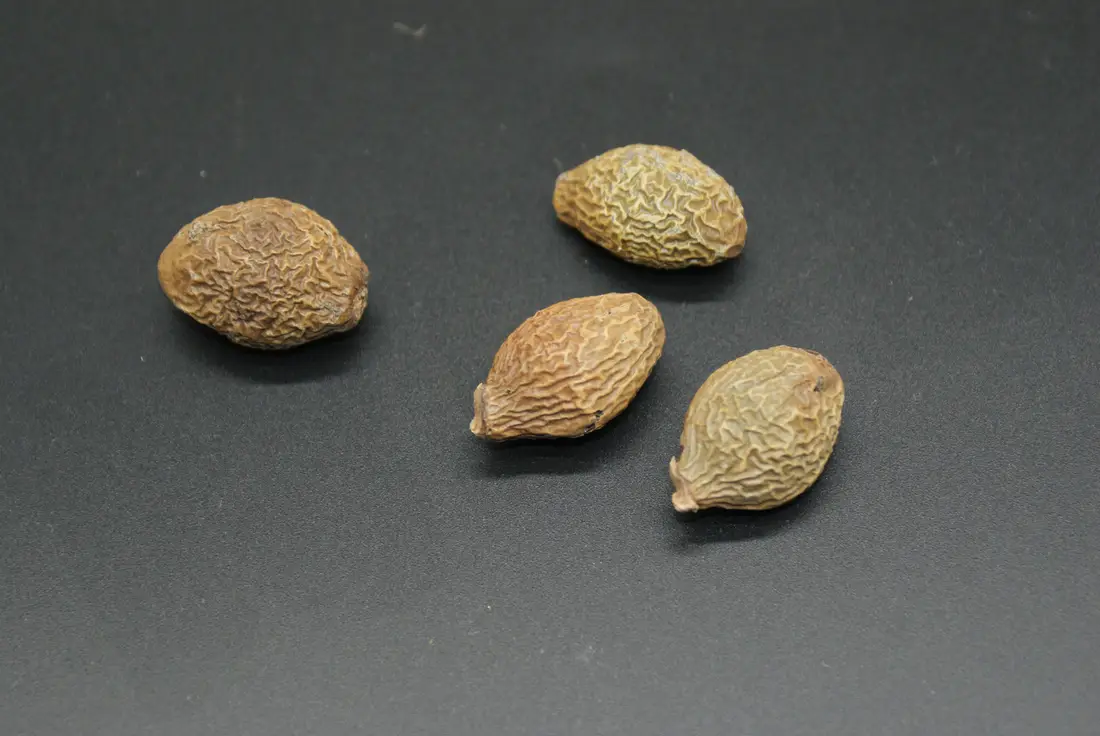
Pang Da Hai (Sterculia lychnophora seed)
Pang Da Hai is a traditional Chinese herbal seed used to clear heat, moisten the lungs, soothe the throat, and unblock the bowels.
The dried ripe seed of Sterculia lychnophora Hance (family Sterculiaceae).
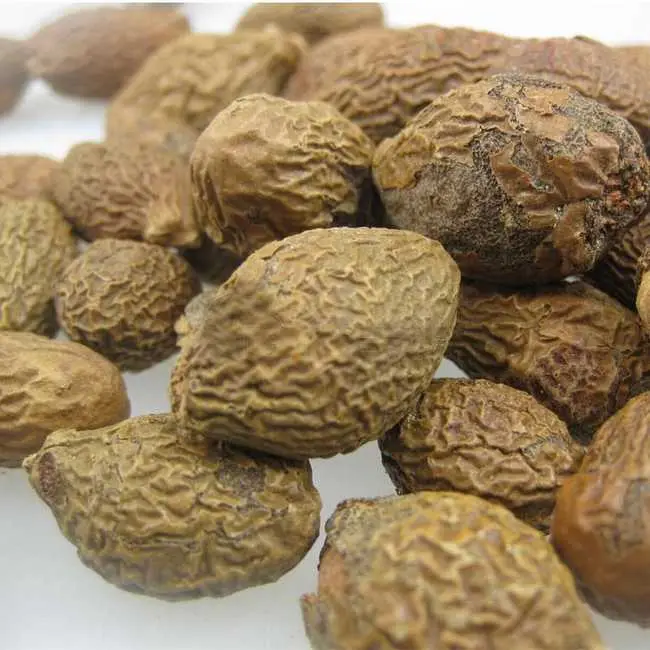
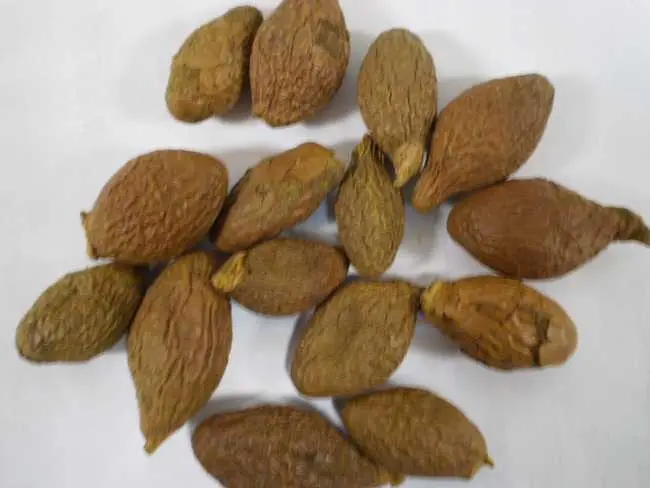
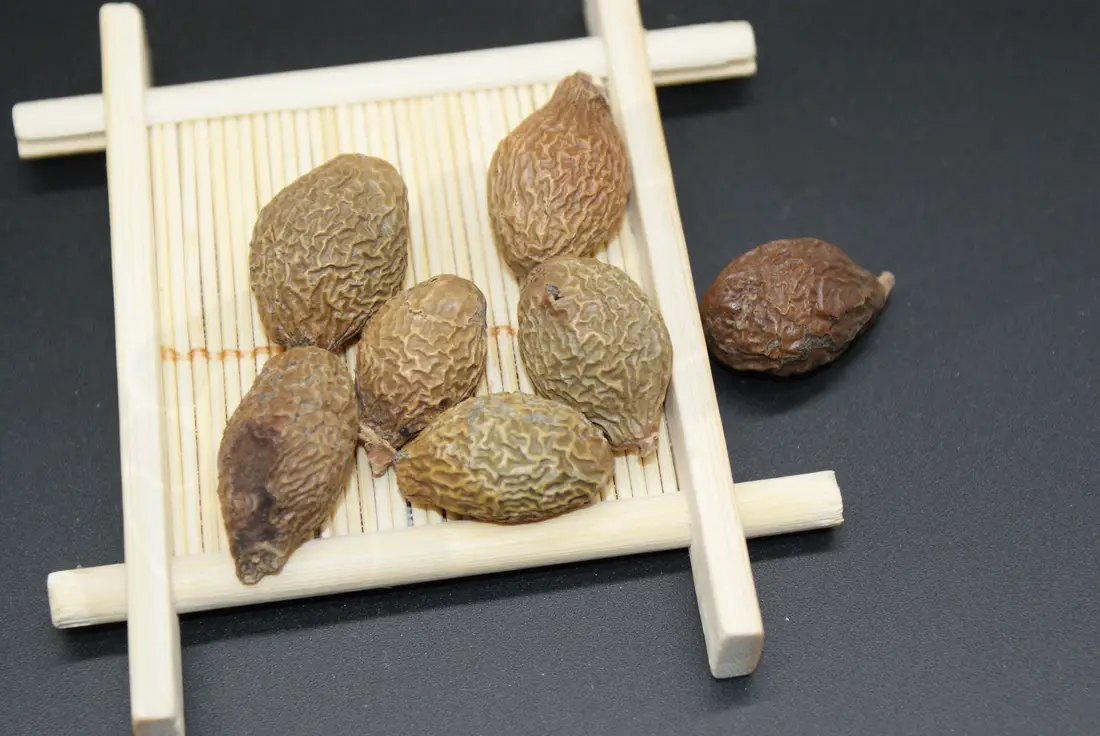
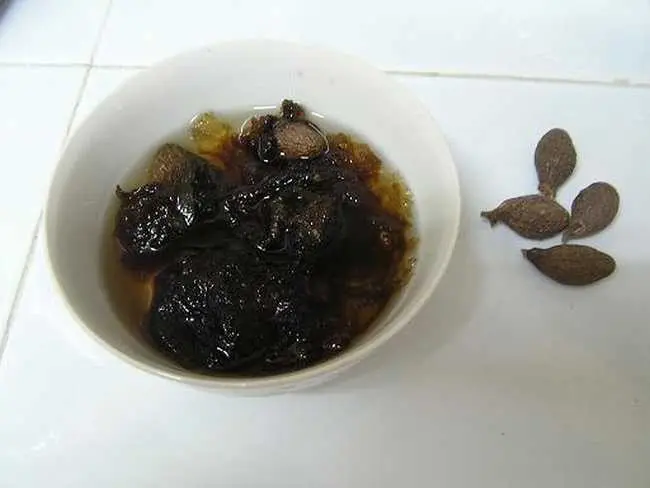
The seed is spindle-shaped or ellipsoidal, 2–3 cm long, 1–1.5 cm in diameter. The apex is bluntly rounded, the base slightly pointed and skewed, with a pale circular hilum. The surface is brown or dark brown, slightly lustrous, with irregular dry wrinkled striations. The outer seed coat is very thin, brittle, and easily shed. The middle seed coat is thicker, dark brown, loose and easily broken, and swells into a sponge-like mass when soaked in water. Scattered resinous dots are visible on the cross-section. The inner seed coat can be peeled from the middle layer, slightly leathery; inside are two thick cotyledons of broad ovate shape, and two very thin cotyledons closely attached to the inner side of the endosperm, equal in size to the endosperm. Odor slight; taste bland; chewed it is viscous.
Legend tells of a young man named Peng Dahai who collected herbs in Annam (present-day Vietnam) to treat throat ailments. He and his uncle provided medicine to the poor at little or no cost. Once, his uncle fell ill and Dahai went alone to collect herbs but did not return. Later, locals reported that a young man had been eaten by a white python. In his memory, the medicinal fruit was renamed 'Peng Dahai'; because he was rather stout, it also came to be called 'Pang Dahai' (Fat Dahai).
4 cultivation notes and 7 authentication articles exist for this herb. They are long-form field material and are published in Chinese only.
Chinese version · All herbs