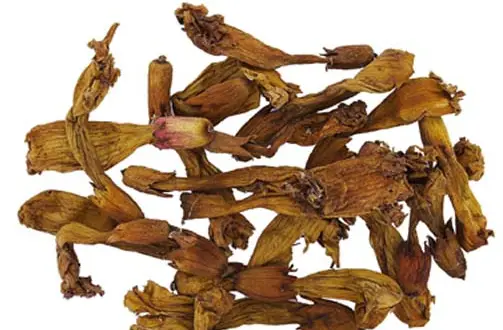
Chinese trumpet creeper flower (Ling Xiao Hua)
Chinese trumpet creeper flower is a blood-invigorating and stasis-resolving herb used for menstrual disorders and skin conditions.
The dried flowers of Campsis grandiflora (Thunb.) K.Schum. or Campsis radicans (L.) Seem. (Bignoniaceae).
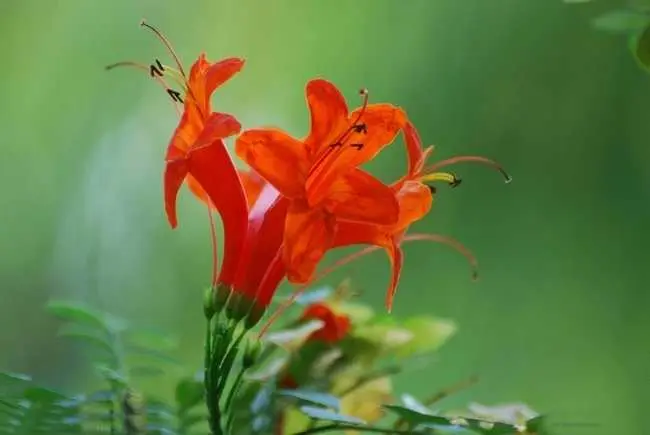
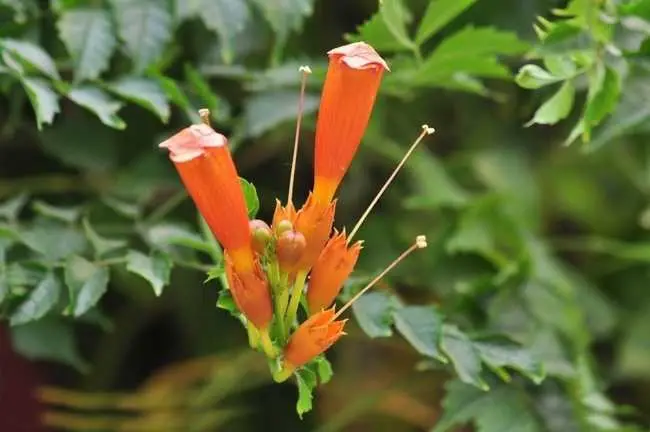
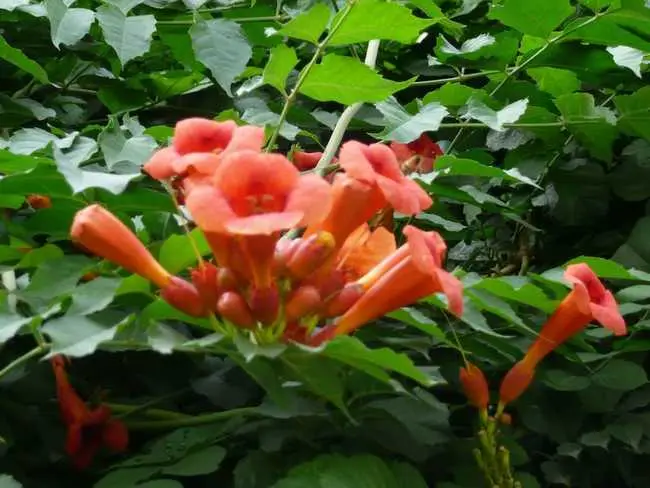
Campsis grandiflora: Often wrinkled and curled, yellowish-brown or brownish-brown, whole flowers 4–5 cm long. Calyx tube campanulate, 2–2.5 cm long, 5-lobed to the middle, with 5 longitudinal ridges from base to apex. Corolla 5-lobed at apex, lobes semicircular, lower part funnel-shaped, fine veins visible, more obvious on inner surface. Stamens 4, inserted on corolla, 2 long and 2 short, anthers dithecous, style 1, stigma flat. Odor fragrant, taste slightly bitter and sour. Campsis radicans: Whole flowers 6–7 cm long. Calyx tube 1.5–2 cm long, hard leathery, apex 5-toothed, teeth short triangular, about 1/3 length of calyx tube, without obvious longitudinal ridges outside; inner surface of corolla with obvious dark brown veins.
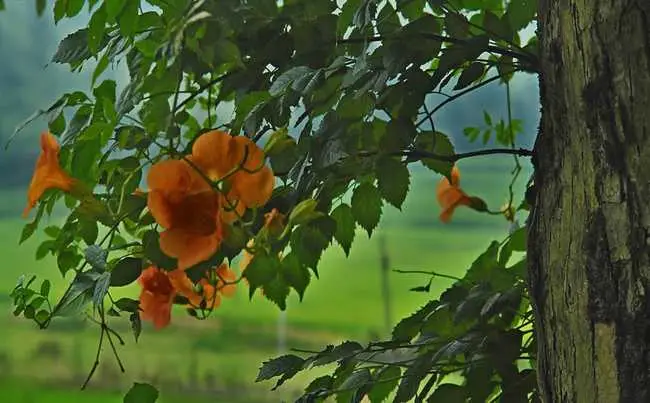
The Shijing refers to it as 'tiao zhi hua'. Ling Xiao Hua, originally called Zi Wei, is also known as Ling Tiao, Nü Wei, and many other names. According to the Laosheng'an Biji, a single plant in a garden in Xijing grew upright without support, over 4 zhang tall with a girth of over 3 chi and flowers as large as cups. The famous horticulturist Zhou Shoujuan noted that in Luoyang and Suzhou there are also upright Ling Xiao flowers that do not need support. The Hua Jing describes it as a climbing vine that attaches to trees by aerial roots, blooming in early summer with trumpet-shaped flowers. Bai Juyi of the Tang dynasty wrote a poem criticizing it for relying on a tree, warning people not to learn from weak seedlings. Yang Hui of the Song dynasty praised it for reaching the clouds while having roots on the ground, and Jia Changchao wrote of its ambition to reach the sky. Gao Qi of the Ming dynasty praised its self-reliance, and Li Liweng of the Qing dynasty said that among vine flowers, none is more admirable than Ling Xiao. Liu Wentai's Pinhui Jingyao states that it should not be taken during pregnancy. Bencao Jingshu also says it is good at breaking blood and removing stasis, and should not be used in women with blood-qi deficiency, and absolutely not before childbirth. Huang Gongxiu of the Qing dynasty said it should be used for all conditions caused by blood stasis and blood heat.
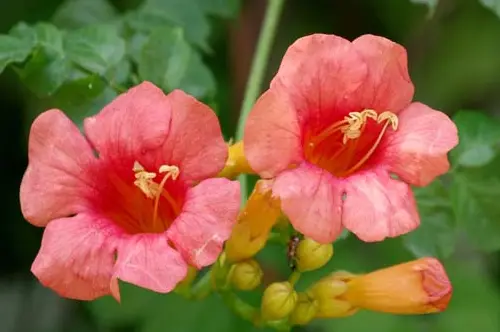
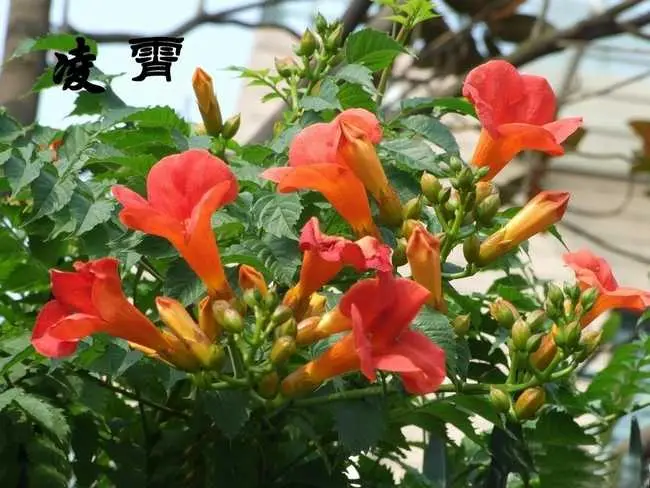
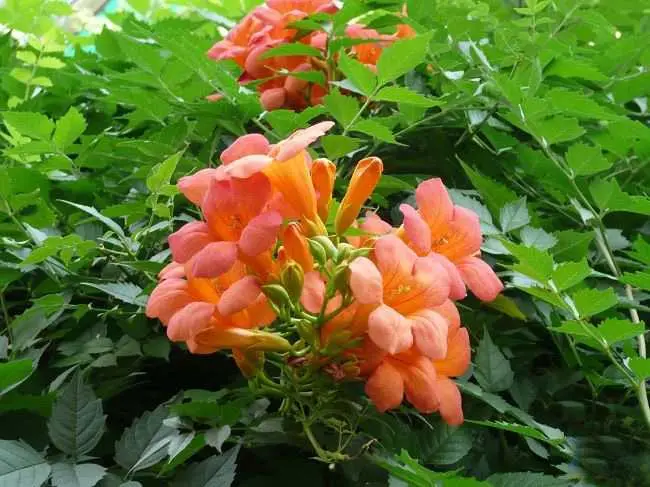
1 cultivation notes and 5 authentication articles exist for this herb. They are long-form field material and are published in Chinese only.
Chinese version · All herbs