Cocklebur fruit (Cang Er Zi)
Cang Er Zi
XANTHII FRUCTUS
Nature and flavorPungent, bitter, warm; toxic. Enters the Lung meridian.
Meridians enteredLung
Reference market price¥11 / kgBozhou market · spec 小粒 · 东北 · snapshot 2026-11-21
Cocklebur fruit is a wind-cold dispersing herb used mainly for nasal congestion and wind-damp painful obstruction, with important toxicity precautions.
Source药物来源
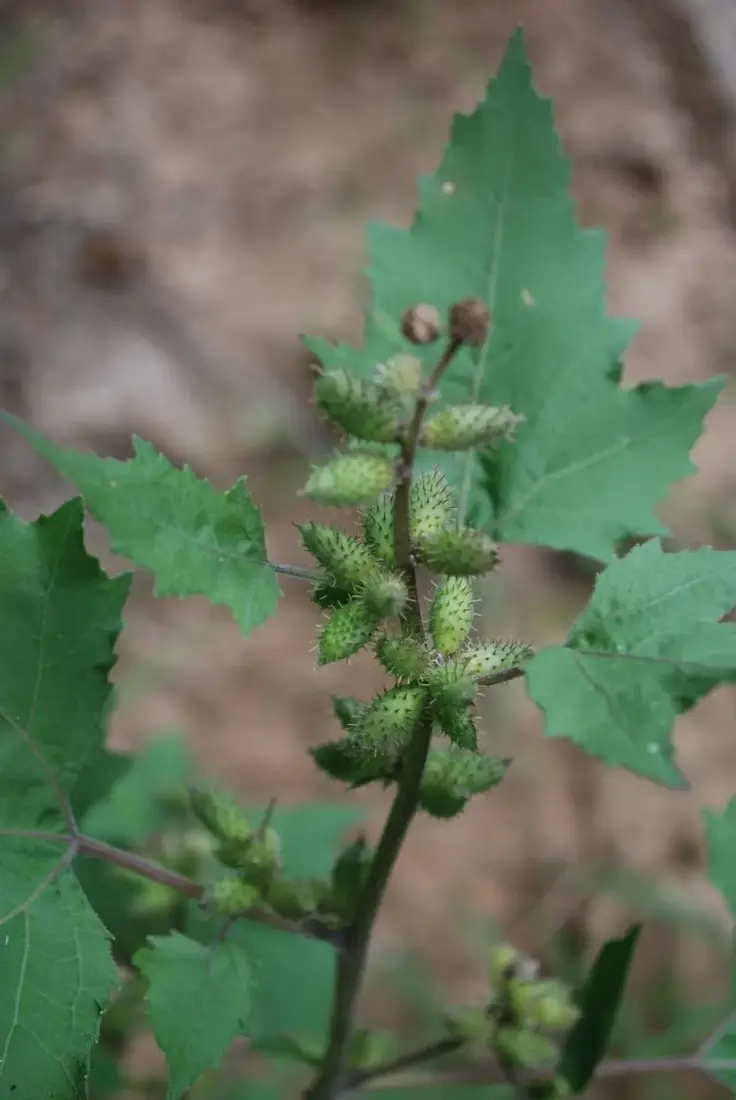
The dried ripe fruit with involucre of Xanthium sibiricum Patr. (family Asteraceae).
Identification性状特征
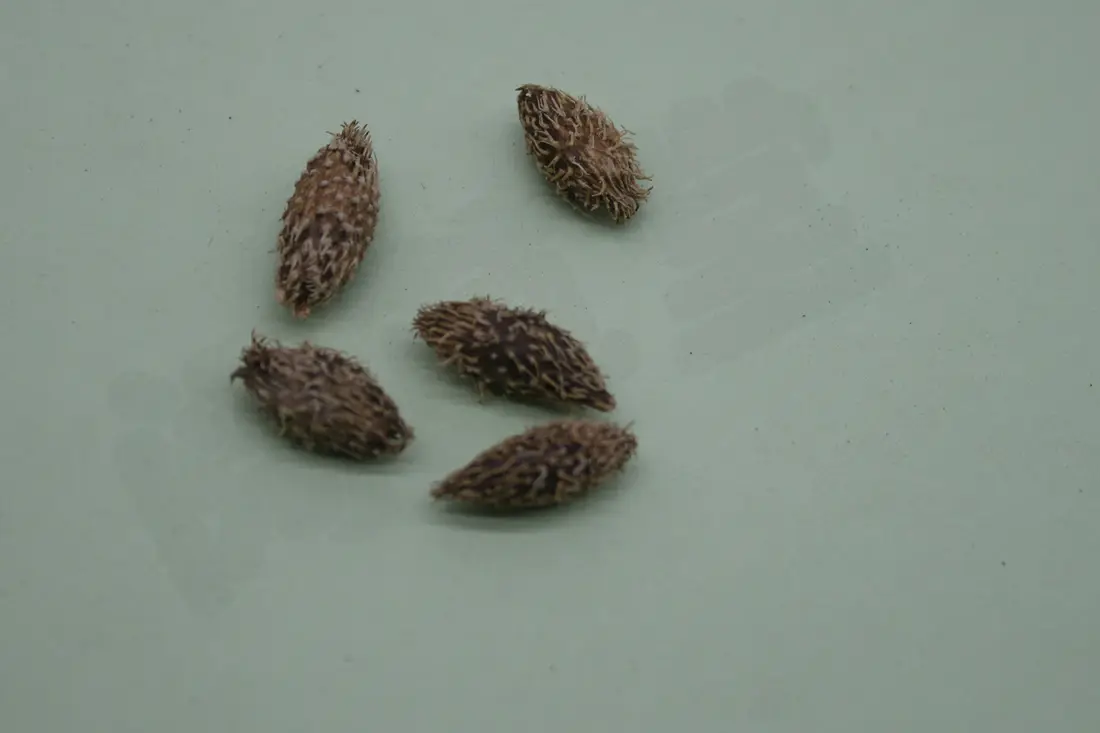
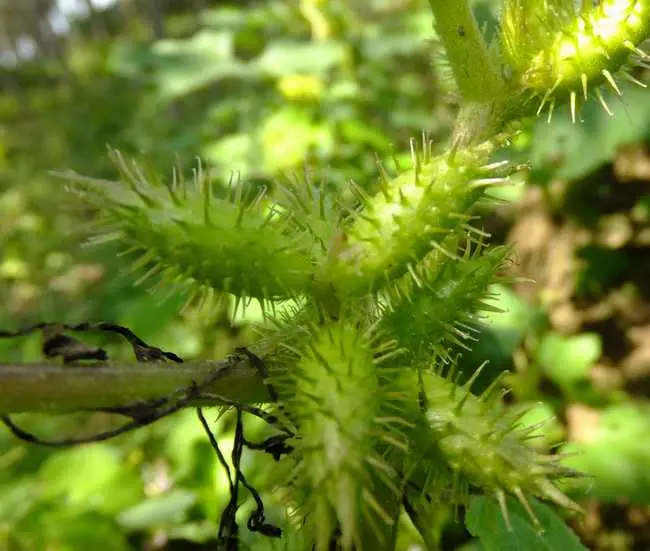
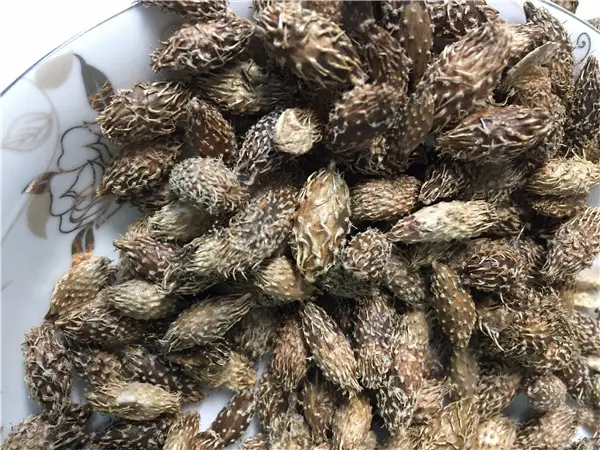
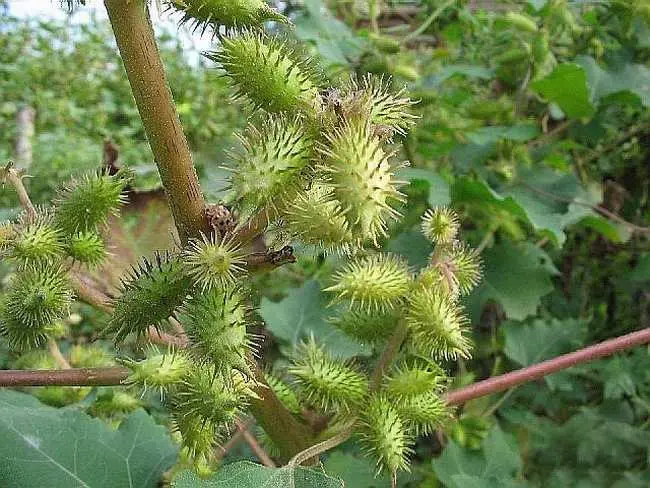
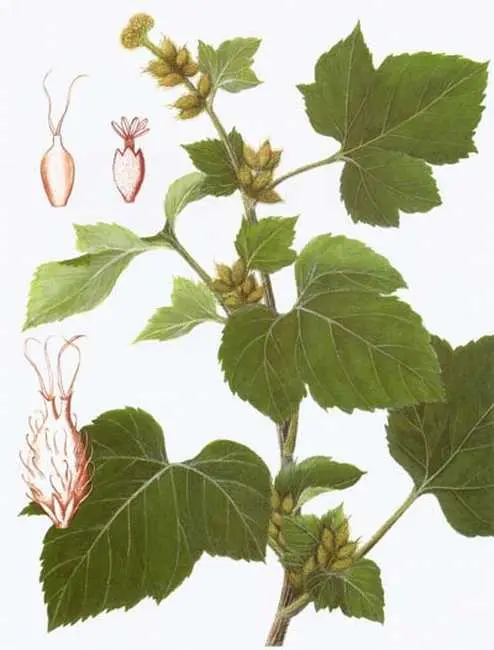
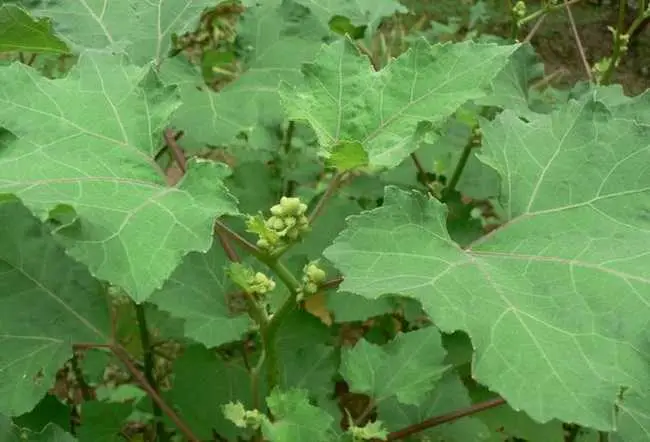
Spindle-shaped or ovoid, 1–1.5 cm long, 0.4–0.7 cm in diameter. Surface yellow-brown or yellow-green, covered with hooked spines; apex with two thicker spines, separate or joined; base with fruit stalk scar. Hard and tough; transverse section shows a central longitudinal septum, 2 locules, each with one achene. Achene somewhat spindle-shaped, one side flatter, apex with a raised stylopodium; pericarp thin, gray-black, longitudinally striate. Seed coat membranous, light gray; cotyledons 2, oily. Odor slight; taste slightly bitter.
Properties and actions性味与功效
ActionsDisperse wind-cold · Open the nasal passages · Dispel wind-dampness
IndicationsUsed for wind-cold headache, nasal congestion with clear discharge, allergic rhinitis, sinusitis, wind-rash with itching, and damp painful obstruction with contracture.
CautionToxic; use with caution. Overdose may damage the kidneys. Contraindicated in deficiency-cold of the spleen and stomach. Do not take with pork. External use may cause contact dermatitis. The whole plant is toxic, with the fruit most toxic.
Processing炮制
Cocklebur fruit (raw)Remove impurities from the crude drug. Crush before use.
Stir-fried cocklebur fruitPlace clean cocklebur fruit in a preheated container, heat over medium fire until the surface is scorched yellow and the spines are charred, then grind off the spines and sieve clean. Crush before use.
Modern research现代药理
Antibacterial and anti-inflammatoryCocklebur fruit has antibacterial and anti-inflammatory effects.
Cardiovascular effectsIts injection lowers blood pressure in anesthetized rabbits and dogs, and also in conscious rabbits. It transiently inhibits isolated guinea pig heart.
Respiratory effectsIntravenous injection significantly increases respiratory amplitude and rate in anesthetized rabbits and dogs, and stimulates respiration in conscious rabbits. The tincture enhances respiratory movement in frogs; large doses inhibit respiration. The decoction by gavage has antitussive effects on cough induced by carbon dioxide and ammonia in mice.
Hypoglycemic effectIt lowers blood glucose in normal animals but does not reduce alloxan-induced hyperglycemia in rats.
Immunosuppressive effectCocklebur fruit has immunosuppressive activity.
Antioxidant effectCocklebur fruit has antioxidant activity.
Cytotoxic effectCocklebur fruit has cytotoxic activity.
Hematological effectsIts extract AA2 causes a brief marked decrease in white blood cells, returning to normal 6 hours after withdrawal. The extract significantly prolongs bovine thrombin-induced human fibrinogen time in vitro. In fasting rabbits with lowered blood lipids, the methanol extract rapidly restores serum cholesterol and triglycerides to normal.
Anticancer and antiviralCocklebur fruit also has anticancer and antiviral effects.
Classical records历代本草
The Shennong Bencao Jing records it as sweet and warm, treating wind headache, wind-damp painful obstruction, and dead flesh. The Bencao Gangmu notes that stir-fried and wine-soaked it dispels wind and benefits the skin, and that it opens the top of the head. The Bencao Mengquan warns against pork and rice water, and describes its use for itching and wind-damp contracture.《神农本草经》:味甘,温。主治风头寒痛,风湿周痹,四肢拘挛痛,恶肉死肌。久服益气,耳目聪明,强志轻身。
《本草纲目》:炒香浸酒服,去风补益。尤治皮肤风,令人肤革清净。善通顶门连脑,盖即苍耳也。
《本草蒙筌》:味苦、甘,气温。味苦、辛,微寒。有小毒。最忌猪肉、米泔。散疥癣细疮遍身瘙痒者立效,驱风湿周痹四肢挛急者殊功。止头痛善通顶门,追风毒任在骨髓。杀疳虫湿蛪,主恶肉死肌。益气开聪明,强志暖腰膝。亦堪久服,明目轻身。
《开宝本草》:味苦、甘,温。膝痛,溪毒。
《名医别录》:味苦。主治膝痛,溪毒。
《本草拾遗》:叶妥,安舌下,令涎出,去目黄好睡。子炒令香,捣去刺,使腹破,浸酒,去风,补益。又烧作灰,和腊月猎脂,封丁肿,出根。又毡中子七枚,烧作灰,投酒中饮之,勿令知,主嗜酒。
Folklore本草传说
Legend tells of two villages along the Yellow River, Hedong and Hexi. Hexi villagers suffered from nasal congestion and discharge. A hundred-year-old man said cocklebur grew in Hedong, but the river was impassable. Two dogs swam across, rolled in the field to carry back cocklebur seeds, but the mother dog drowned saving her pup. The seeds cured the villagers, who then set up a ferry and shared the seeds with Hedong. In modern terms, the illness was chronic simple rhinitis; cocklebur is effective but toxic, and overdose can harm the kidneys.
Cultivation and authentication栽培与鉴别
1 cultivation notes and 5 authentication articles exist for this herb. They are long-form field material and are published in Chinese only.
Read them in Chinese →