Mulberry leaf
Sang Ye
MORI FOLIUM
Nature and flavorSweet, bitter, cold; enters the Lung and Liver meridians.
Meridians enteredLung, Liver
Dosage5–10 g
Reference market price¥4 / kgBozhou market · spec 霜 · 安徽 · snapshot 2026-11-21
Mulberry leaf is a wind-heat dispersing herb used for common cold, lung dryness, and eye redness.
Source药物来源
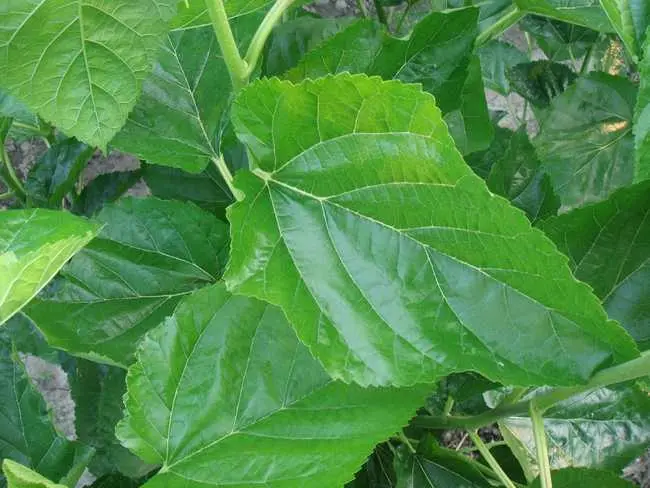
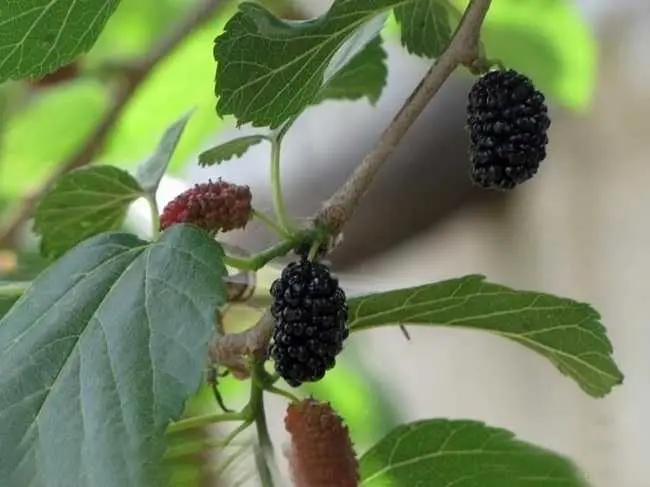
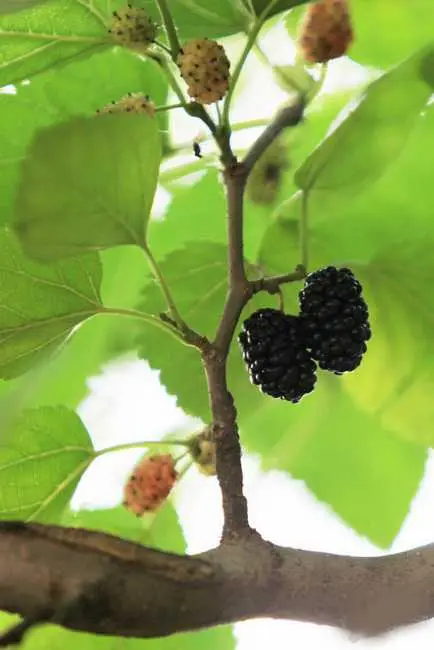
This product is the dried leaf of Morus alba L. (family Moraceae). Name origin: The herb is named for the leaves of the mulberry tree used medicinally. Because 'mulberry leaves are best when regrown in summer and autumn, and collected after frost' (Tujing Bencao), it is also called 'winter mulberry leaf' or 'frost mulberry leaf'.
Identification性状特征
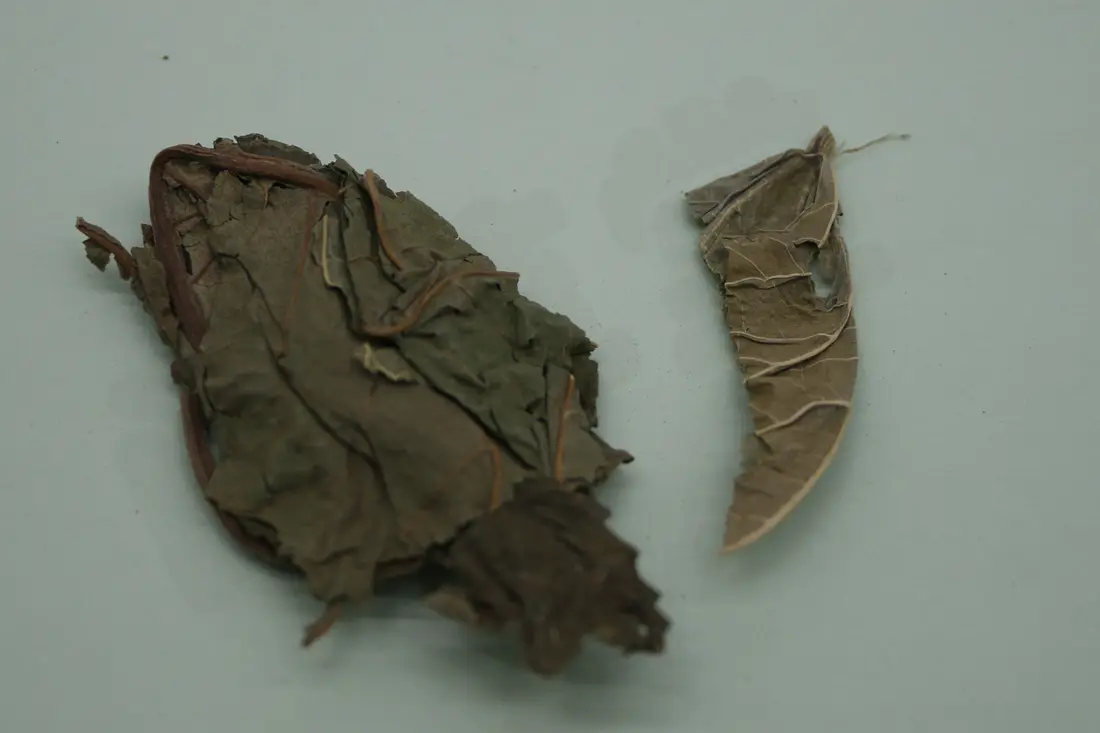
Mostly shriveled and broken. Complete leaves have petioles; when flattened, the blade is ovate or broadly ovate, 8–15 cm long, 7–13 cm wide. Apex acuminate, base truncate, rounded or cordate, margin serrate or obtusely serrate, sometimes irregularly lobed. Upper surface yellow-green or light yellow-brown, sometimes with small warty protrusions; lower surface slightly paler, veins prominent, veinlets reticulate, sparsely hairy on veins, with tufts of hair at vein bases. Texture brittle. Odor slight; taste bland, slightly bitter and astringent.
Properties and actions性味与功效
ActionsDisperse wind-heat · Clear lung and moisten dryness · Clear liver and brighten the eyes
IndicationsUsed for common cold of the wind-heat type, dry cough due to lung heat, dizziness and headache, and red eyes with blurred vision.
CautionUse with caution in cases of deficiency-cold of the spleen and stomach.
Processing炮制
Mulberry leaf (raw)Remove impurities, rub into pieces, and discard petioles.
Honey-fried mulberry leafMix clean mulberry leaf pieces with diluted refined honey, let stand until absorbed, then stir-fry over gentle heat until the surface is dark yellow and no longer sticky. Use 25 kg refined honey per 100 kg mulberry leaf. The fried product is dark yellow, slightly glossy, slightly sticky, and sweet in taste. Raw mulberry leaf is better for dispersing wind-heat and clearing the liver to brighten the eyes; honey-fried mulberry leaf is more moistening and is often used for cough due to warm dryness damaging the lung.
Modern research现代药理
Antispasmodic effectMulberry leaf has antispasmodic action.
Anti-pathogenic microorganism effectIn vitro, the decoction inhibits Staphylococcus aureus, beta-hemolytic Streptococcus, Corynebacterium diphtheriae, and Escherichia coli to some extent. It also kills Leptospira.
Anti-inflammatory effectMulberry leaf has anti-inflammatory action.
Hypoglycemic effectEcdysterone contained in mulberry leaf lowers blood sugar elevated by various methods, promotes conversion of glucose to glycogen, but does not change blood sugar in normal animals.
Blood pressure-lowering effectIntravenous injection of mulberry leaf extract into the femoral vein of anesthetized dogs causes transient blood pressure reduction without affecting respiration.
Effect on smooth muscleMulberry leaf excites the uterus of animals in estrus and inhibits rat intestinal muscle.
Lipid-lowering and diuretic effectsMulberry leaf also has lipid-lowering and diuretic effects.
Classical records历代本草
The Shennong Bencao Jing records mulberry leaf as bitter, sweet, and cold, with mild toxicity, indicated for alternation of cold and heat with sweating. The Bencao Gangmu states it is a hand and foot yangming medicine, used for consumptive heat cough, to brighten eyes and promote hair growth, and to relieve wasting-thirst. The Bencao Mengquan mentions its use for washing eyes, treating snake and centipede bites, and stopping bleeding.《神农本草经》:气味苦甘寒,有小毒,主寒热出汗。
《本草纲目》:桑叶乃手、足阳明之药,治劳热咳嗽,明目长发,止消渴。
《本草蒙筌》:采经霜者煮汤,洗眼去风泪殊胜。盐捣敷蛇虫蜈蚣咬毒,蒸捣罯扑损瘀血带凝。煎代茶,消水肿脚浮,下气令关节利;研作散,汤调。止霍乱吐泻,出汗除风痹疼。炙和桑衣煎浓,治痢诸伤止血。
《开宝本草》:霜后叶煮汤,淋渫手足,去风痹殊胜。
《本草拾遗》:桑叶、汁,主霍乱腹痛,吐下,研取白汁,合金疮。又主小儿吻疮,细锉大釜中,煎取如赤糖,去老风及宿血。椹,利五藏关节,通血气。
Folklore本草传说
Legend has it that in the Song dynasty, a wandering monk came to Yanshan Temple. He was thin, had a poor appetite, and every night sweated all over during sleep, soaking his clothes and even the bedsheet and straw mat. Twenty years of treatment had failed. The temple supervisor told him of a ancestral remedy: mulberry leaves collected at dawn when still wet with dew, dried and powdered. The monk took two qian each time on an empty stomach with rice water, once daily. After three days, his twenty-year illness was cured. Everyone was amazed.
Culinary use民间药膳
Honeysuckle and Corn Silk DrinkFructus Ligustri Lucidi 30 g, mulberry leaf 6 g, chrysanthemum flower 6 g, corn silk 30 g, bamboo shavings 6 g.
1. Wash the above herbs and place in a pot with 300 ml water. 2. Bring to a boil over medium heat, then simmer over gentle heat for 25 minutes.
Clears lung heat and relieves thirst; suitable for patients with triple diabetes.
Mulberry and Chrysanthemum DrinkMulberry leaf 5 g, chrysanthemum flower 5 g, bitter bamboo leaf 30 g, white茅根 30 g, mint 3 g.
Place washed mulberry leaf, chrysanthemum, bitter bamboo leaf, white茅根, and mint in a teapot. Pour boiling water and steep for 10 minutes. Drink frequently or cool as a beverage.
Disperses wind-heat with pungent-cool.