Angelica dahurica root (Bai Zhi)Materia Medica

Angelica dahurica root (Bai Zhi)

Bai Zhi
ANGELICAE DAHURICAE RADIX
Nature and flavorPungent, warm; enters the Stomach, Large Intestine, and Lung meridians.
Meridians enteredStomach, Large Intestine, Lung
Dosage3–10 g
Reference market price¥6.2 / kgBozhou market · spec common grade · 河北 · snapshot 2026-11-21

Bai Zhi is a wind-dispelling herb used for headache, nasal congestion, and skin disorders.

Source药物来源

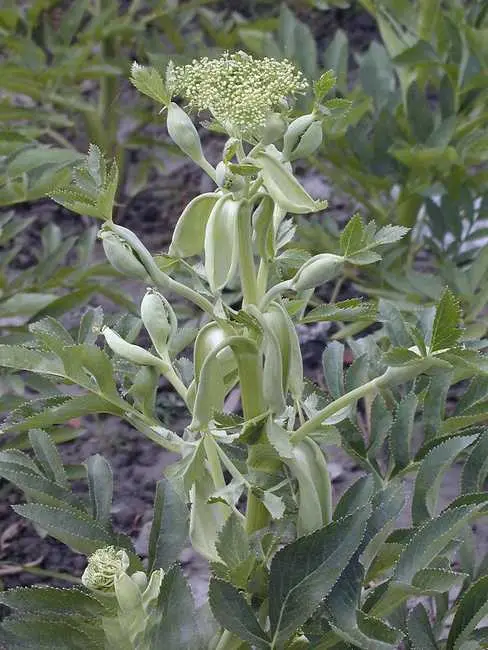
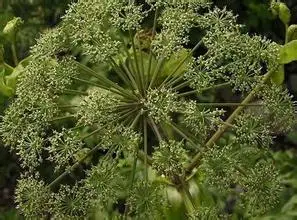
The dried root of Angelica dahurica (Fisch. ex Hoffm.) Benth. et Hook. f. or Angelica dahurica var. formosana (Boiss.) Shan et Yuan (Apiaceae).

Identification性状特征

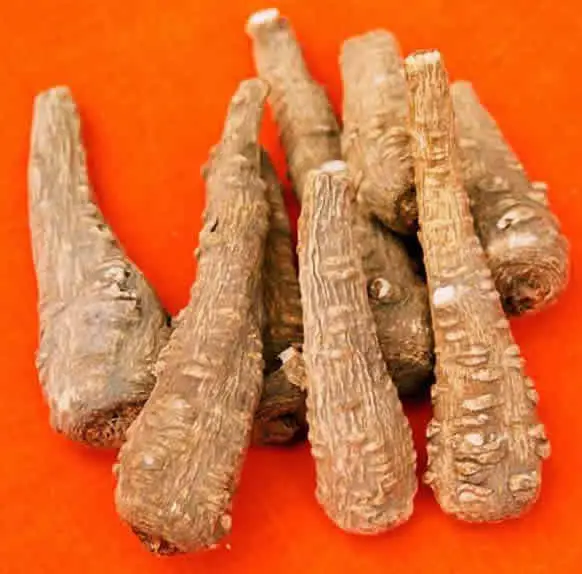
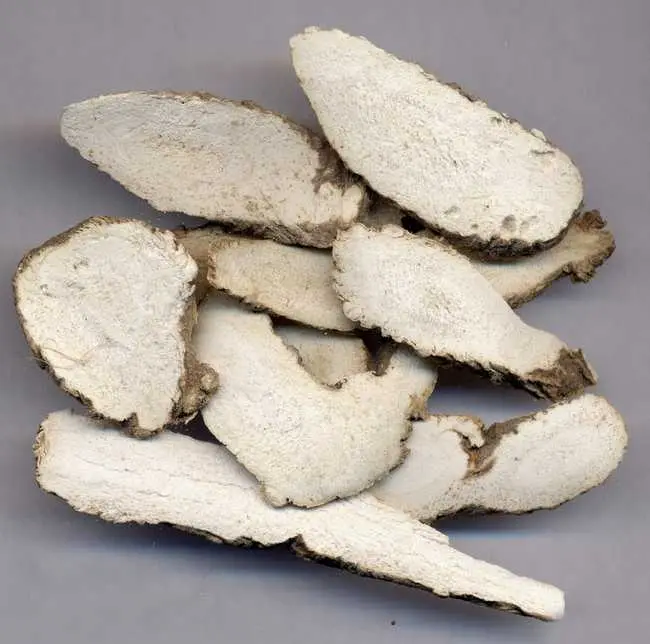
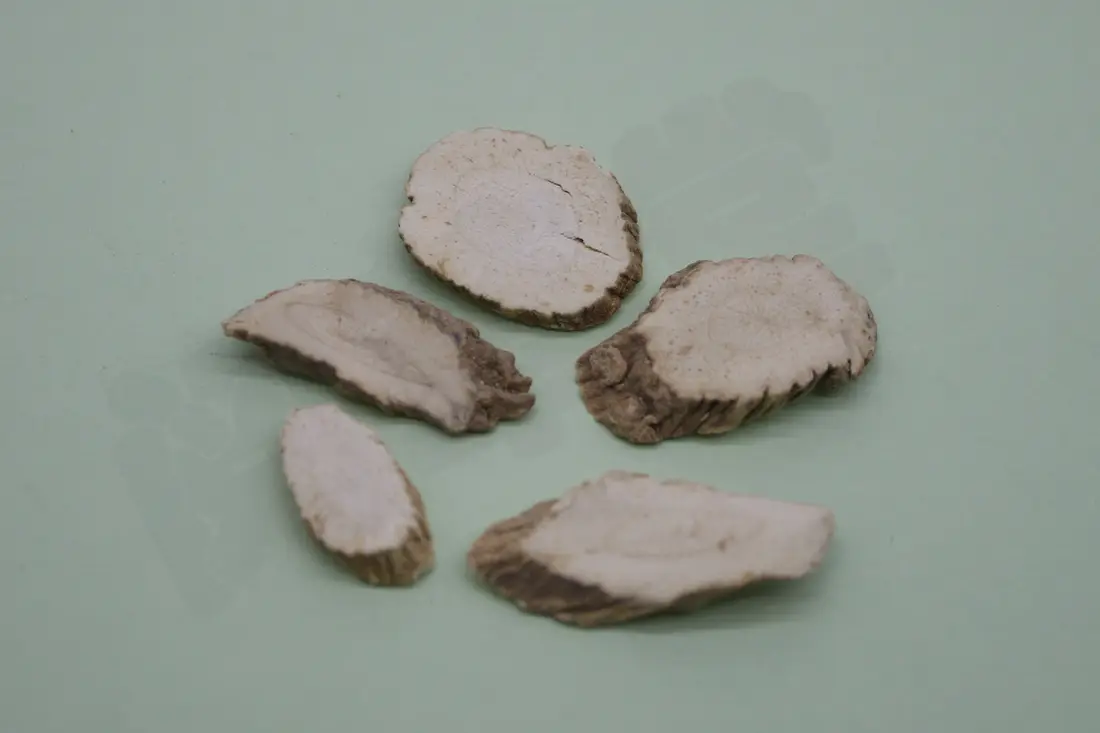
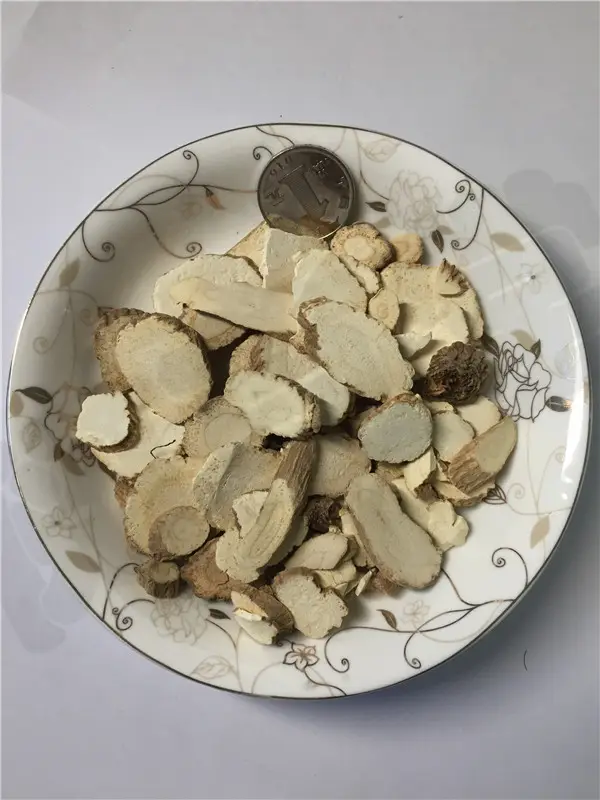
Long conical, 10–25 cm long, 1.5–2.5 cm diameter. Surface grayish-brown or yellowish-brown; root head bluntly quadrangular or nearly round, with longitudinal wrinkles, rootlet scars, and lenticel-like transverse protrusions, sometimes in four longitudinal rows. Apex with depressed stem scar. Texture firm; fracture white or grayish-white, powdery, cambium ring brown, nearly square or round; cortex with numerous brown oil dots. Fragrant; taste pungent, slightly bitter.

Properties and actions性味与功效
Actions
Disperse wind and dissipate cold · Dispel wind and relieve pain · Unblock the nasal passages · Dry dampness and stop discharge · Reduce swelling and discharge pus
Indications
Common cold with headache, pain in the supraorbital bone, nasal congestion and rhinorrhea, allergic rhinitis, sinusitis, toothache, leukorrhea, and carbuncles with swelling and pain.
Dosage
3–10 g, decocted and taken orally.
Caution
Use with caution in cases of yin deficiency with heat or deficiency-cold of the spleen and stomach. It contains photosensitizing compounds; avoid excessive sun exposure during use.
Processing炮制
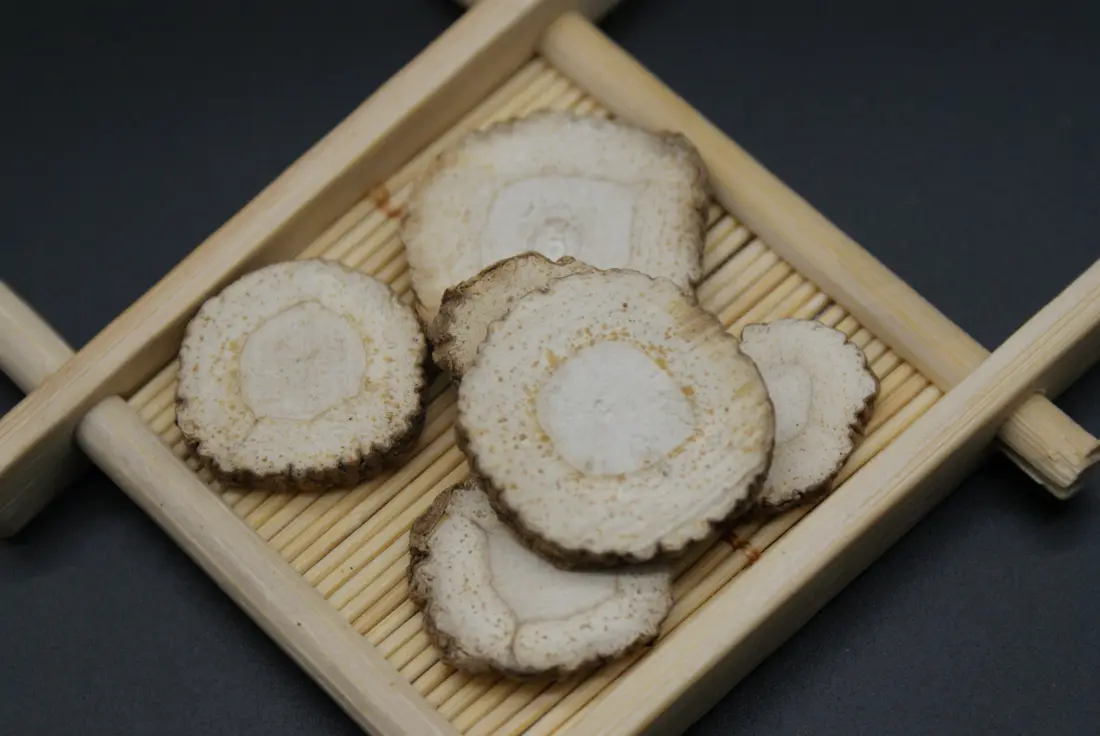
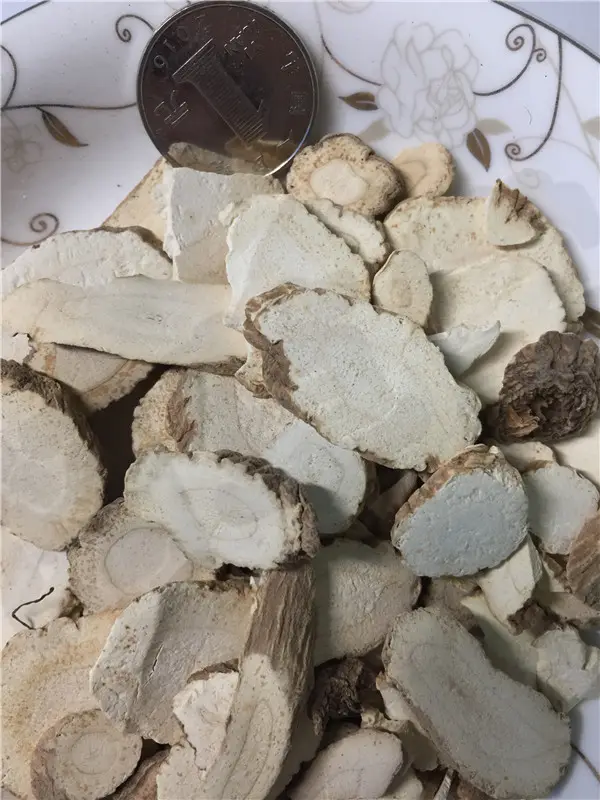
Raw Bai Zhi (decoction pieces)
Remove impurities, separate large and small pieces, soak briefly, moisten thoroughly, slice into thick pieces, and dry.
Modern research现代药理
CNS excitation
Small doses of Bai Zhi toxin excite the vasomotor, respiratory, vagal, and spinal centers, raising blood pressure, slowing pulse, deepening respiration, and causing salivation and vomiting; large doses cause tonic-clonic spasms and then general paralysis.
Antipyretic and analgesic
Bai Zhi has antipyretic and analgesic effects.
Anti-inflammatory and antimicrobial
The decoction inhibits various bacilli and markedly inhibits L-form tuberculosis bacilli. In vitro, it inhibits fungi such as Epidermophyton floccosum and Trichophyton mentagrophytes; the 1:3 infusion also inhibits Trichophyton audouinii.
Hypotensive
Isoimperatorin and indian quince (?) produce hypotensive effects in cats lasting about 1.5 hours.
Photosensitizing
Furanocoumarins such as bergapten, xanthotoxin, and isoimperatorin are photoactive substances used in the treatment of vitiligo.
Sympathetic activation and lipogenesis inhibition
Bai Zhi activates sympathetic hormones and inhibits fat synthesis.
Hemostatic
Bai Zhi has a hemostatic effect.
Skin effects
Topical Bai Zhi tincture plus low-dose UVA significantly inhibits DNCB-induced allergic contact dermatitis in guinea pigs. Oral Bai Zhi plus black light irradiation significantly inhibits DNA synthesis in human lymphocytes. Bai Zhi-black light therapy for psoriasis may work by inhibiting epidermal DNA synthesis, normalizing hyperproliferation.
Hepatic drug metabolism and antiasthmatic
Bai Zhi inhibits hepatic drug-metabolizing enzymes; Dian Bai Zhi has an antiasthmatic effect.
Classical records历代本草
The Shennong Bencao Jing records Bai Zhi for leucorrhea, blood block, and wind-induced eye tearing. The Bencao Gangmu notes its use for sinusitis, epistaxis, toothache, and as a guiding herb for the Yangming meridians. The Bencao Mengquan emphasizes its use in headache and gynecological disorders.
《神农本草经》:味辛,温。主治女人漏下赤白,血闭,阴肿,寒热,风头侵目泪出,长肌肤润泽,可作面脂。 《本草纲目》:治鼻渊鼻衄,齿痛,眉棱骨痛,大肠风秘,小便去血,妇人血风眩运,翻胃吐食。白芷色味辛,行手阳明庚金;性温气厚,行足阳明戊土;芳香上达,入手太阴肺经。肺者,庚之,戊之子也。故所主病不离三经。如头目眉齿诸病,三经之风热也,辛以散之;如漏带痈疽诸病,三经之湿热也,温以除之。为阳明主药,故又能治血病,胎病,而排脓生肌止痛。又戴元礼亦云:头痛挟热,项生磊块者,服之甚宜。 《本草蒙筌》:味辛,气温。气味俱轻,升也,阳也。无毒。气甚香窜,又名芳香。恶旋覆,使当归。通行手足阳明二经,又为太阴经之引使也。乃本经头痛中风寒热解利之要药,亦女人漏下赤白血闭阴肿之仙丹。宜炒黑用。作面脂去面瘢,散目痒止目泪。去肺经风寒,治风通用;疗心腹血痛,止痛多宜。外散乳痈背疮疡,并用调治。与细辛辛夷作料,治久患鼻塞如神。 《开宝本草》:味辛,温,无毒。疗风邪,久渴,吐呕,两胁满,风痛,头眩,目痒,可作膏药面脂,润颜色。 《名医别录》:无毒,主治风邪,久渴,吐呕,两胁满,风痛,头眩,目痒。可作膏药面脂,润颜色。
Folklore本草传说

In the early Northern Song dynasty, a wealthy merchant's daughter suffered from severe menstrual pain that worsened her health. On their way to the capital for treatment, they met an old herb gatherer who gave them a bundle of Bai Zhi, instructing them to decoct it. After taking it, her pain gradually subsided, and subsequent cycles were pain-free. Since then, Bai Zhi has been widely used among women for menstrual discomfort.
Culinary use民间药膳
Melon seed and sesame paste
Sweet melon seeds, Bai Zhi, Angelica sinensis, Ligusticum chuanxiong, and honey-fried licorice 60 g each; pine nuts 30 g; glutinous rice 150 g; black sesame 500 g.
Decoct Bai Zhi, Angelica, Chuanxiong, and licorice to obtain a liquid. Soak glutinous rice, melon seeds, and pine nuts in the liquid, then dry and re-soak until the liquid is used up. Stir-fry the rice, seeds, nuts, and sesame until fragrant, then grind into powder. Take 30 g each time, mix with boiling water into a paste. Twice daily.
Invigorates blood and nourishes blood, promotes hair growth and moisturizes skin. Suitable for premature graying and thinning hair; also helps prevent aging and premature hair graying.
Peach blossom and Bai Zhi wine
Peach blossoms 250 g, Bai Zhi 30 g, white liquor 1000 g.
Pick peach blossoms around the 3rd day of the 3rd lunar month or Qingming, especially buds and newly opened flowers from southeast-facing branches. Place peach blossoms, Bai Zhi, and liquor in a container and soak for 30 days. Drink 15–30 ml each morning and evening; also pour a little wine into the palm, rub hands together until warm, and massage affected facial areas.
Invigorates blood and unblocks collaterals, moisturizes skin and removes spots. Used for facial dullness, dark spots, and chloasma due to blood stasis.
Huang Dan and Galla chinensis solution
Huang Dan (lead oxide) 12 g, calcined alum 12 g, white alum 12 g, Galla chinensis 15 g, Stemona root 15 g, realgar 6 g, Bai Zhi 6 g, Dictamnus dasycarpus 6 g, sulfur 6 g, cinnabar 3 g, calomel 3 g, Cnidium monnieri 9 g, white Aconitum 9 g, white Impatiens 9 g, aged rice vinegar 1500 ml.
Grind each herb into powder. Boil the vinegar in an iron pot, add Huang Dan, stir well, then add the fine powders of Galla, Stemona, Cnidium, Aconitum, Bai Zhi, Dictamnus, and Impatiens, stir, then slowly add the remaining six powders, stir well, and remove from heat.
For various tinea infections, hand dermatitis, and onychomycosis.
Chuanxiong and Bai Zhi stewed fish head
Chuanxiong and Bai Zhi 3–9 g each, bighead carp head 500 g, scallion, pepper, ginger, and salt to taste.
Remove gills from fish head and wash. Place fish head, Chuanxiong, Bai Zhi, scallion, pepper, and ginger in a clay pot, add water, bring to a boil over high heat, then simmer for 30 minutes, season with salt. Eat fish and drink soup in two servings, morning and evening.
Dispels wind, dissipates cold, invigorates blood, and relieves pain.
Audio and video语音与视频
Narration · Chinese · 7:34
Latin name · pronunciation
Narration and video are shared by all language versions and are in Chinese; the images and footage themselves are language-independent.
Photographs药材图片
Angelica dahurica root (Bai Zhi)
Cultivation and authentication栽培与鉴别

11 cultivation notes and 5 authentication articles exist for this herb. They are long-form field material and are published in Chinese only.

Read them in Chinese →

Compiled from public Chinese materia medica sources for study and reference. Not medical advice.
Chinese version · All herbs