Cinnamon Twig (Gui Zhi)
Gui Zhi
CINNAMOMI RAMULUS
Nature and flavorPungent, sweet, warm. Enters the heart, lung, and bladder meridians.
Meridians enteredHeart, lung, bladder
Dosage3–10 g
Reference market price¥12 / kgBozhou market · spec 小片 · 广西 · snapshot 2026-11-21
Cinnamon twig, the dried young branch of Cinnamomum cassia, is a key herb in the release-exterior category, valued for its ability to induce sweat, warm the channels, and restore harmony.
Source药物来源
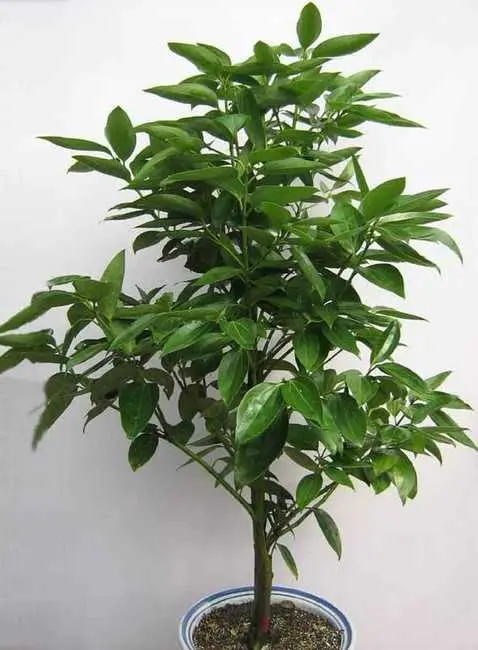
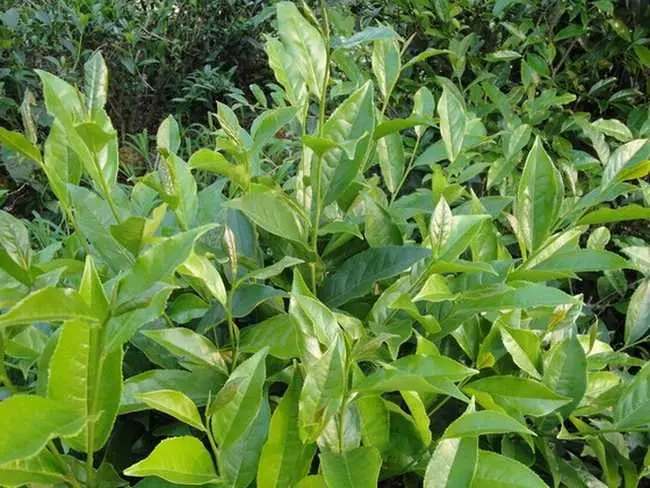
This product is the dried young branch of Cinnamomum cassia Presl (family Lauraceae). The name 'Gui Zhi' means 'the branch of the cinnamon tree' (from Bencao Bian Du); only the tender branches that curl into a round shape are used (from Bencao Jing Ji Zhu).
Identification性状特征
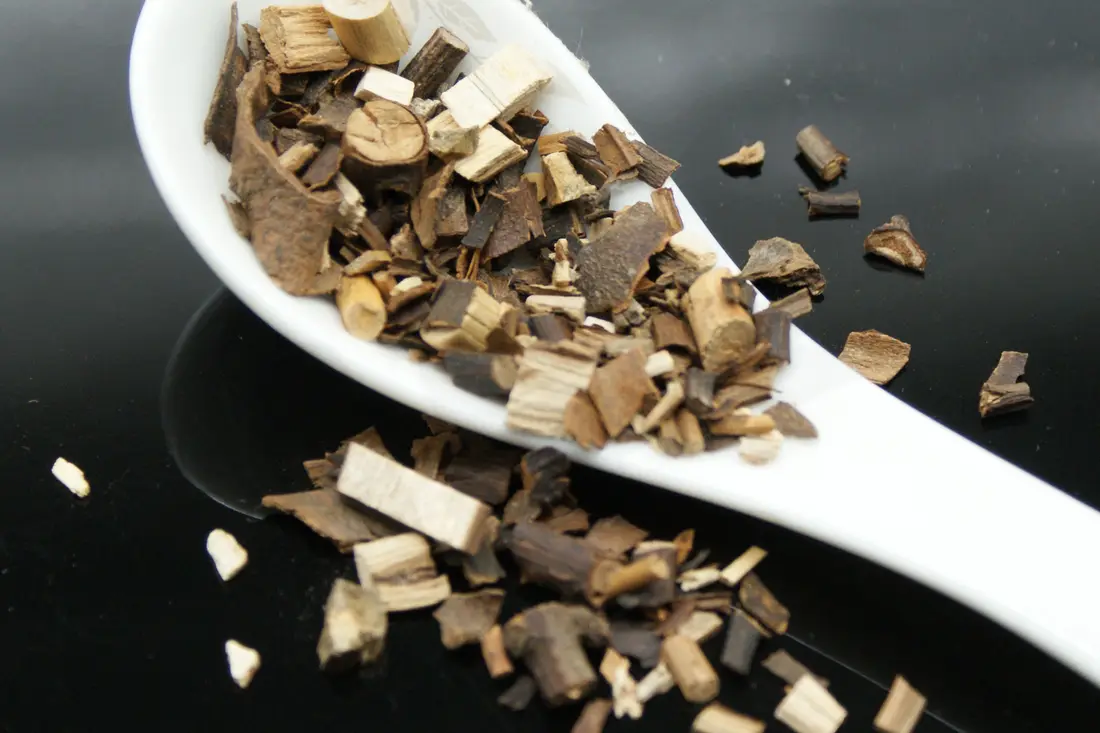
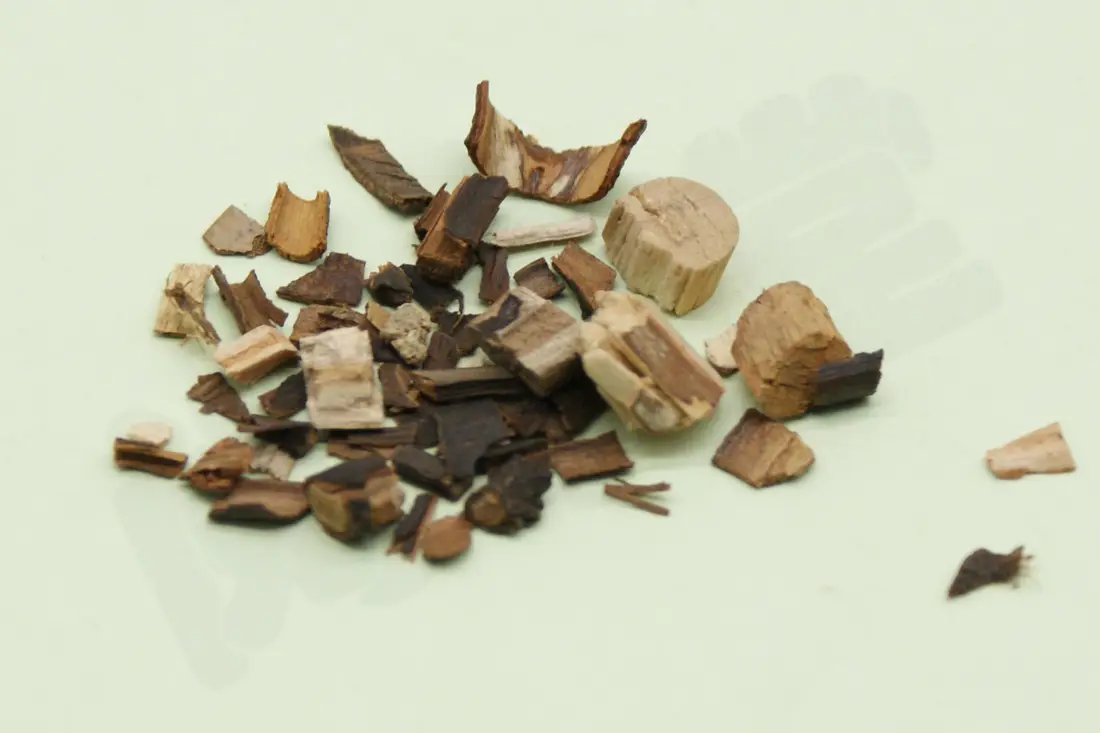
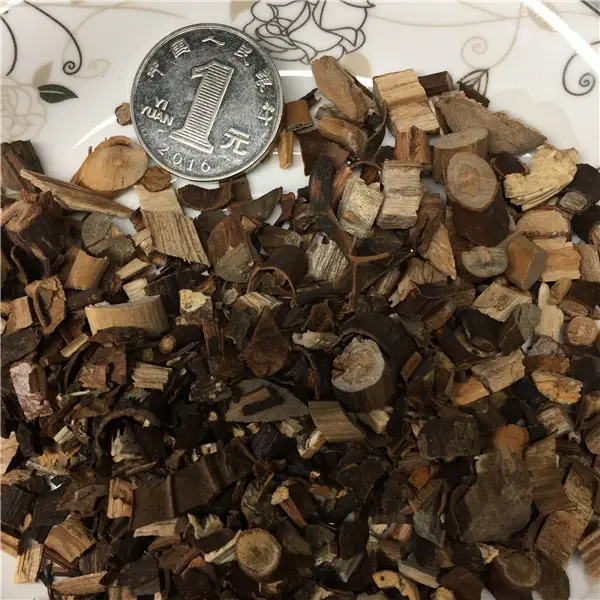
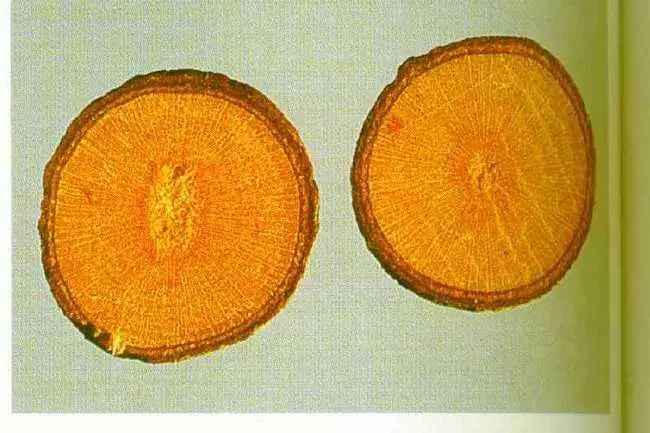
Long cylindrical, often branched, 30–75 cm long, 0.3–1 cm in diameter at the thick end. Surface reddish-brown to brown, with longitudinal ridges, fine wrinkles, and small knot-like leaf scars, branch scars, and bud scars; lenticels dotted. Hard and brittle, easily broken. Sliced pieces 2–4 mm thick; cut surface shows reddish-brown bark, yellowish-white to light yellowish-brown wood, and slightly square pith. Distinctive aromatic odor; sweet and slightly pungent taste, stronger in the bark.
Properties and actions性味与功效
ActionsInduce sweat and release the muscle layer · Warm and unblock the meridians · Assist yang and transform qi · Calm the upward rush and descend qi
IndicationsUsed for wind-cold common cold, cold pain in the epigastrium and abdomen, blood-cold amenorrhea, arthralgia, phlegm-fluid retention, edema, palpitations, and running piglet qi.
Dosage3–10 g, decocted and taken orally.
CautionContraindicated in warm febrile diseases, yin deficiency with heat, and excessive sweating. Use with caution in cases of deficiency-cold of the spleen and stomach. Do not use during pregnancy without professional guidance.
Processing炮制
Raw cinnamon twigRemove impurities, soak briefly, wash clean, soften thoroughly, slice into thin pieces, and air-dry.
Modern research现代药理
Central nervous systemCinnamon twig has an inhibitory effect on the central nervous system, with cinnamaldehyde being the most active component.
Antipyretic and anticonvulsantThe decoction and its cinnamaldehyde have antipyretic and anticonvulsant effects.
Expectorant and antitussiveAfter absorption, the volatile oil is excreted via the lungs, diluting bronchial secretions and producing expectorant and antitussive effects.
AntimicrobialIn vitro, the alcohol extract inhibits various cocci, bacilli, Vibrio cholerae, and some pathogenic fungi; the decoction (1:20) inhibits influenza A/Jingke/68-1 and ECHO11 viruses; the 70% alcohol extract inhibits influenza virus.
DiureticCinnamon twig has a diuretic effect.
Anti-inflammatory and immunosuppressiveCinnamon twig has anti-inflammatory and immunosuppressive effects.
Anticoagulant and antiplateletIn vitro, it completely inhibits thrombin-catalyzed conversion of fibrinogen to fibrin and significantly prolongs thrombin clotting time; the extract inhibits collagen- and ADP-induced platelet aggregation.
VasodilatoryCinnamon twig dilates blood vessels, increases coronary circulation, and enhances peripheral blood flow.
CardioprotectiveCinnamon twig protects against myocardial ischemia-reperfusion injury.
Stomachic and diaphoreticCinnamon twig also promotes stomach function and stimulates sweat gland secretion.
Classical records历代本草
The Shennong Bencao Jing records cinnamon twig as pungent and warm, treating cough, qi stagnation, throat impediment, and joint problems. The Bencao Gangmu explains that cinnamon twig penetrates the nutritive and defensive levels, releases the muscle layer, and dispels wind, while cinnamon bark directs fire downward. The Bencao Mengquan notes that cinnamon twig acts on the upper body and arms, harmonizes the nutritive blood, and induces sweat, whereas cinnamon bark treats cold in the lower body and warms the meridians.《神农本草经》:味辛,温。主治上气咳逆,结气,喉痹,吐吸,利关节,补中益气。
《本草纲目》:麻黄遍彻皮毛,故专于发汗而寒邪散,肺主皮毛,辛走肺也。桂枝透达营卫,故能解肌而风邪去,脾主营,肺主卫,甘走脾,辛走肺也。肉桂下行,导火之原,此东垣所谓肾苦燥,急食辛以润之,开腠理,致津液,通其气也。言桂心入心,引血化汗化脓,盖手少阴君火,厥阴相火,与命门同气者也。《别录》云桂通血脉是矣。又言小儿惊风及泄泻,并宜用五苓散以泻丙火,渗土湿,内有桂,能抑肝风而扶脾土。又赤眼肿痛,脾虚不能饮食,肝脉盛,脾脉弱,用凉药治肝则脾愈虚,用暖药治脾则肝愈盛,但于温平药中倍加肉桂,杀肝而益脾,实为妙也,传云木得桂而枯是也。引皆与《别录》桂利肝肺气,桂枝治胁痛胁风相符。人所不知多矣。又桂辛散,能通子宫而破血,故能堕胎,庞安时云炒后即不损胎也。
《本草蒙筌》:味辛、甘,气大热。浮也,阳中之阳也。有小毒。桂枝味淡,能治上焦头目,兼横行手臂,调荣血,和肌表,止烦出汗,疏邪散风,经云气薄则发泄是也;肉桂木桂性热,堪疗下焦寒冷,并秋冬腹疼,泄贲豚,利水道,温筋暖脏,破血通经,经云气厚则发热是也。桂心美之之义,性略守,治多在中;官桂贵之之辞,味甚辛,治易解表。如此之异,盖缘本乎天者亲上,本乎地者亲下。理之自然,性分所不可移也。然柳桂桂枝,入足太阳之腑;桂心入心,在手少阴之经。《本经》注云:桂有小毒,亦从类化。与黄芩黄连为使,小毒何施;与乌头、附子为使,全得热性。与人参、麦门冬、甘草同用,能调中益气,实卫护荣;与柴胡、紫石英、干地黄同用,却主吐逆。与巴豆、硇砂、干漆、穿山甲、水蛭、虻虫,如此有毒之类同用,则小毒化为大毒矣。春夏禁服,秋冬定煎。
谟按:诸桂所治不同,无非名因其材而致用也。然《本经》谓:桂止烦出汗。仲景治伤寒乃云:无汗不得服桂枝。又云:汗过多者,桂枝甘草汤。是又用其闭汗,何特反其经义耶?抑一药而二用耶?噫!此正气谓殊途而合辙也。盖桂善通血脉。《本经》言:桂止烦出汗者,非桂能开腠理而发出汗也,以之调其荣血,则卫气自和,邪无容地,遂自汗出而解矣。仲景言:汗多用桂者,亦非桂枝能闭腠理而止住汗也,以之调和荣卫,则邪从汗出,邪去而汗自止矣。昧者不解出汗止汗之意,凡病伤寒,便用桂枝汤,幸遇太阳伤风自汗者,固获奇效。倘系太阳伤寒无汗者,而亦用之,害岂浅浅乎?犹有谓仲景之治表虚,而一概用敛虚汗者,此又大失经旨矣。
《名医别录》:无毒。主治心痛,胁风,胁痛,温筋通脉,止烦,出汗。
Folklore本草传说
The Jin dynasty scholar Guo Pu praised cinnamon for growing in the southern mountains and being revered as a leader among herbs. Zhang Zhongjing used cinnamon twig in as many as 76 formulas in his Shanghan Lun and Jinkui Yaolue. Zhang Xichun once treated an elderly woman with a formula containing cinnamon twig, which cured her cold; later, in summer, she reused the same formula and suffered hematemesis. During the Qianlong era, a wealthy man named Ni Fuchang sued the famous doctor Jin Shenzhi after his concubine died following treatment with a cinnamon twig decoction; investigation revealed that an apprentice at the pharmacy had mistaken the dose, and the pharmacy was ordered to pay for the funeral and build a pavilion called 'Cinnamon Twig Pavilion' in apology. The story also mentions that an old official wore a fragrant sachet containing cinnamon, aloeswood, and sandalwood to invigorate his health.
Cultivation and authentication栽培与鉴别
1 cultivation notes and 2 authentication articles exist for this herb. They are long-form field material and are published in Chinese only.
Read them in Chinese →